Interview
Damien Patterson
Damien is a Virginia-based artist and published author who returned to art after a 25-year hiatus. As a contemporary emotional expressionist, he channels a lifetime of intense, wide-ranging experiences into bold, visceral works that explore the depths of human nature.
What is your background and how did you start your journey in the art world?
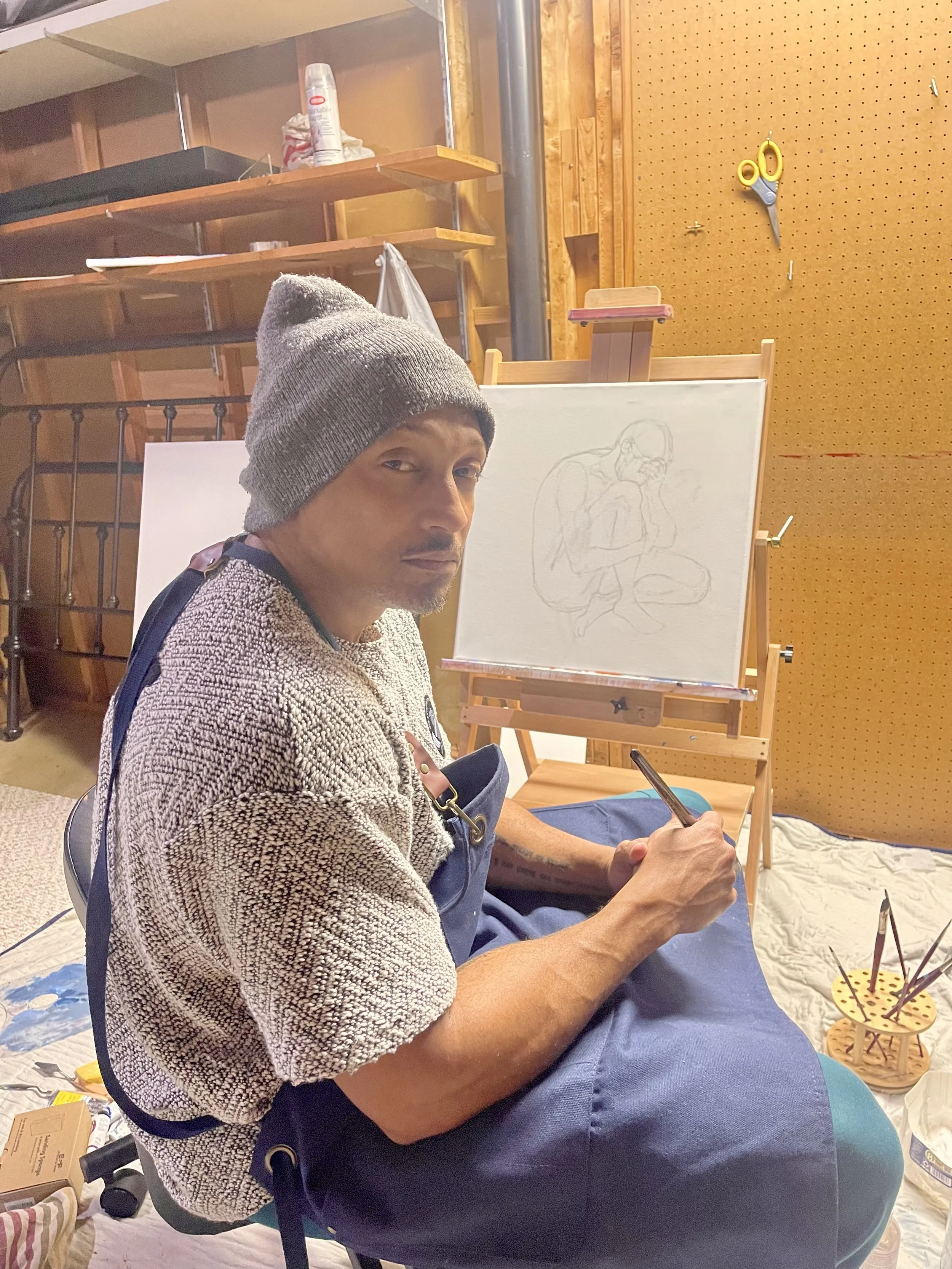
“I was born in Trinidad and Tobago and started drawing as soon as I could hold a pencil. In high school my talent was noticed, and I spent the next five years studying art, earning a distinction on a Caribbean-wide exam and placing third in a national competition. At 19 I immigrated to the United States. Within four months, due to circumstances beyond my control, I was homeless until a friend took me in. Those early immigrant years were a crash course in cultural, social, financial, and emotional survival. Three years later I was unexpectedly recruited into the military, which completely reshaped me. It gave me structure and purpose, but it also pulled me away from the creative path. I served for over a decade in what I’d describe as a ‘unique’ career—one that was considered successful by most standards: I became a highly decorated, combat-disabled veteran with specialized skills, and along the way, a husband and a father. After leaving the military, I began contracting for U.S. intelligence agencies, until a near-fatal medical event and more than 25 surgeries left me permanently disabled and forced me to confront my life in a new way.
During my last major series of operations, I made myself a promise: if I made it out of the hospital alive, I would fully honor the talents I’d been given and stop living on autopilot. I vowed to write a novel, move my family abroad for a time, relearn how to walk, and simply ‘go for it.’ I’m proud to say I’ve kept those promises and more. I’m now a published author, recently returned from a year living in Portugal, and—after a 25-year hiatus—I’ve finally come home to art. Today, I pour those intimate experiences of migration, war, illness, love, pain and resilience into my expressionist work, hoping that the vulnerability on the canvas resonates with whoever stands in front of it.”
What does your work aim to say? Does it comment on any current social or political issues?
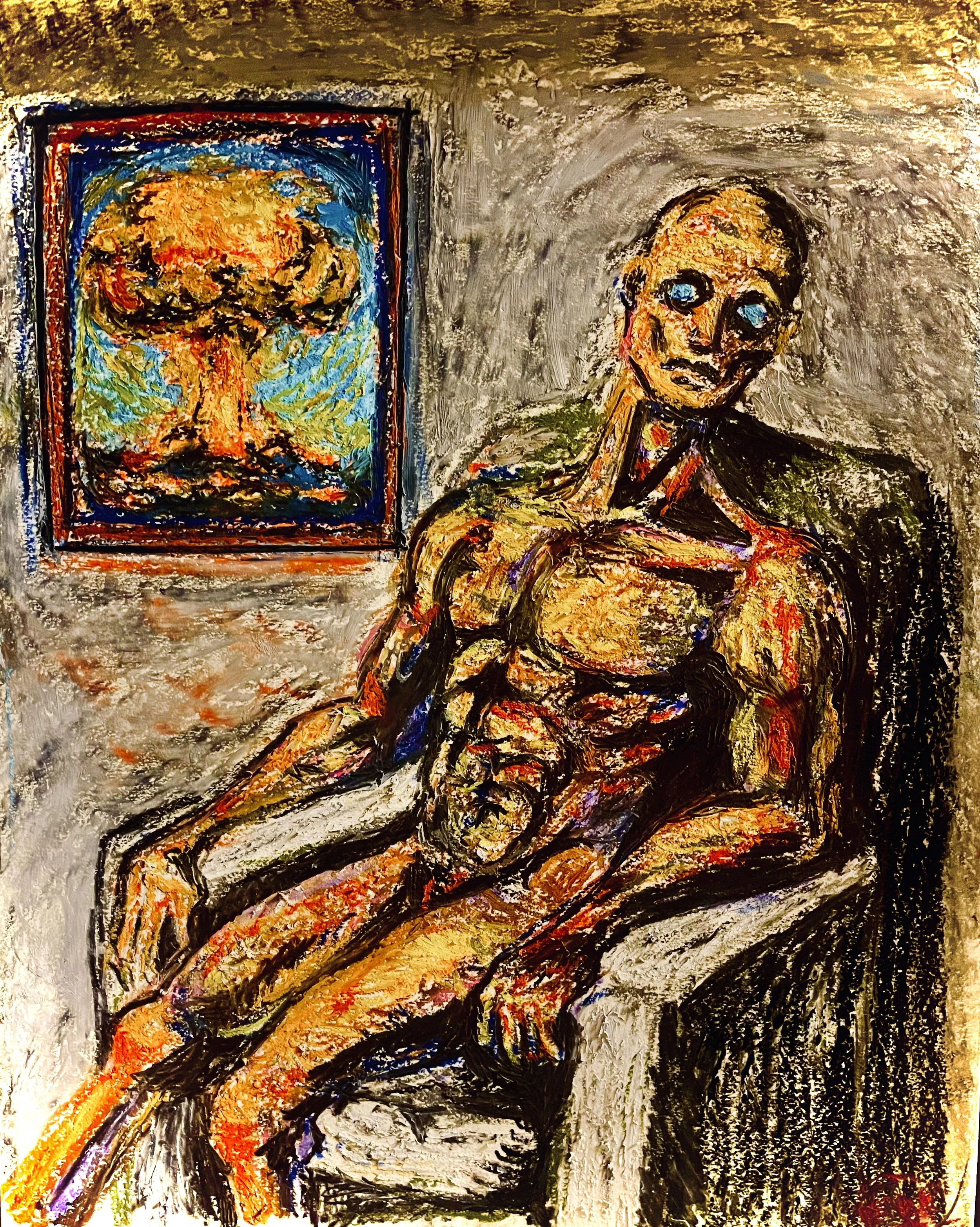
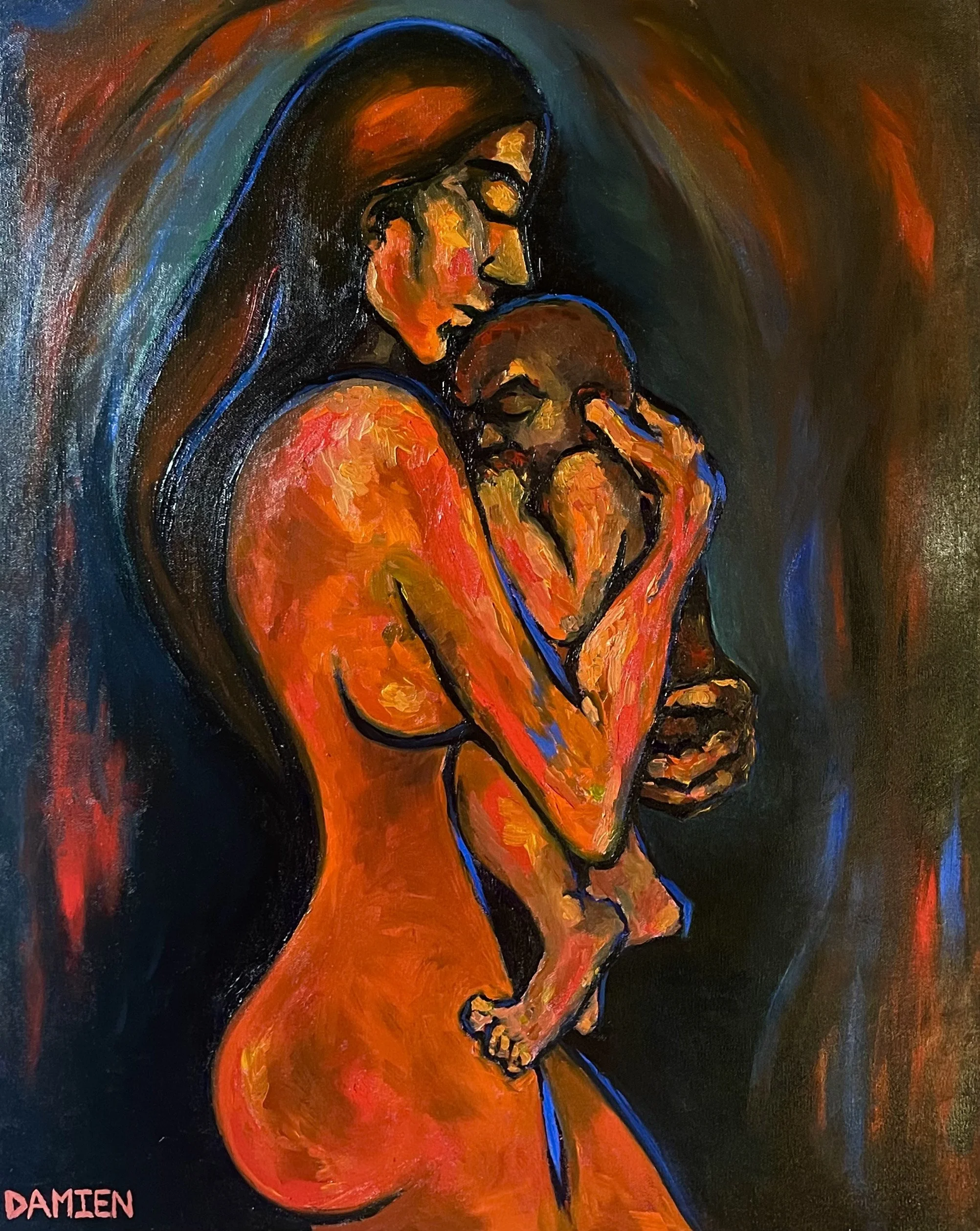
“You can’t hide emotions from an expressionist. My work says whatever is already living in me. In most areas of my life I’m methodical and strategic, but my art is organic and unfolds in real time. I start with a clear feeling rather than a fixed plan, and I only create when I’m genuinely moved to. Behind each piece there’s a real story—tragedy, pain, love, regret, resilience. They’re all grounded in human experiences I’ve lived or witnessed. As my portfolio grows, my aim is to have at least one work that truly resonates with anyone who encounters it, regardless of background, class, nationality, or race. I want to host an exhibition where everyone leaves with one image still echoing in their mind because it touched something intimate in them. My work isn’t overtly political in the traditional sense, but it does respond to the world we’re living in. I’ve seen how people can be capable of both unimaginable cruelty and astonishing compassion. That tension—between apathy and empathy, destruction and connection—is what I’m ultimately trying to capture on the canvas.”
Do you plan your work in advance, or is it improvisation?
“I’ll do something totally out of character and pull back the crazy curtain on ‘The Art of Damien.’ My process starts with what I call the 4 Ms: Memory, Music, Mood, and Me. I’ll be sitting quietly and a memory surfaces—something I lived, witnessed, or felt—and that sparks a specific emotion. From there, I find a song that ties directly to that feeling. I put on my headphones, hit repeat on that track and a related playlist, and let the music drive everything: the rhythm of the brushstrokes, the thickness of the paint, the color choices, even where I’m willing to distort the figure. So there is a seed of intention at the beginning, but once I’m in it, the process becomes pure improvisation. The painting evolves in real time as the memory, the mood, the music, and my own state of mind collide on the canvas.”
Are there any art world trends are you following?
“I’m aware of a lot of current trends, but I don’t really chase them. During the pandemic I briefly experimented with NFTs, but I was turned off by how much mass-produced, low-effort work flooded the space. My own life and struggles make it hard for me to celebrate art that feels lazy or purely opportunistic, whether it’s digital or hanging in a blue-chip gallery. What does interest me is the growing focus on emotional honesty, personal narrative, and artists from diverse backgrounds telling their own stories. I pay attention to painters who are digging deep—using expressionism, figuration, and abstraction to process trauma, identity, migration, disability, or love. That’s the current that I feel aligned with. I’d rather be slightly out of step with what’s fashionable and fully in step with what feels true.”
What process, materials and techniques do you use to create your artwork?
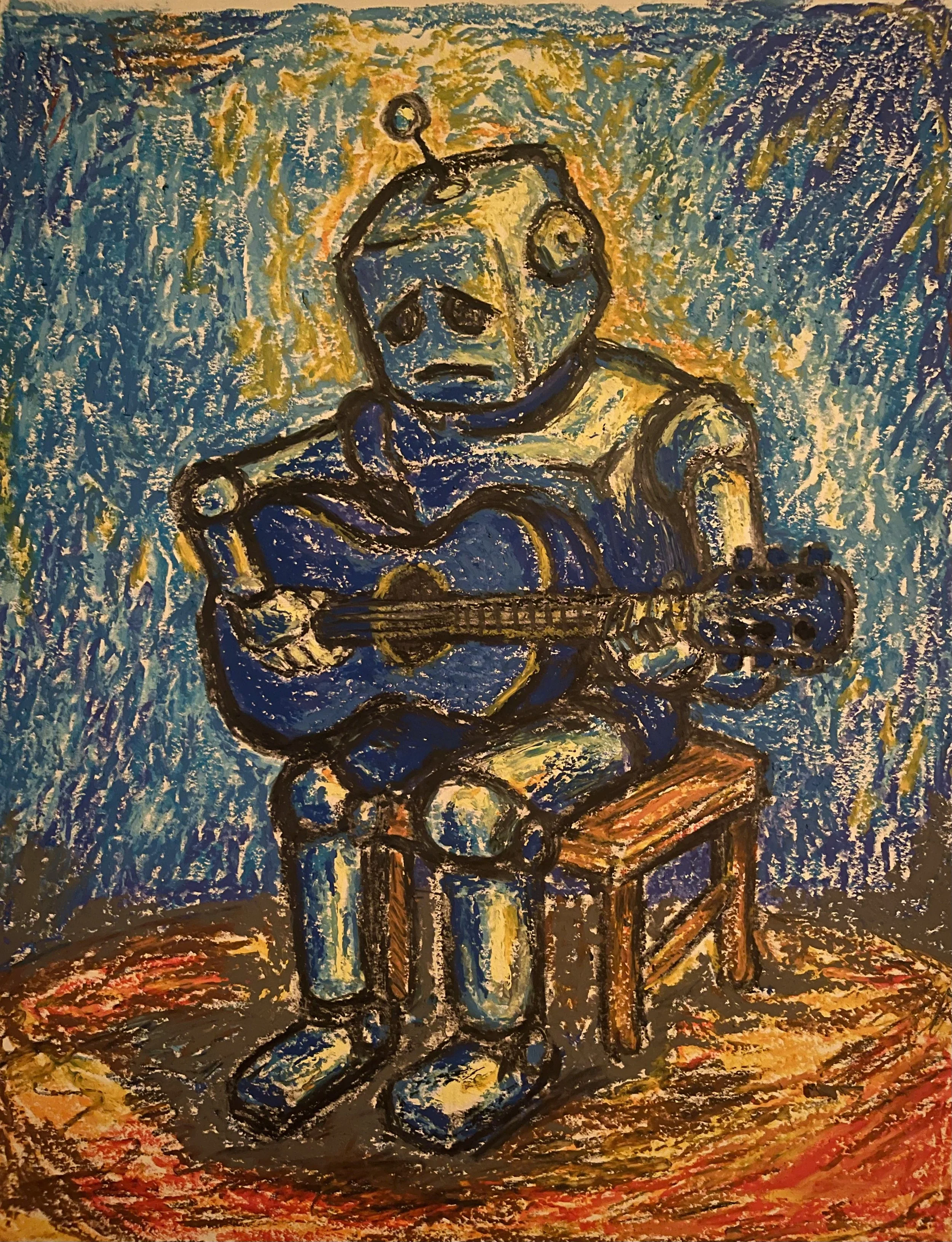
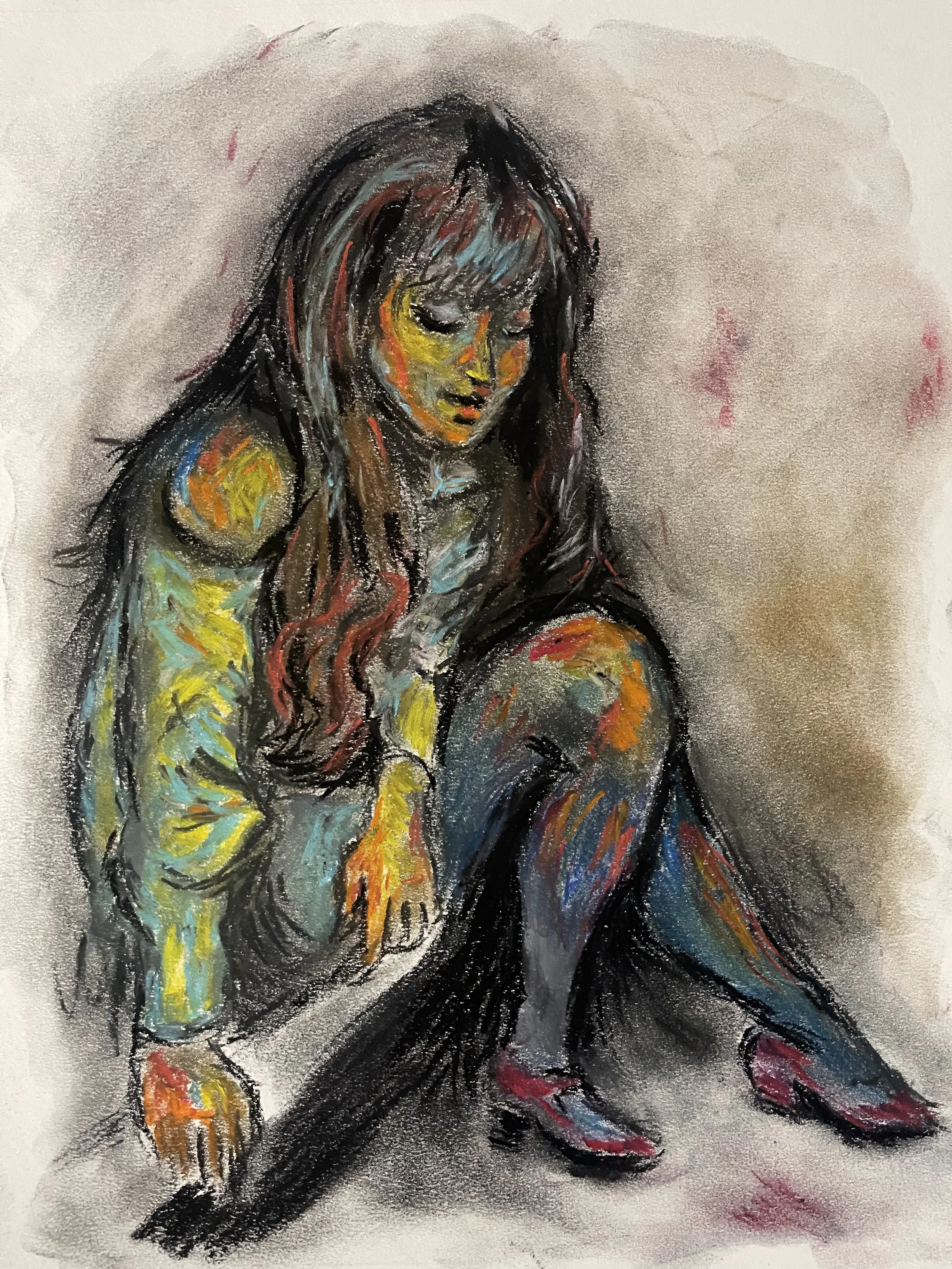
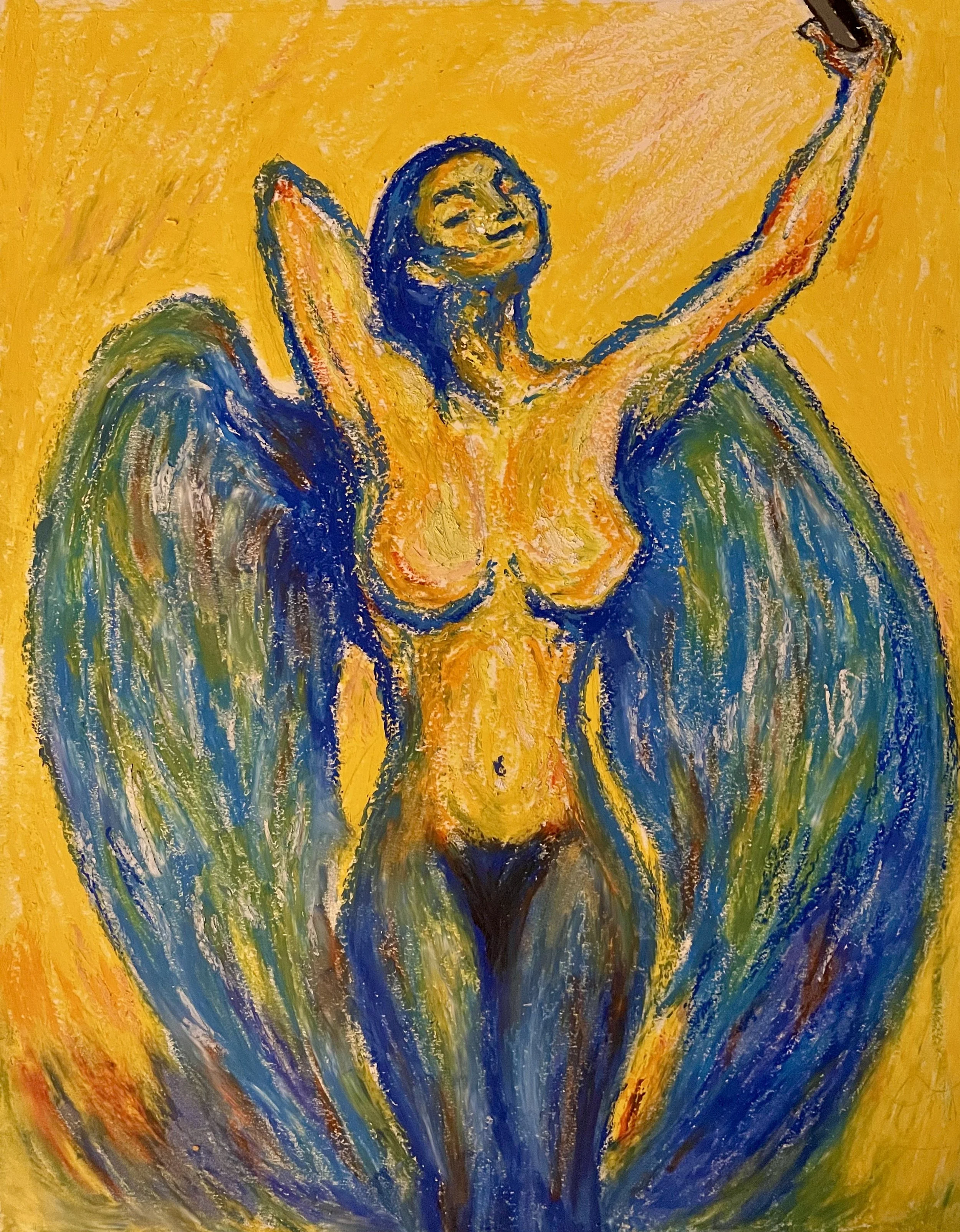
“I mentioned the 4Ms earlier—Memory, Music, Mood, and Me—which guide the emotional side of my process. On the technical side, I was trained as a teenager in a very traditional way: acrylic on canvas, pencil drawing, and expressive finger work with charcoal and chalk. That foundation still shapes how I build form, value, and composition, even when the final result is loose or distorted. During the pandemic, while experimenting with NFTs and writing my debut novel Dante & The Magic Lomi Stick, I taught myself Procreate. Those digital pieces helped me visualize and illustrate key scenes in the book. I have a deep respect for digital artists, but I realized I’m ultimately a tactile painter. As an expressionist, I need to feel the work—the drag of the brush, the unpredictability of mixing color, the smell of paint, the mess, the ritual of preparing a canvas and cleaning brushes, even the slight tremor in my wrist when I’m working a delicate area. Those intangibles are part of the piece for me. In this current era, I’m working primarily in oil on canvas, oil pastels, and soft pastels. I like being able to move between media and styles, because for me emotion comes first and technique is there to serve it. Whether I’m pushing thick paint, blending pastels with my fingers, or sketching something out in pencil, the goal is always the same: to give a physical body to whatever feeling I’m trying to work through on the surface.”
What does your art mean to you?
“To answer this honestly, I have to peel back some very intimate layers. Most people my age haven’t had to confront mortality as often as I have. Experiences with war, poverty, and crisis—while often horrible—have all been ingredients in shaping the artist I am today. I’m not sharing this as a badge of honor, but I’ve survived abuse, attempted suicide, homelessness, rejection and abandonment, near-death experiences, limb salvage, PTSD, bankruptcy, racism, and the untimely loss of loved ones. In many ways, those things force you to numb yourself just to survive, and that can pull you away from creativity. But something strange and almost miraculous can happen after those lowest points. If you’re able to channel it, all of that pain, fear, and confusion can become a language. For me, that language is art and writing. After a series of major surgeries, I was left with permanent disability and chronic pain. With that comes depression, anxiety, and a constant search for inner peace. Instead of sinking deeper into destructive patterns, I’ve learned to use painting as a kind of therapy and communication—an honest way to share what I feel without revealing personal or national secrets from my time working in intelligence. My art is where I can release the weight of what I’ve seen and lived through. It’s not just about pain, though. I paint from the place where pain meets the possibility of redemption—the belief that if we can hold on through the storm, there’s still something worth fighting for on the other side. My work reflects both the scars and the hope: the brutality of life, but also the quiet, stubborn promise of a different tomorrow.”
What’s your favourite artwork and why?
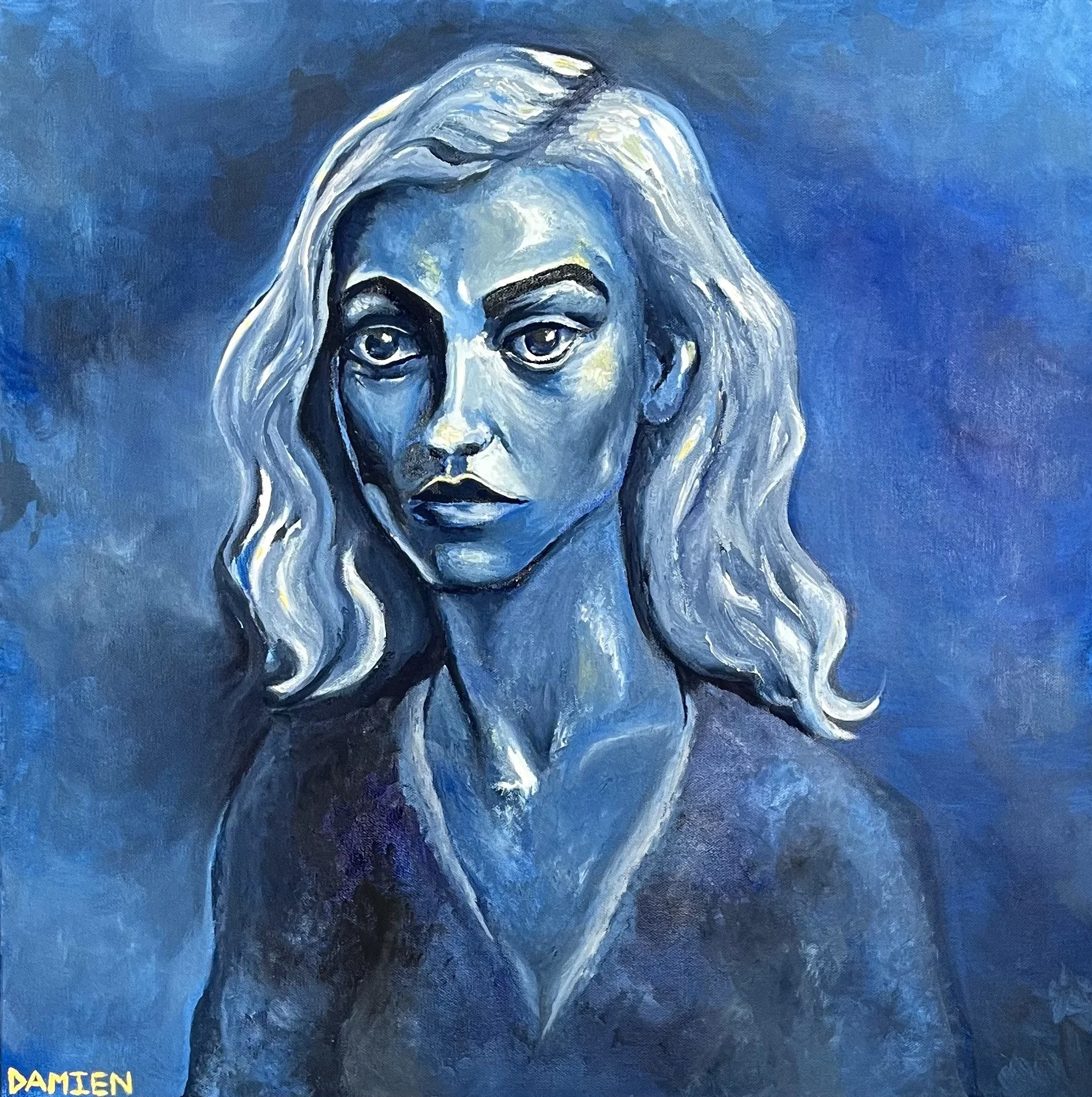
“If we’re talking about established masterpieces, I don’t have just one favourite—there are a few I place in what I’d call the ‘unparalleled’ category. Michelangelo’s Pietà and Degas’ ballet series come to mind immediately. The Pietà feels almost superhuman in its balance of grief and tenderness carved out of stone, and Degas’ dancers have this haunting mix of elegance and exhaustion that feels very human to me. If I’m choosing from my own work, I’d have to say Loyce. Photographs don’t quite capture the nuances of the piece—the texture, the depth in her expression, the way the colours shift in person. The feedback from the few people who’ve seen it up close has been incredibly encouraging. It feels like a turning point painting for me, where everything I’ve lived through and everything I’m trying to say with my art finally aligned on one canvas.”
Have you had any noteworthy exhibitions you'd like to share?
“I’ve been to around 50 countries, and wherever I go I make it a point to visit either the national art museum or the local art districts. Some of the most meaningful exhibitions for me haven’t been the ‘headline’ shows, but the work of incredibly talented, lesser-known artists whose names most people will never hear. In terms of major institutions, a few stand out: the Louvre in Paris, the Vatican Museums, the Smithsonian art museums in Washington, D.C., and, somewhat unexpectedly, the Norwegian National Museum in Oslo. Each holds an extensive range of work that’s influenced how I think about scale, emotion, and the many different ways artists around the world choose to tell their stories.”
Instagram: @theartofdamien