Interview
Cristóbal Corbeaux
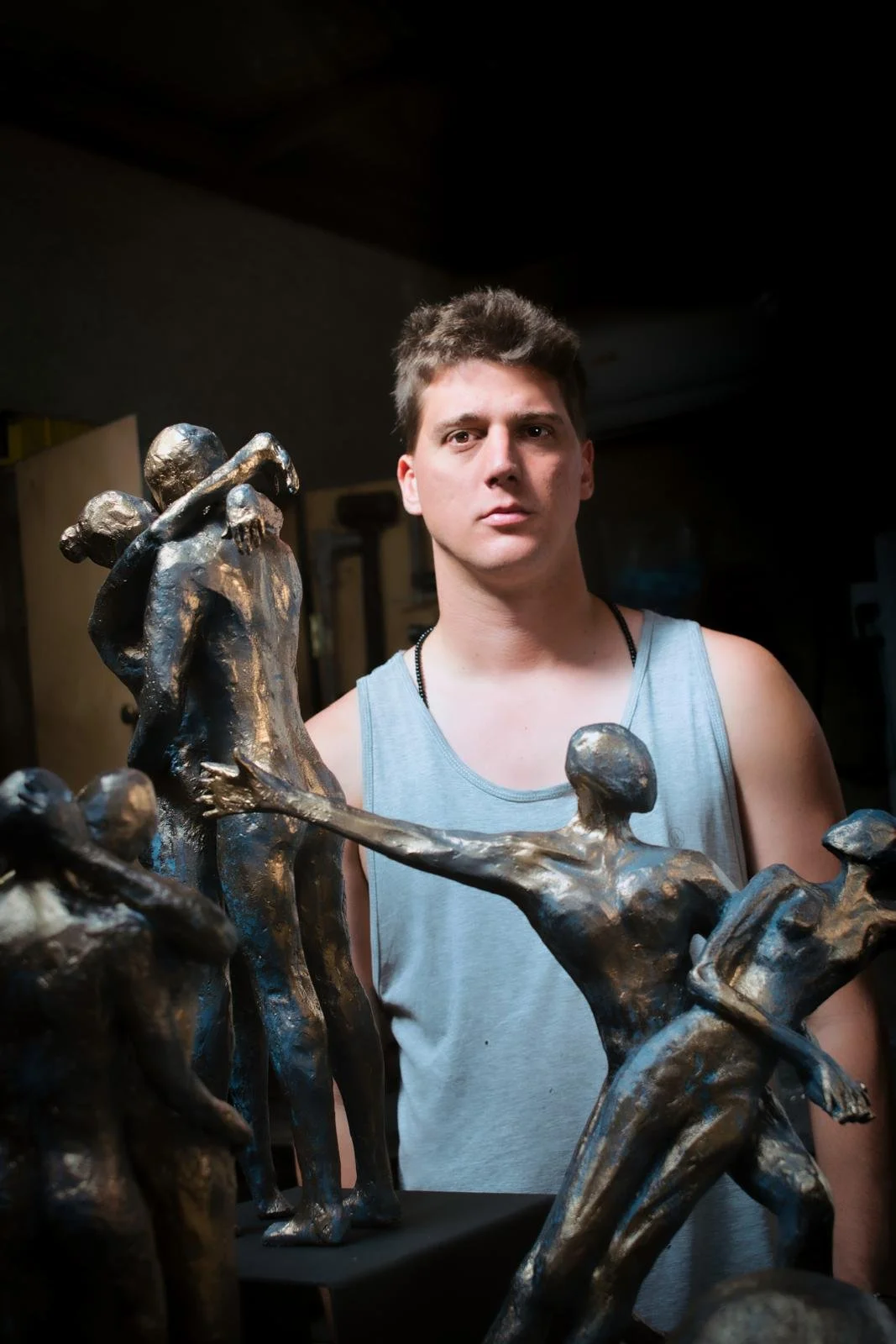
Cristóbal Corbeaux is an architect trained at the Pontifical Catholic University of Chile, holds a Master’s degree in Architecture, and is a self-taught artist. He has exhibited his work in various galleries in Chile and internationally, and has participated in large-scale urban sculpture exhibitions in Chile. He is currently pursuing a Master of Fine Arts at the Royal College of Art in London, United Kingdom.
What is your background and how did you start your journey in the art world?
“I am from Chile. I am an architect graduated from the Pontificia Universidad Católica de Chile, with a Master’s degree in Architecture, and a visual artist. I am currently pursuing an MFA at the Royal College of Art in London. I have been connected to art since I was very young. When I was a child, I constantly drew and painted, and every trip became an excuse to carry a sketchbook and capture everything I saw. That practice never disappeared. Later, while studying architecture, I discovered sculpture and became fascinated by the possibility of giving physical form to my ideas and dreams. Feeling how something that begins in the mind becomes material and coexists with you is almost magical. From that moment, I began developing sculptural work.”
What does your work aim to say? Does it comment on any current social or political issues?
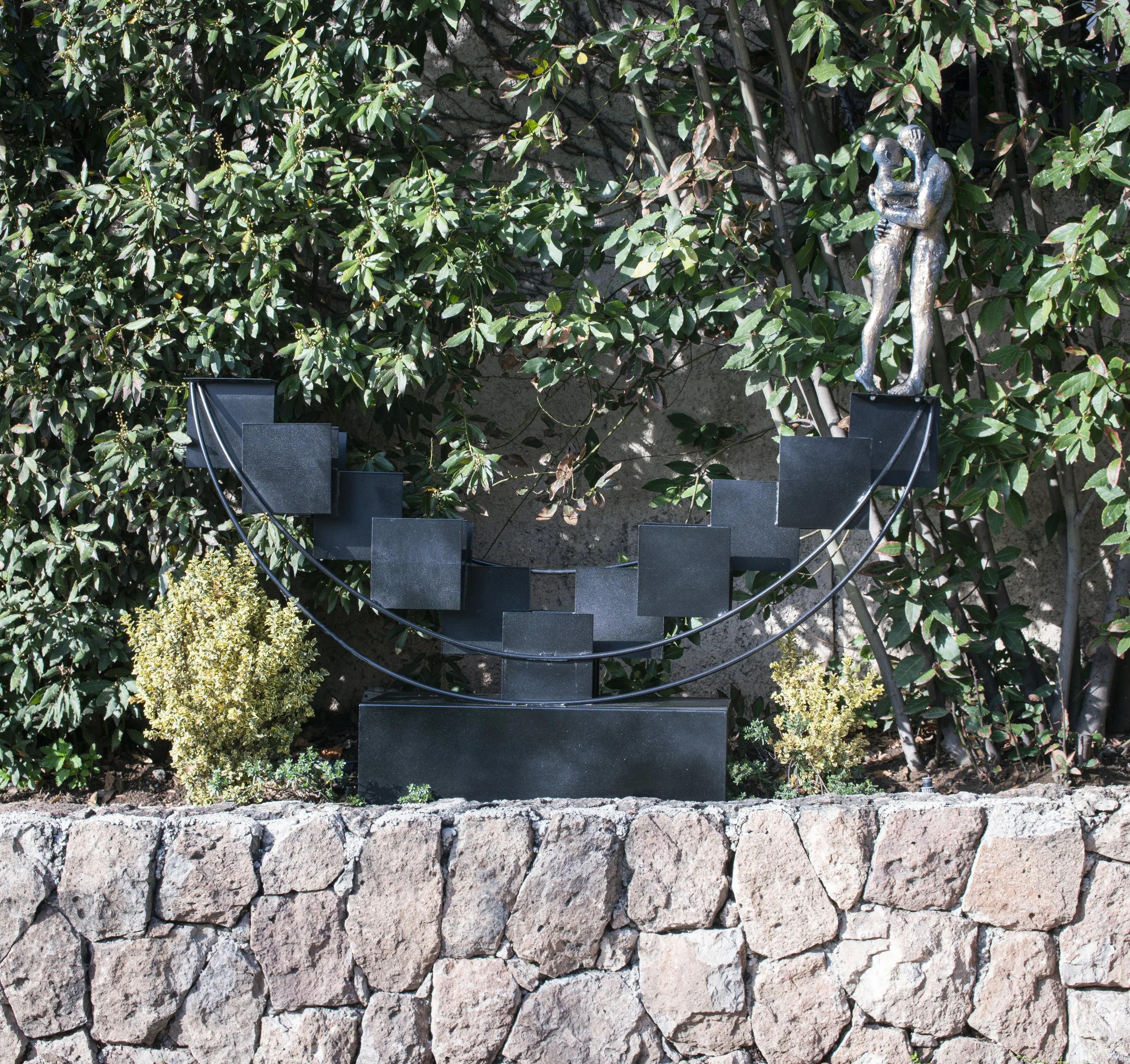
“My work seeks to express, question, and provoke reflection. I believe we live in an accelerated, cold, and impersonal contemporary world, where everything happens automatically and we lack moments to contemplate the everyday. My practice focuses on simple gestures and familiar situations that invite us to disconnect from immediate reality. They are common actions that contain emotions, messages, and narratives, allowing us to pause, observe, and become more receptive and sensitive. I aim to create a space where, through interacting with the piece, the viewer enters a parallel micro-world that transforms the ordinary into the extraordinary. In that moment of disconnection, more vulnerable and deeper, we may feel more human than ever.”
Do you plan your work in advance, or is it improvisation?
“I always start from a concept or message that I believe is important to communicate. Once that concept is established, I carefully design the form, space, and overall experience. Before beginning the piece, I study, read, and research, from social behaviour and cultural context to material choices, technical calculations, and symbolic meaning. I leave nothing to chance. I believe every detail carries valuable information, and if I want to convey clearly what I feel, think, and observe, I need to guide the creative process intentionally and precisely.”
Are there any art world trends are you following?
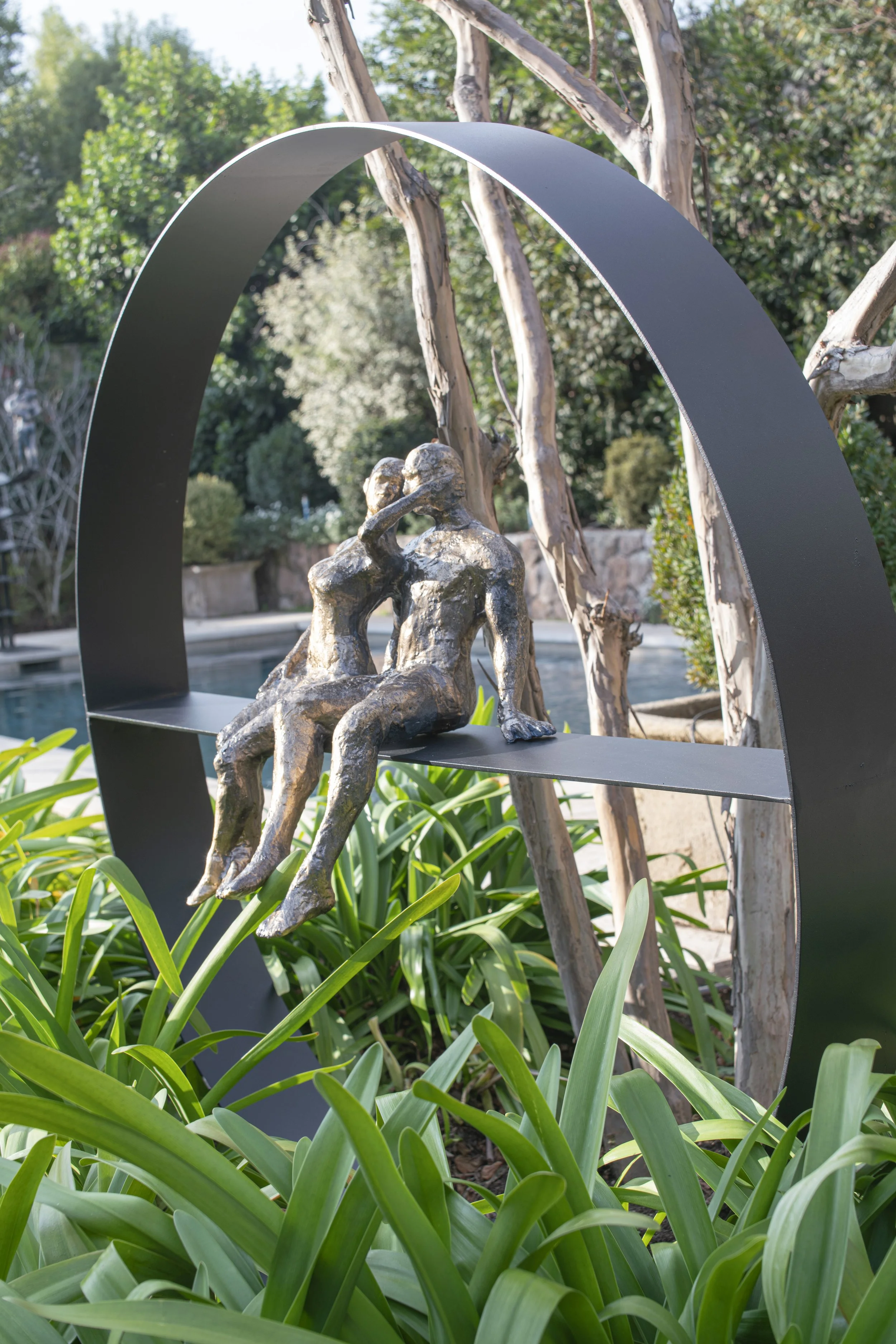
“I am deeply passionate about the technical mastery of historical artistic movements, particularly the Renaissance. I greatly admire artists such as Michelangelo, whose discipline and precision continue to inspire my approach to form and composition. At the same time, I am strongly drawn to symbolic art and the interpretative power of imagery. The idea that every element within an artwork can carry meaning, what it is and what it might become, truly fascinates me. I am especially interested in the capacity of artworks to communicate, to engage in dialogue with the viewer, and to invite multiple interpretations. For this reason, I explore the balance between figurative realism and symbolic language, combining technical rigor with conceptual depth. My aim is to create works that are accessible and intelligible, yet open enough to allow the viewer to complete the meaning through their own perception and imagination. I seek to make my work suggestive rather than explicit. I want the audience not only to observe the artwork, but to experience it, to question it, to interact with it emotionally and intellectually. I strongly believe in the importance of understanding and imagining as fundamental aspects of artistic creation. Therefore, the integration of diverse artistic currents, both in theory and in practice, is a central element of my work, shaping a language that moves between tradition and contemporary expression.”
What process, materials and techniques do you use to create your artwork?
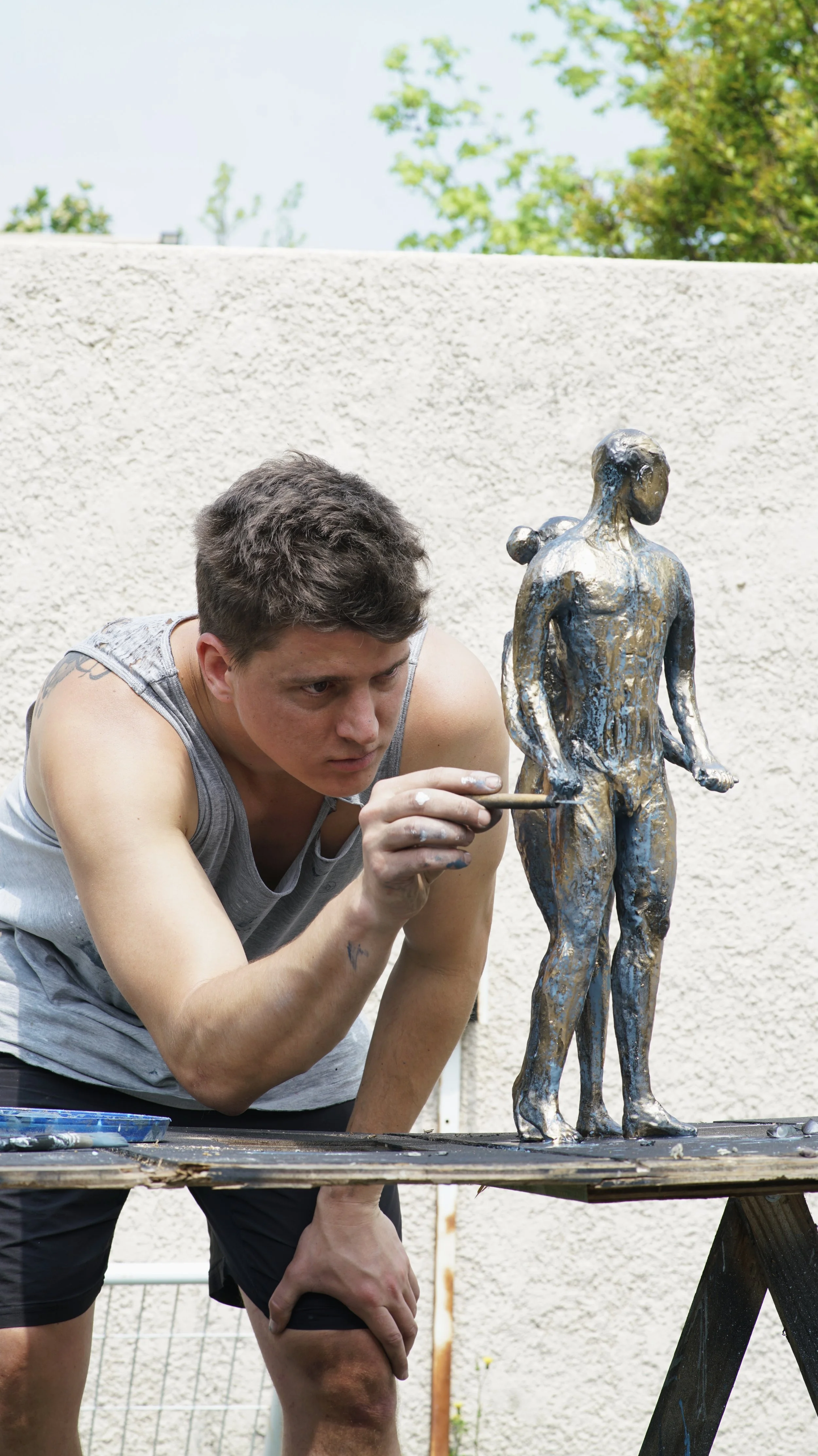
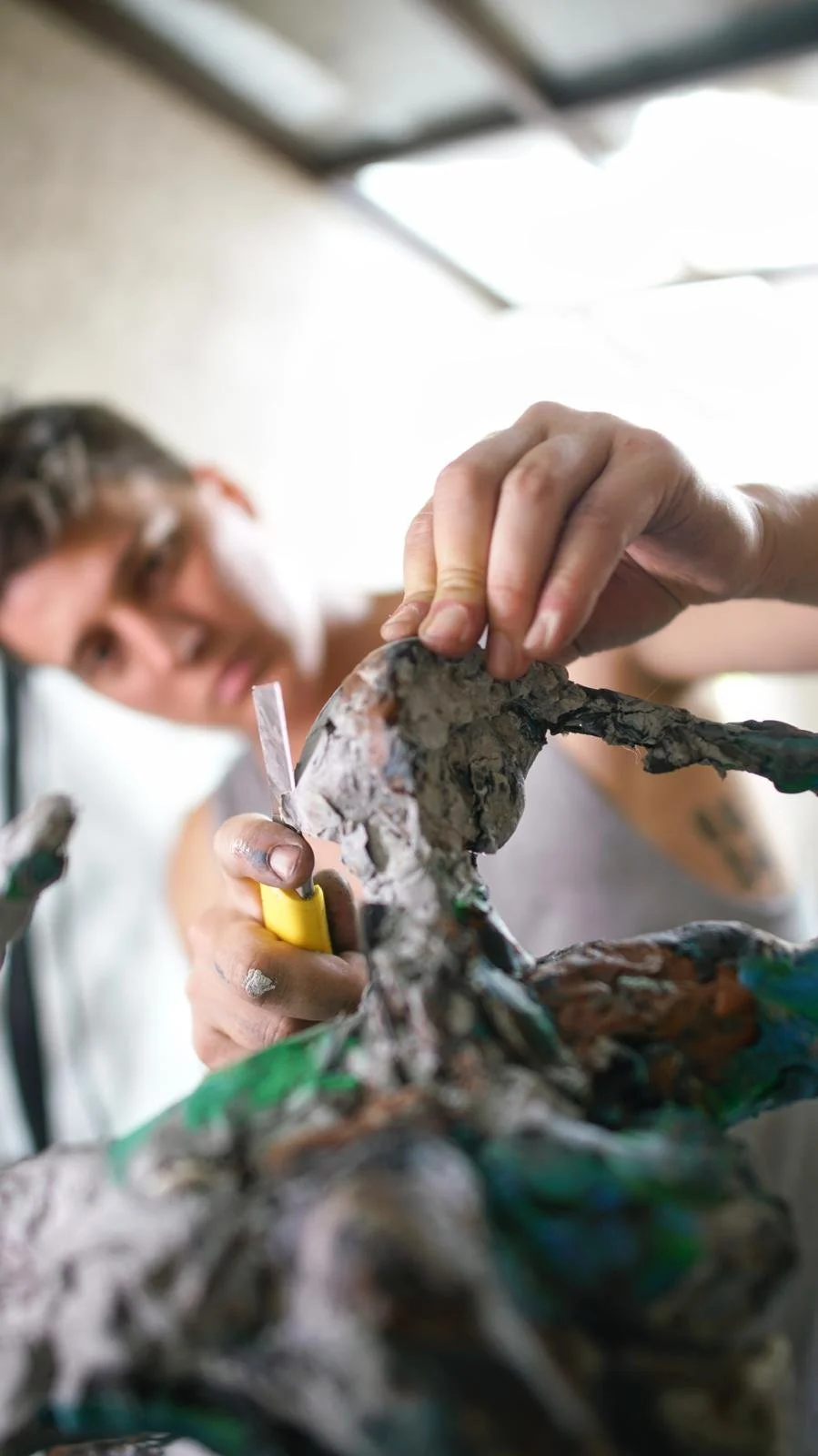
“I am passionate about resistant, long-lasting materials, especially metal and bronze. I deeply value the relationship between the artist and the artwork, and these materials allow for direct connection through manual modelling. In the mold or matrix, the artist’s imprint remains embedded like a permanent seal that links creator and object beyond time. I feel that my presence becomes part of the piece, and that union only ends if the artwork disappears. For this reason, I consider these materials and techniques essential for creating a lasting and meaningful bond.”
What does your art mean to you?
“My art is my voice, my way to shout, cry, smile, and share. It materializes thoughts, emotions, and experiences that, without a physical form, would never reach others. Art is my medium to project a message that I hope travels far and reaches unexpected places and people. I deeply believe in the importance of art in our lives, and therefore I strive to spread that message as widely as possible.”
What’s your favourite artwork and why?
“I always say my favourite piece is the next one. I see each work as part of a large puzzle I am still assembling. Every piece brings experience, knowledge, and discoveries that nourish the work to come. I conceive my practice as an ecosystem where one artwork feeds another, and together they form something greater than themselves.”
Have you had any noteworthy exhibitions you'd like to share?
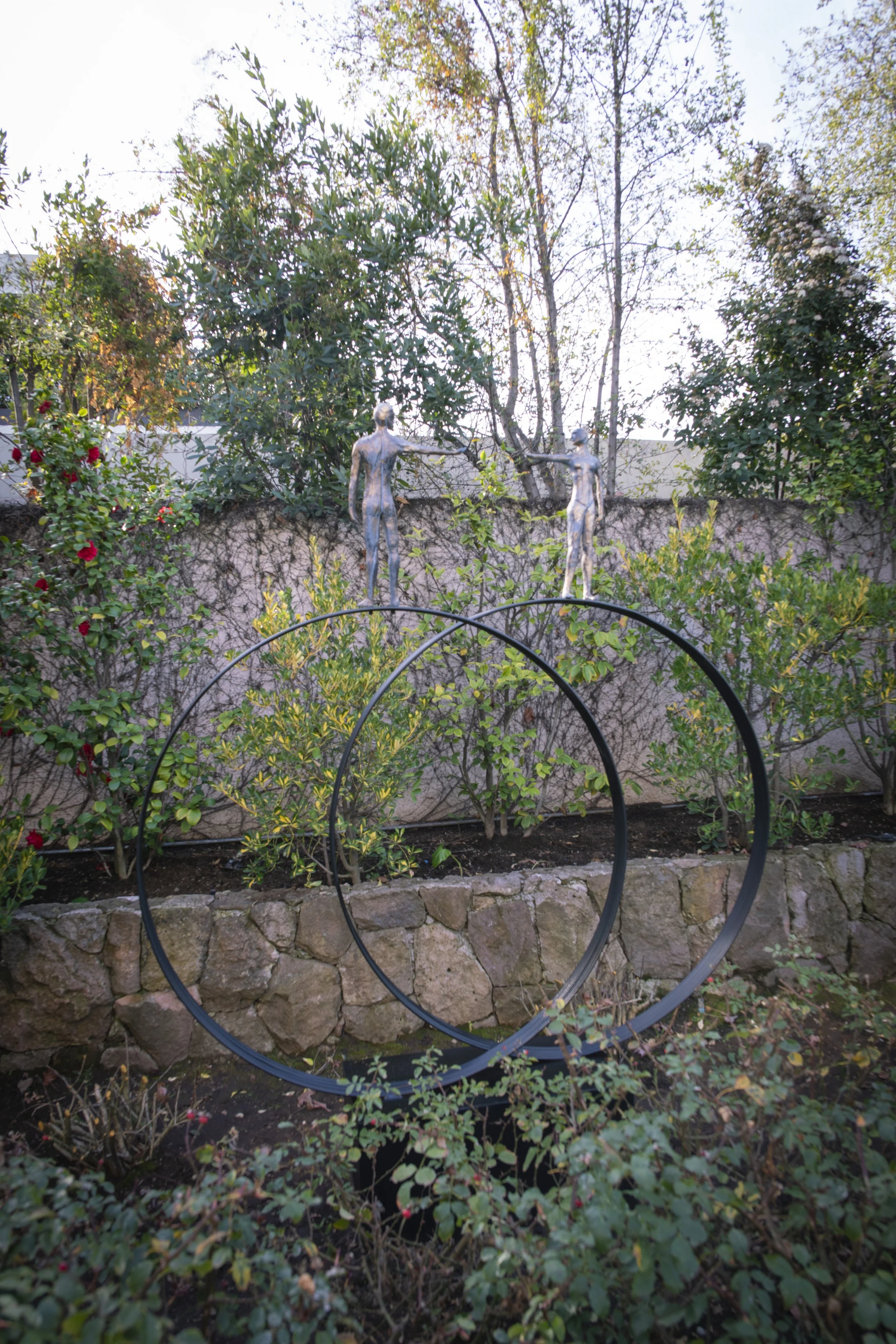
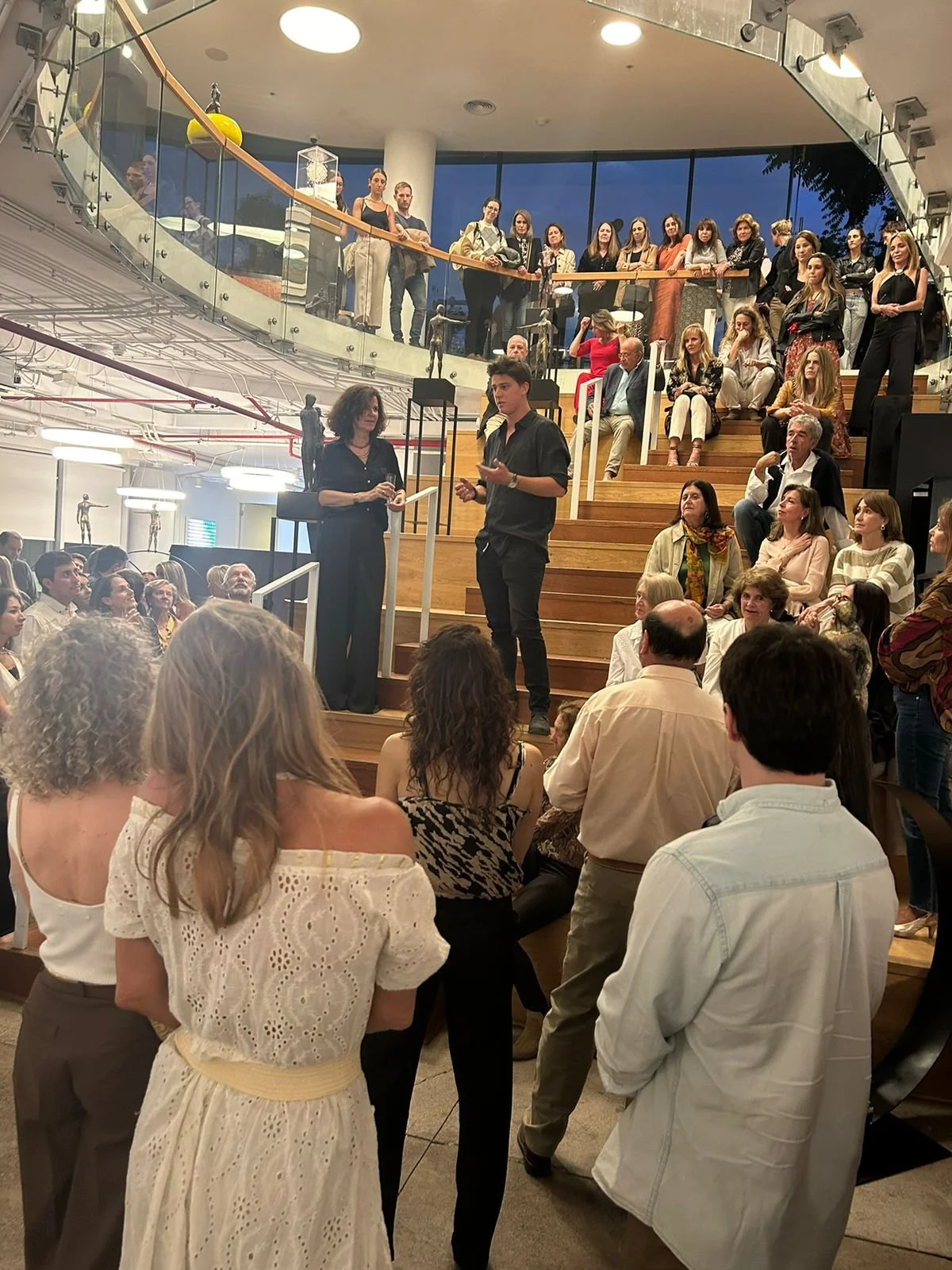
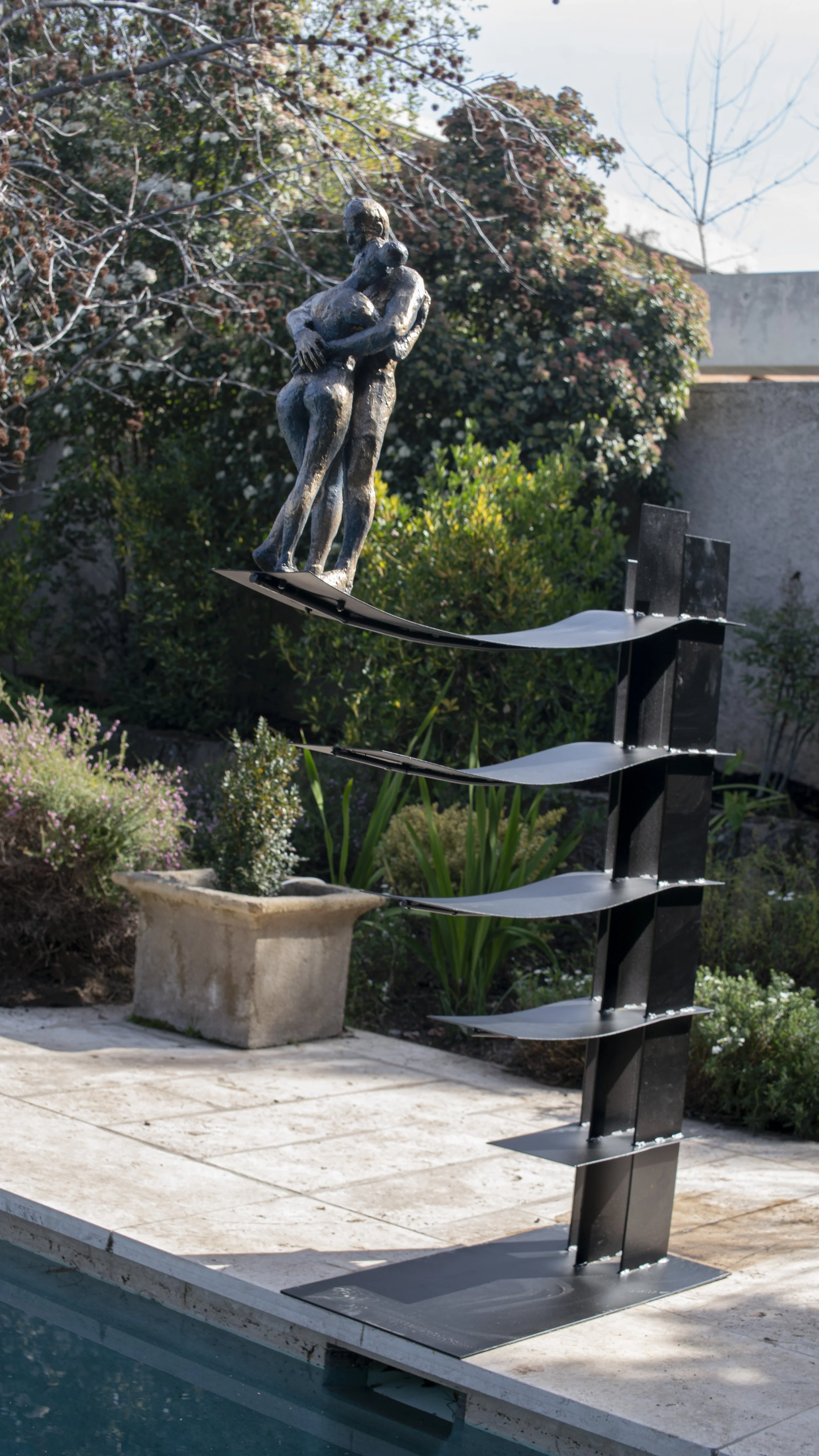
“I currently live in London while completing my MFA, but before moving I participated in various exhibitions and public art interventions in Chile. My most recent exhibition there was at Galería La Sala, titled ‘Micro worlds,’ a show centered on human figures inspired by couples. It was an enriching experience, with excellent attendance and reception. Now, I am preparing for new exhibitions in Europe, including a participation at the European Museum of Modern Art (MEAM) in Barcelona and a second one in London, scheduled for February, which I am extremely excited about given how positively my work has been received.”
Website: www.cristobalcorbeaux.com
Instagram: @cristobal_corbeaux_art