Interview
Clarence Doskocil
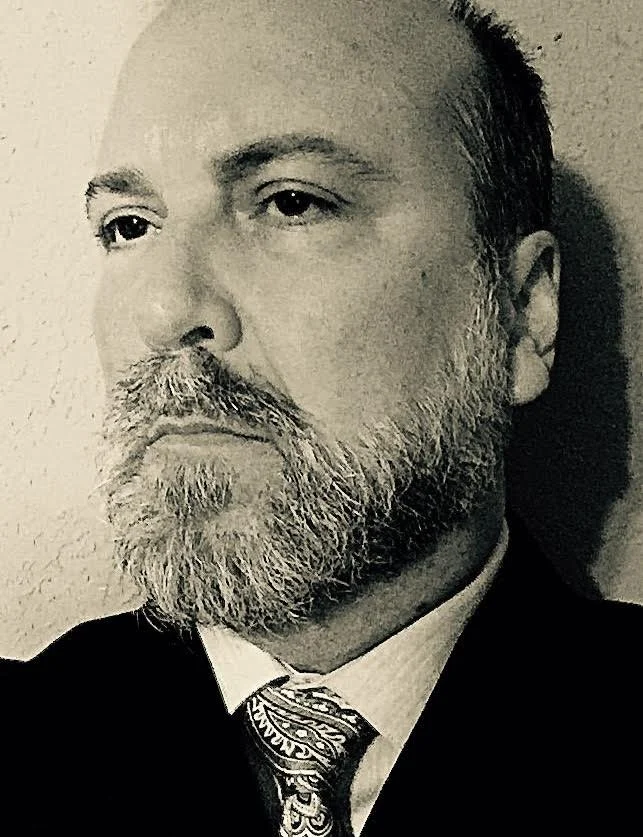
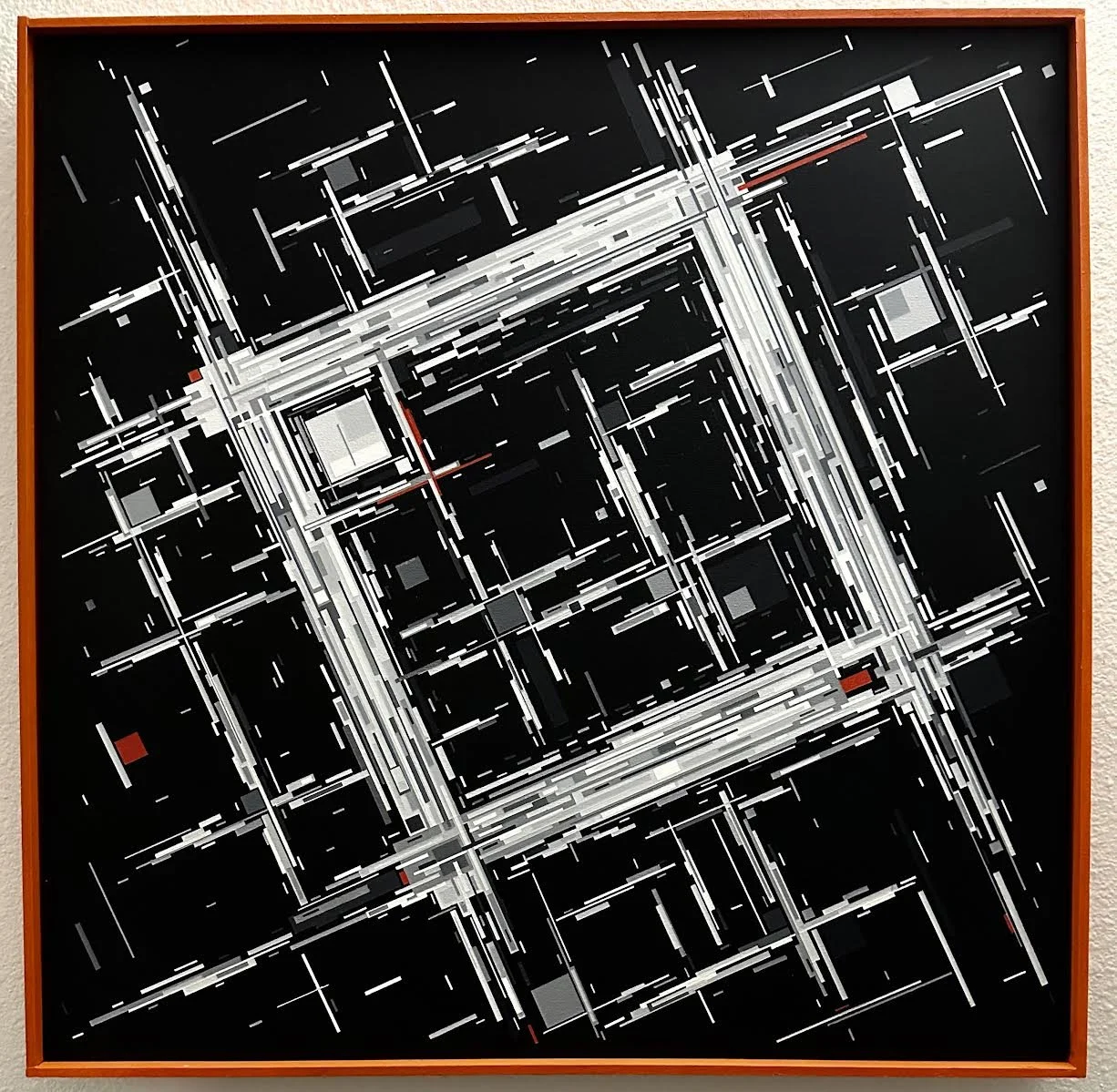
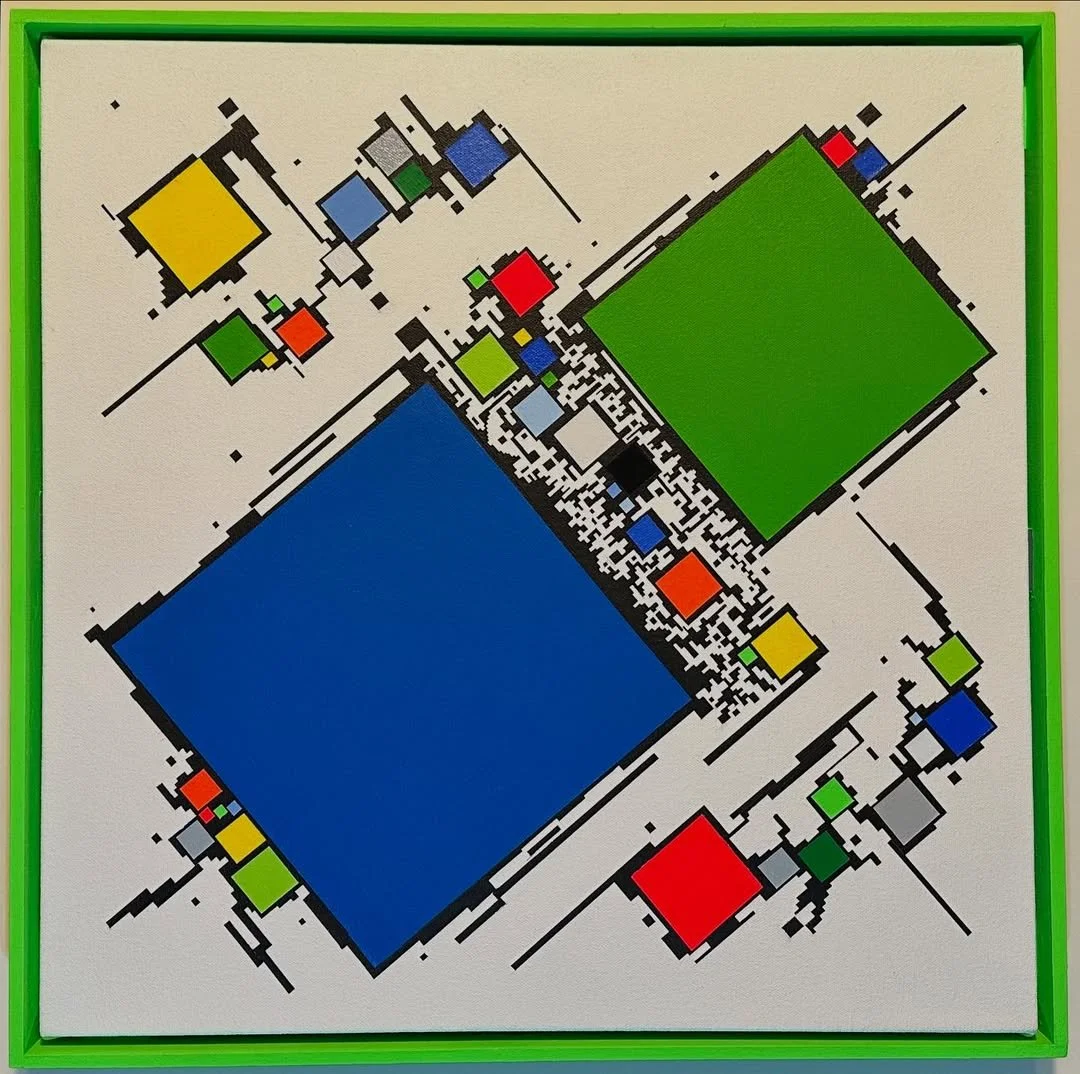
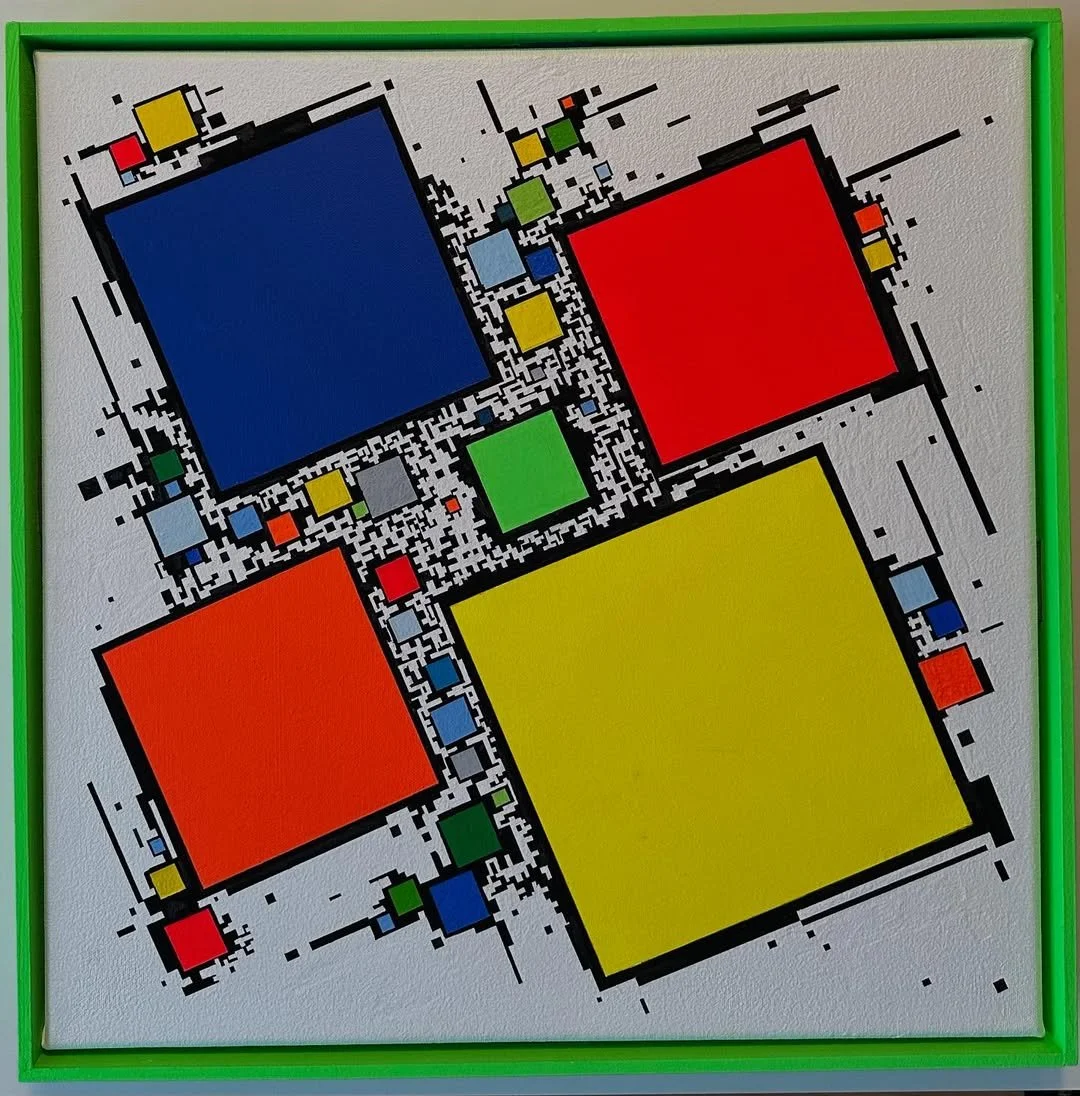
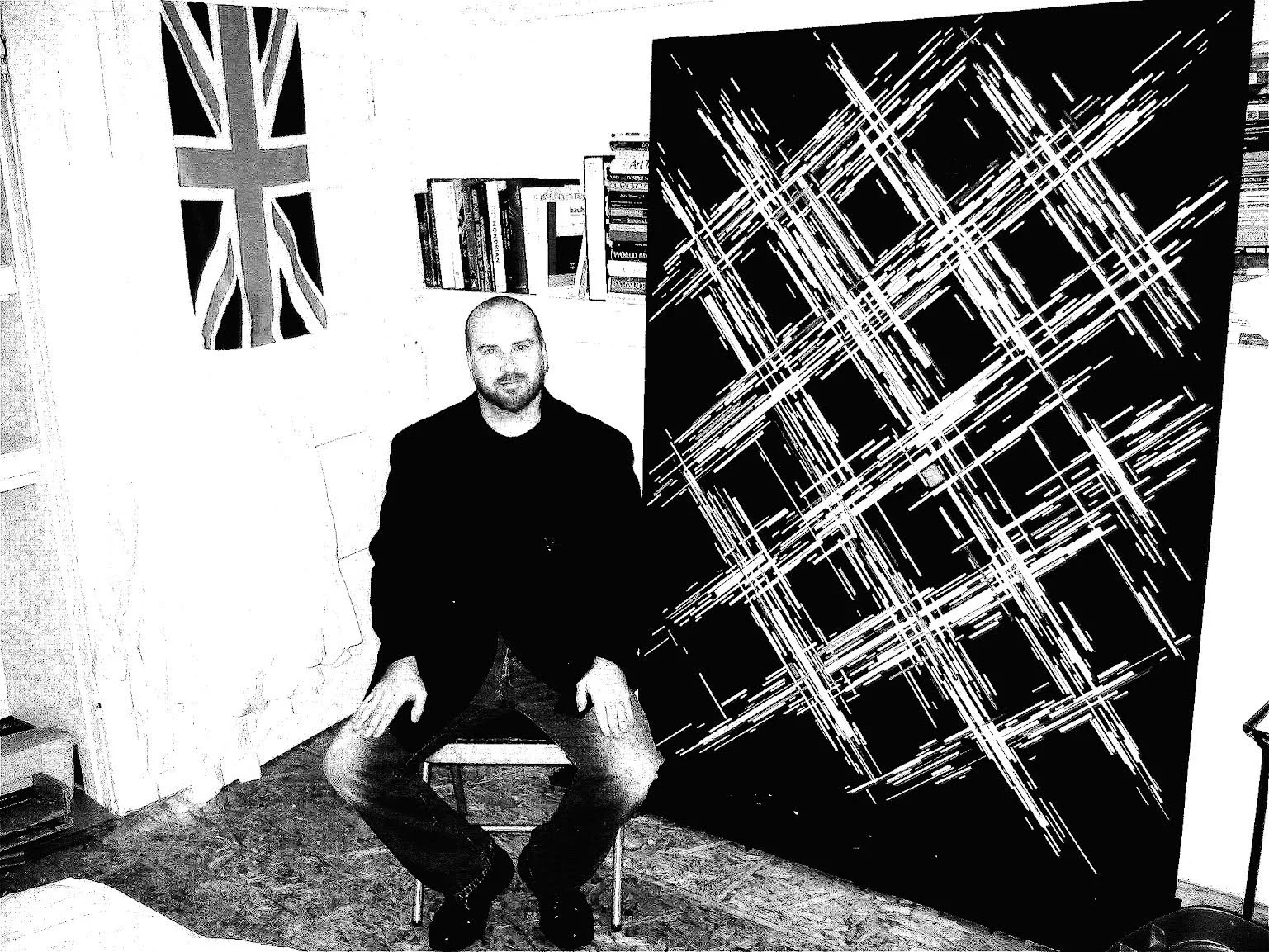
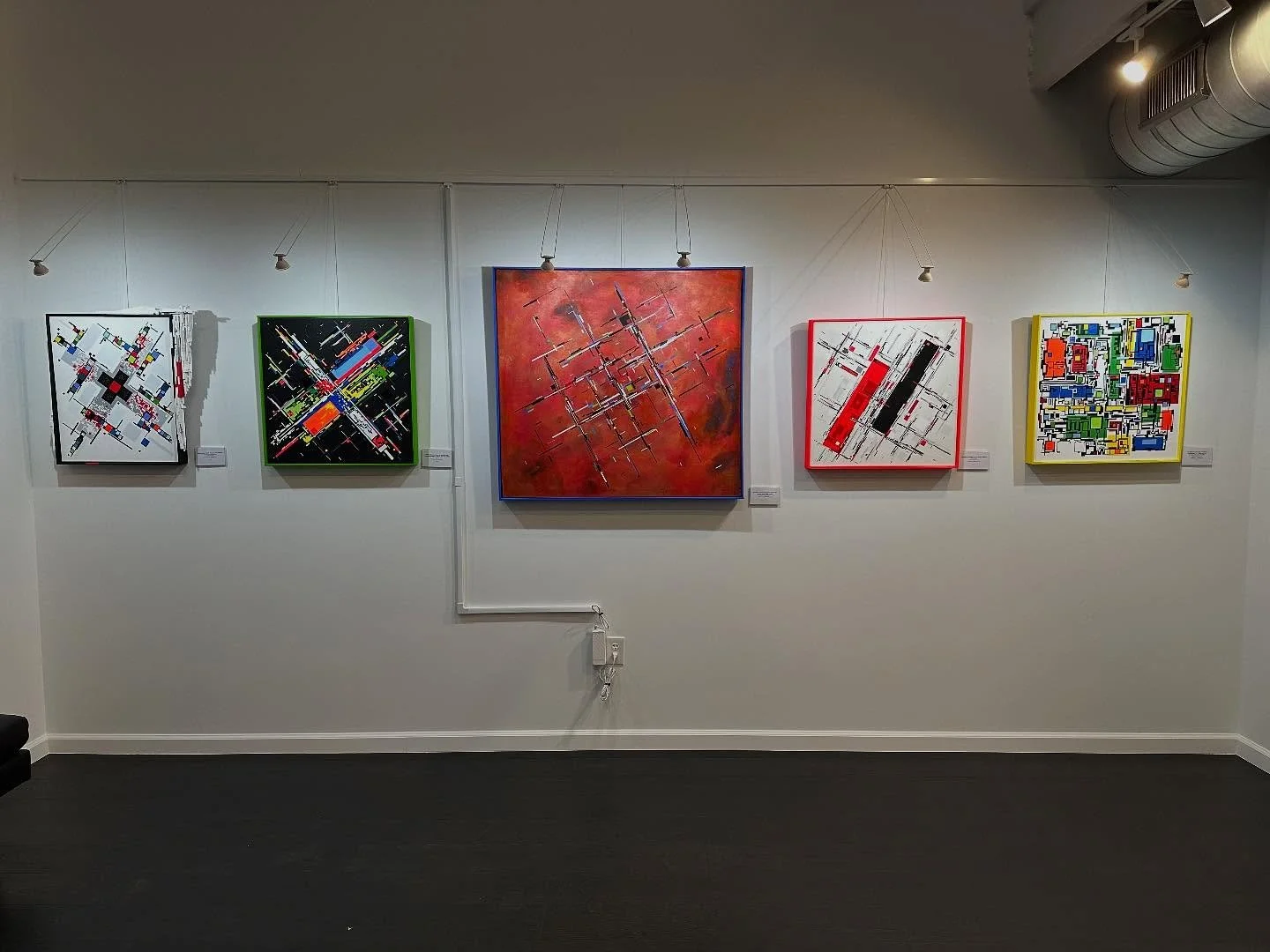
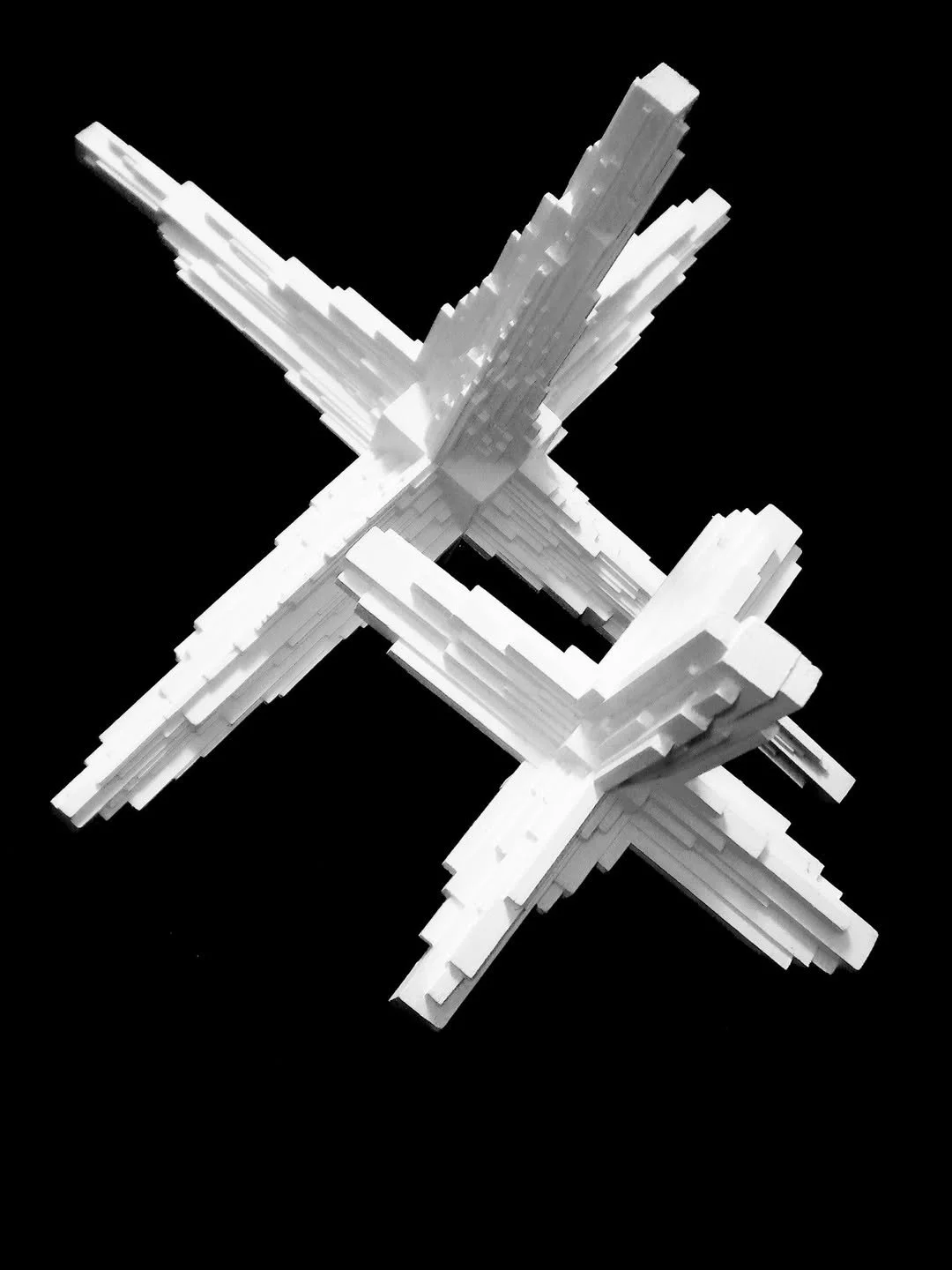
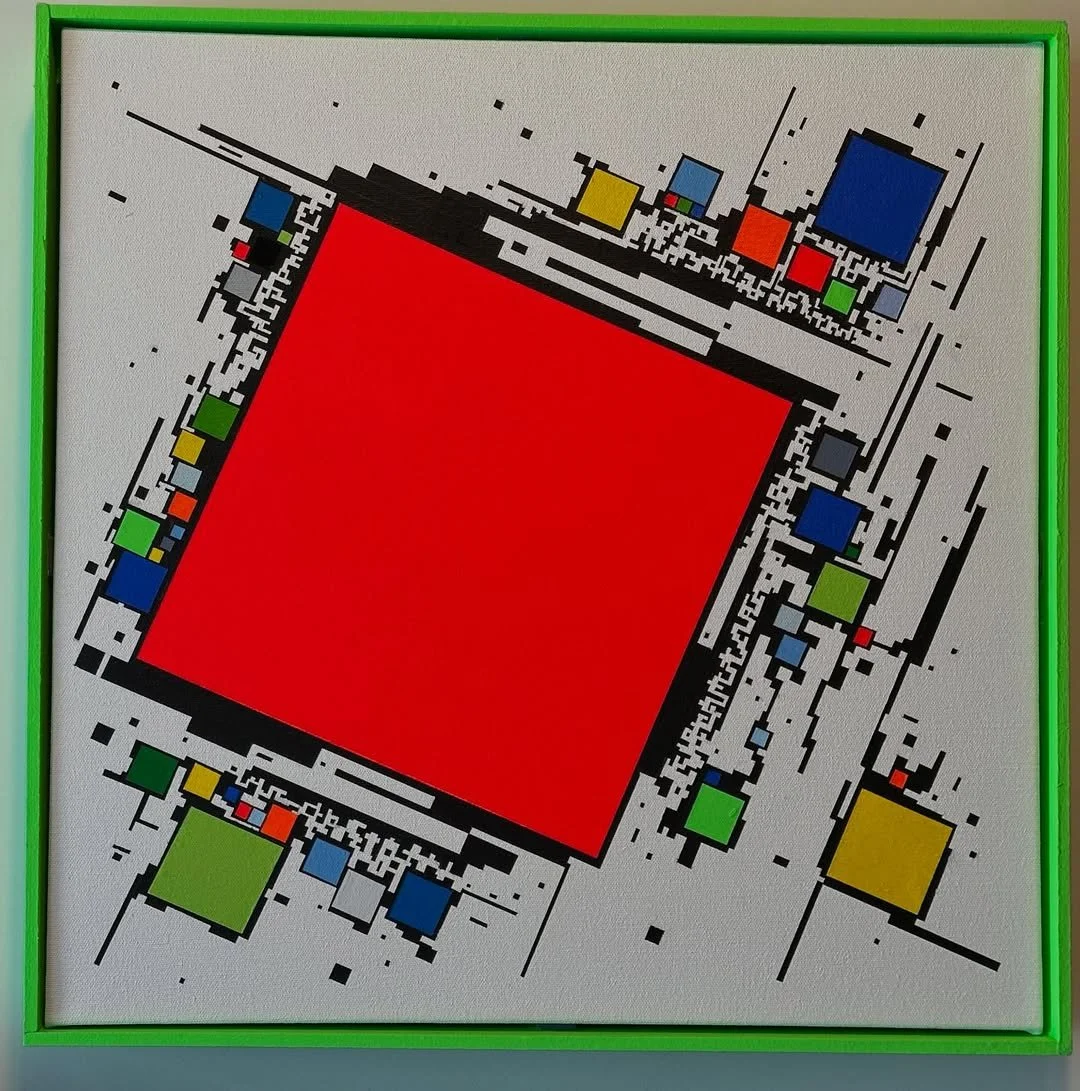
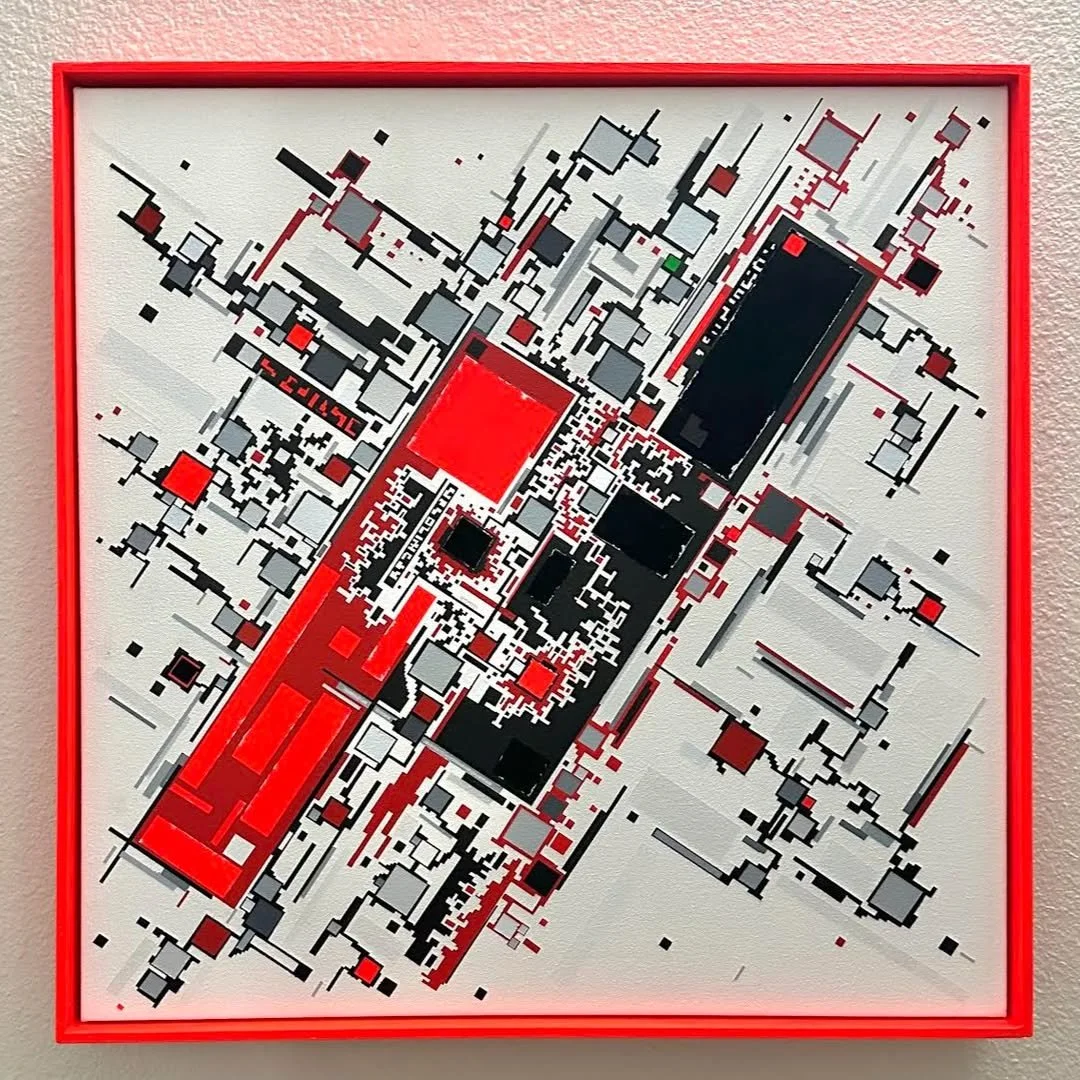
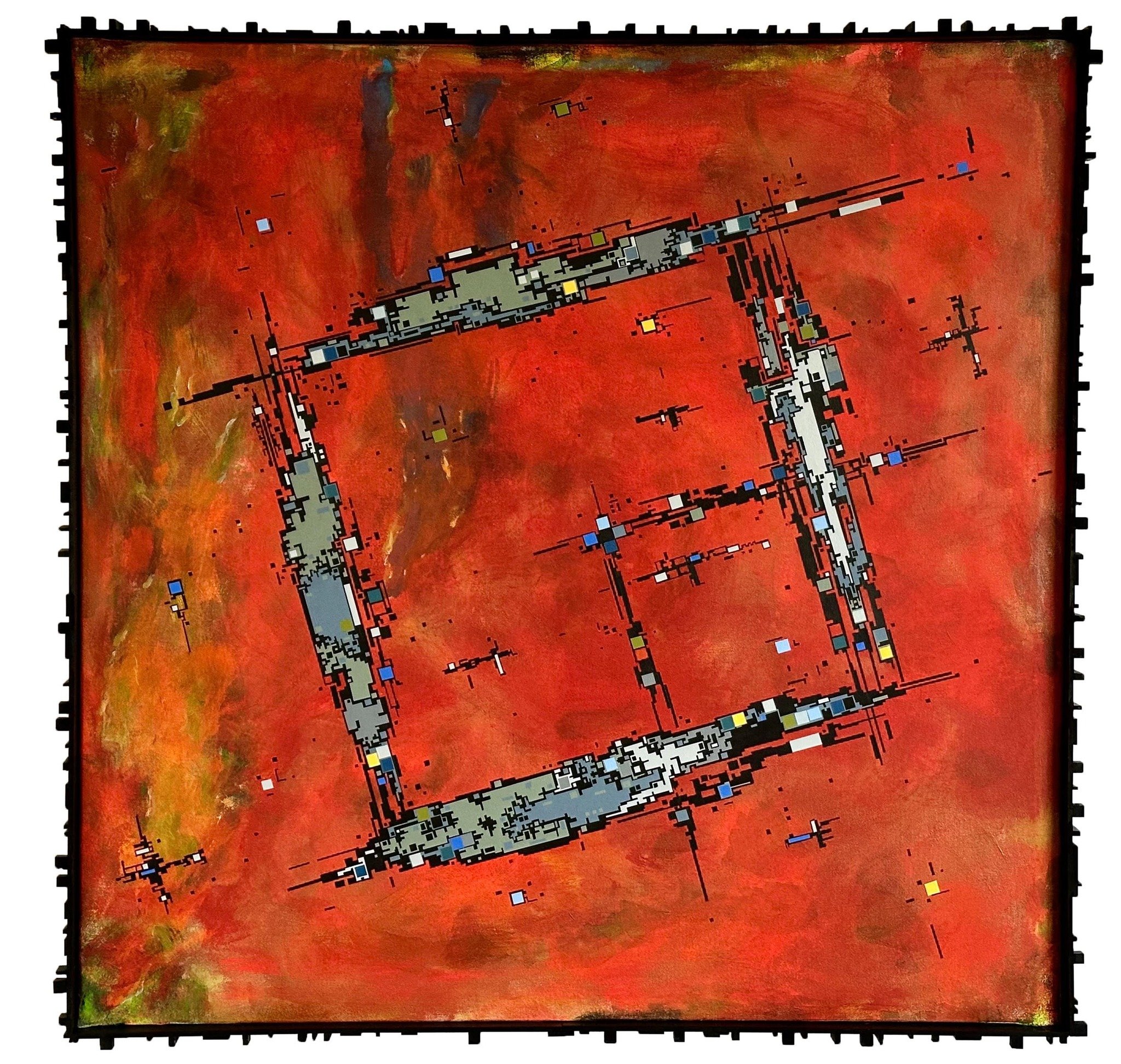
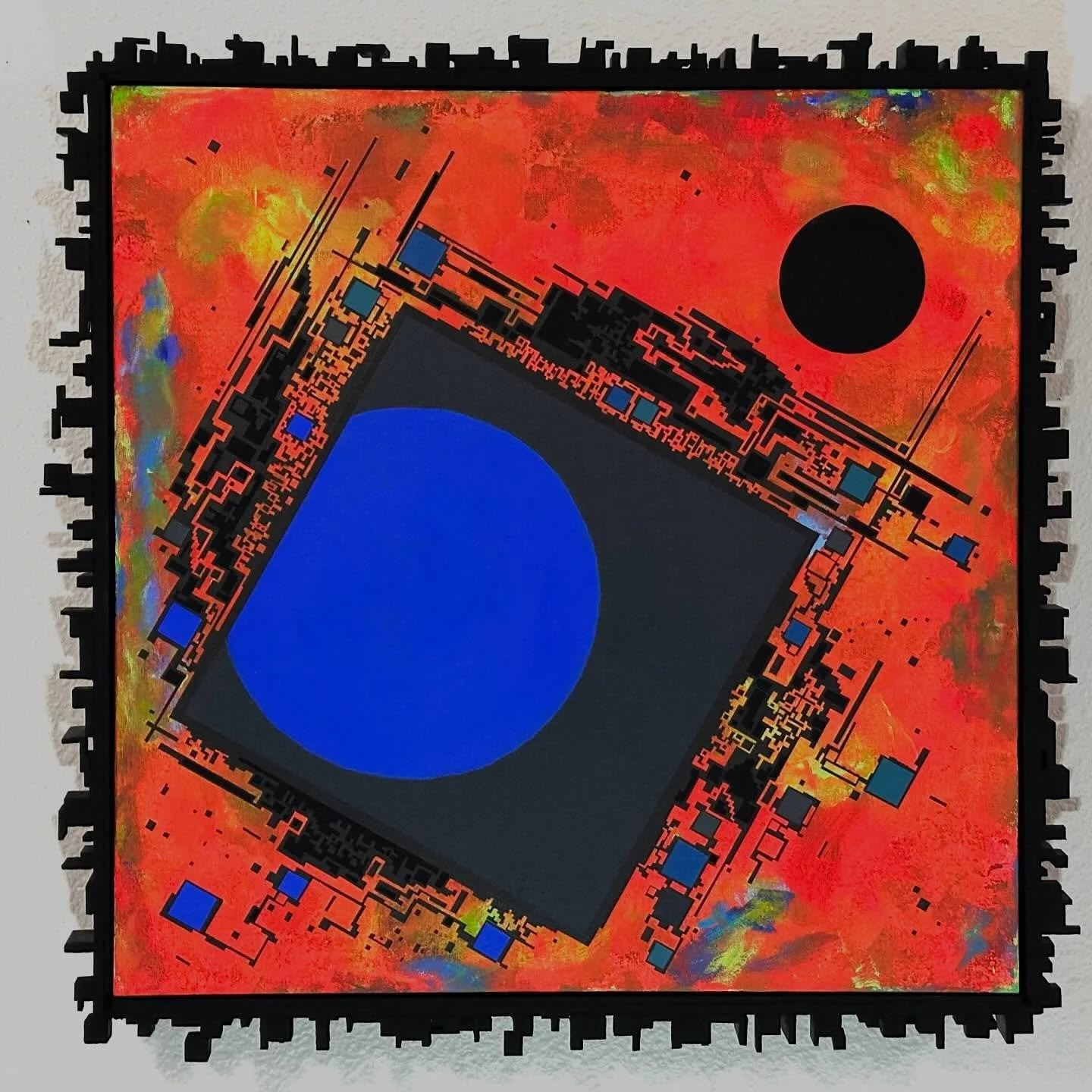
Clarence Edward Doskocil, Jr. is a contemporary American artist, known for Non-Objective Geometric Abstraction paintings and sculpture. Influenced primarily by the Russian/Soviet avant-garde with influences of De Stijl and Bauhaus movements, his primary materials are oil, acrylic, canvas, and other mixed media. He describes his works as conveying “Emotion and Movement through Color, Shape, and Relationship.” Born in 1968 in Mansfield, Texas, United States, he was active in the U.S. Air Force and holds a Bachelor’s degree in both History and Classical Studies. With over fifty works completed and continuing further projects, he’s preparing for his first solo exhibition. He is also a writer, poet, and a self-described Liberal Arts junkie who lives in Austin, Texas.
What is your background and how did you start your journey in the art world?
“It started when I was six, we had a set of 1968 World Book Encyclopedias. I was obsessed with World War II, (Vol. WXYZ) and the Air Force and Army (Vol. A). I learned to cross-reference quickly, and within the A, there was a lengthy article on art. I found it interesting. My grade-school teachers would also teach us about art and we participated in her creation. Even then I could hear the Muses of Helicon gently whispering. My third-grade class had another set of Encyclopedias, not Britannica’s, nor World Books, maybe Collier’s or Americana. They were more up to date, maybe a year or so old. My teacher let me take one at a time home, with the promise I would return them. Of course, I devoured the World War I and II articles, Air Force, Army, and I wondered back into the art section. This had definitely more thorough and current detail of the history and world of art, which included these odd paintings of geometric shapes that somehow provoked and interested me. They turned out to be paintings by Malevich, El Lissitzky, and Moholy-Nagy, all black and white.
Around this time, my father took my family to the newly opened DFW Regional/International Airport with the futuristic trams that carried passengers all over. I told my parents that it sounded like Mr. Spock’s voice when the automated terminal informational status updated every few minutes. My father had business dealing with Braniff Airlines and the time and we wandered into a terminal and before our eyes there was the Flying Colors on the Braniff DC 8-62 by Alexander Calder. My oldest sister said it looked like someone had paint buckets and tossed them on the airline. I thought it was splendid!
A few years later, one of my favorite things to do was to go to the Mansfield Public Library to check out books about World War I and II, military things, and I once again wondered upon a comprehensive art book that included that strange geometric art that puzzled me a few years before. I’m about 70% sure the book was the now famous “The Russian Experiment in Art 1863 – 1922” by Camilla Gray, published in 1962. Russian? Aren’t they supposed to be the Bad Guys? I also remember I was intrigued by the art work on the opening credits of ‘Green Acres’ where there is a Mondrian/Van Doesburg-type painting in Ms. Gabor’s Manhattan apartment scenes, similar to those strange geometric shapes. That intuition turned out to be certainly true.
Fast forward to when I was a teenager in the 1980s and pretty much the entire visual platform had a large share of Day-Glo shapes of rectangles and triangles, geometric patterns in pastel too. These things registered in the back of my mind. I remember making a drawing of shattered glass for my art class in the tenth grade, taking inspiration from geometry and the strange layers of archaeology of connected unconscious and conscious thoughts that ‘shaped’ by design choices. I thought of those geometric shapes again, I asked my art teacher, Ms. Benyo what are consisted of this. ‘I think it’s called Constructivism,’ is what she said.
In 1987, I was stationed overseas in the United States Air Force about 40 miles North of London in the town of Shefford. I remember travelling on my own many times to London and on one occasion, I happened into a museum that featured, from what I remember, Russian Constructivism/Suprematism and/or the Soviet Book from the 1920s. I’m overseas in the late 1980s, under the guise of NATO on a Signals Intelligence Base and I’m getting interested in Russian/Soviet art. Aren’t they supposed to be the Bad Guys? There were those strange geometric shapes again! My base library had a comprehensive book on Modern Art 1860 – 1930. It is here where my foundation of love and fascination with Classic Modern begins. I purchased a similar book in 1989, and by 1995 I knew who Kandinsky, van Doesburg, and Malevich were. Greek Geometrical pottery from Archaic Attica, and the Theory of the Forms with its connection to geometry, as espoused by Plato, was conveyed by my pursuance of a Classical Studies Degree and added to my internal narrative.
By the year 2000, I was collecting as many modern art books and researched as much as I could. The Artist and the Camera and the Frantisek Kupka exhibitions at the Dallas Museum of Art sealed the deal. In 2004, in San Francisco, I decided to paint in the Classic Modern Style. Geometric Abstraction, Non-Objective, Suprematism, Constructivism, Russian Avant-Garde, Concrete Art, Post-Painterly Abstraction, and Hard Edge, the definitions, along with my personal interests, keep adding, consolidating, and expanding.”
What inspires you?
“The past, I’ve been an avid reader since I was a child. The Liberal Arts in general give inspiration. There is also the physically present, such as the competition for shadows when natural and artificial light duels. The Dionysian of Nature and the Apollonian of the man-made, though both have each other within; a very Empedoclean concept. Some have described by color choices and shapes as ‘un-natural.’ I argue that most geometric shapes appear in nature, There is a deeply rooted connection to this type of art, our civilizations founding to the very present day, a world of lines, angles, planes; the ubiquitous paradigm of human existence of this world, and the geometrical Platonic archetypes of the next, the Apollonian. Along with the human fascination of bright, irregular colors during sunset, cloud color and its multitude of formations, the garish, chromatic shades of flora and fauna of the deep sea, and the natural intricate pattern in woodworking and marble, the Dionysian spontaneity of nature.
Remember, there are no ‘artificial’ colors, just look at the luminescent creatures of the deep sea and the incomprehensible dance of colors from the birds of paradise in and near New Guinea. We must also be reminded that technically, there are no shapes in nature that are purely artificial, as witnessed with the Golden Ration, the Fibonacci Sequence, Widmanstätten structures, and the Platonic Solids such as the dodecahedron found in pomegranate seeds and viruses, the hexagon upon the southern pole of Saturn, and of bees, and the pentagon in flowers and okra. The three-banded Armadillo itself rolls up into a perfect sphere. Is this attraction to chaos and abstraction formed by the flashes of light and patterns of the outside world exposing itself to our neonatal journey in the womb, forming in our conscious and subconscious developing minds and our eventual exposure to these perceived dichotomies beyond birth that strive for a form of introspective reconciliation? The Apollonian and Dionysian tend to dance, separate, yet have each other within itself. It is a very Empedoclean concept. My latest works with its hyper-pixilation and their geometries have come under the influence of the 1960s computer artist Hiroshi Kawano. While the Muse speaks, Pallas demands that I create.”
What themes do you pursue? Is there an underlying message in your work?
“A lot of it has to do with my studies of the Liberal Arts, there are many mythological ideas, themes, and titles within my work. I’m a huge fan of Hesiod, the Ancient Greek poet. His stories of the Titanomachy and Gigantomachy are used as inspirations of my latest works. I also like to use Greek words, such as φαίνεσθαι (phaínesthai), to reveal oneself, to shine forth. I use this word in a title of a work that includes a tribute to Ilia Chashnik, a student of Malevich. If this seems a little too dreamy and pretentious, please realize I look upon these afore-mentioned individuals, such as Malevich, Suetin, Chashnik, Popova, El Lissitzky, Theo Van Doesburg, and many others as the true masters; my own works are pale shadows compared to these Titans. I’m just pursuing my own personal interests and enjoying the creative process of the journey and that others will enjoy a similar interest I hope to spark.”
How would you describe your work?
“Emotion and movement, through color, shape, and relationship.”
Which artists influence you most?
“Frantisek Kupka, The Symbolists, Gustav Moreau, Odilon Redon, Giorgio de Chirico, Malevich, El Lissitzky, Popova, Suetin, Theo Van Doesburg, Bridget Riley and Hiroshi Kawano. There are so many others too! My collection of art books is starting to get ridiculous. I consider myself a classic modern artist, known for Non-Objective Geometric Abstraction paintings and sculpture.”
What is your creative process like?
“A multitude of universes. I’m exposed to something new, and every mental picture, reference, quip, factoid, aphorism, dissertation, book, musical work, conversation piece, perplexity, experience tends to cross reference itself through pattern recognition with the self-actualized and material ‘present.’ New interpretations quickly form. Being a child of the late 1960s and 70s, teenager throughout most of the 80s, and young adult in the early 90s, I’ve seen the footnotes of the past become dominant narratives of the present. I’ve seen past edifices regulated back to footnotes, perplexing ruins. This never worried me because I realize the eternal recurrence of things, and cast-aside idols will emerge when their time comes once again. They might even shine with more splendor! Art is the dance upon Mount Helikon, it is the thirst to drink from the Hippocrene Spring. I also have inspiration from my dreams. I call it Oneiric Art. I have dreamed several times that I’m in a gallery and I see a work similar to mine. I become envious when I’m told in my dream that this is not my work. I usually wake up from the dream and try by approximation to sketch the work out and eventually recreate it. The question playfully arises. Is the work truly mine? Am I an Oneiric Art Thief?”
What is an artist’s role in society and how do you see that evolving?
“I’m not necessarily sure. Though I’ve been painting for over two decades, I’ve never really felt the gravity of the question until the last few years or so when I’ve decided to take all of this more seriously, to put myself out there to ‘test the bolts and hinges’ as Marinetti said. My first exposure within the gallery system opened up my eyes to this wider world, it seems the more I know and study the system that encompasses, in toto, I’m perplexed in the best way possible. the only knee-jerk answer I can give without totally boring the reader would be ‘Let the artist naturally do their own thing without interference, give them support and love, let the definitions, complexities, and nomenclature keep adding exponents to this complicated equation, and let’s have fun doing this!’”
Have you had any noteworthy exhibitions you'd like to share?
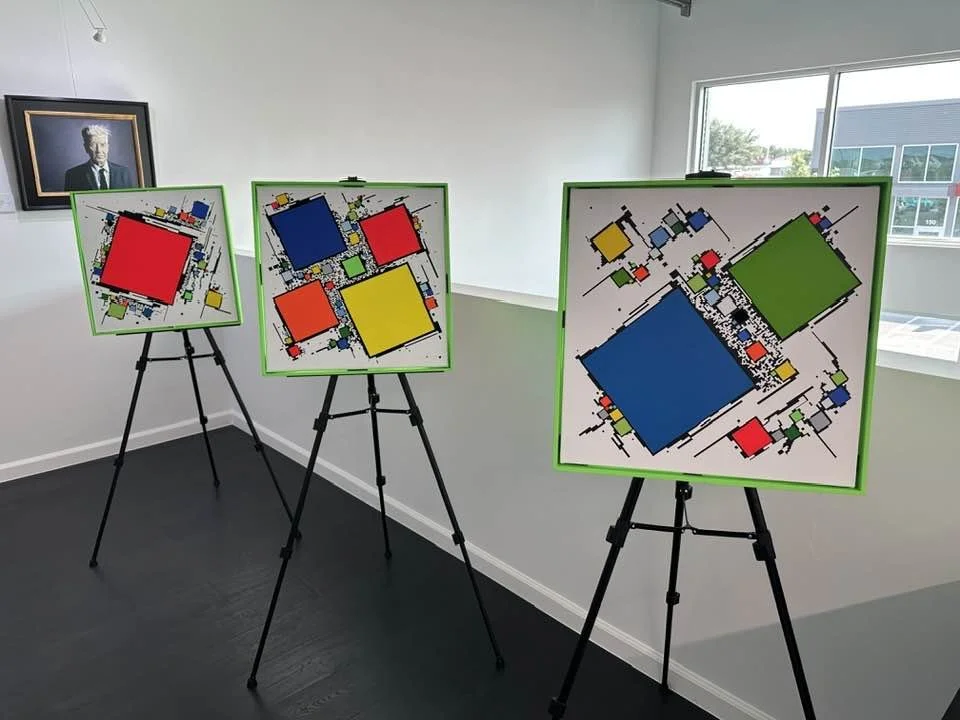
“My most recent exhibitions include: Grand Opening, Rachel Silva, RS Gallery, Pflugerville Texas in 2025. I was one of six participants and had five works submitted. I also participated in Meet the Artist, RS Gallery in 2025 where seven additional works were shown. And most recently, this year I had two digital prints shown at SXSW Monad Broadcast Dissonance.”
Instagram: @clarence.doskocil
Other links: www.youtube.com/@ClarenceDoskocil