Cindy Kudloo
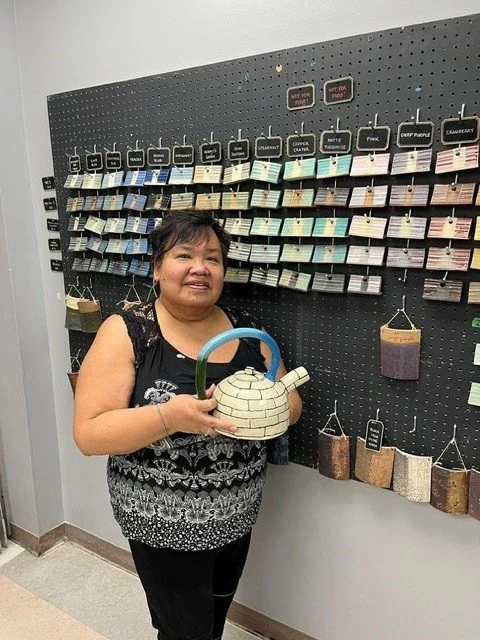
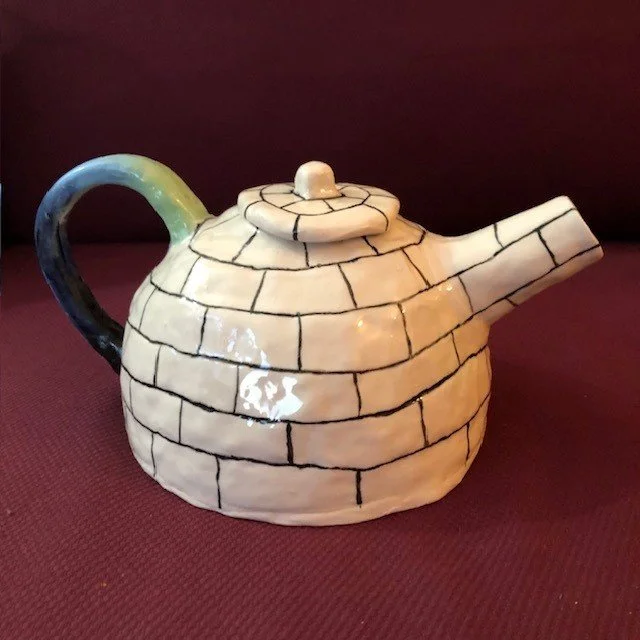
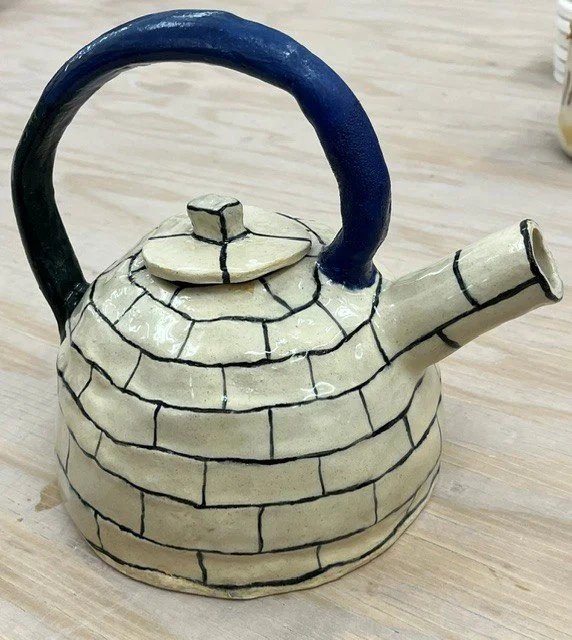
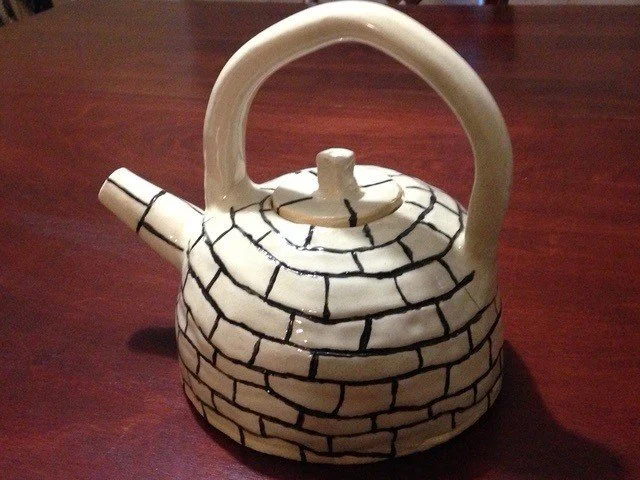
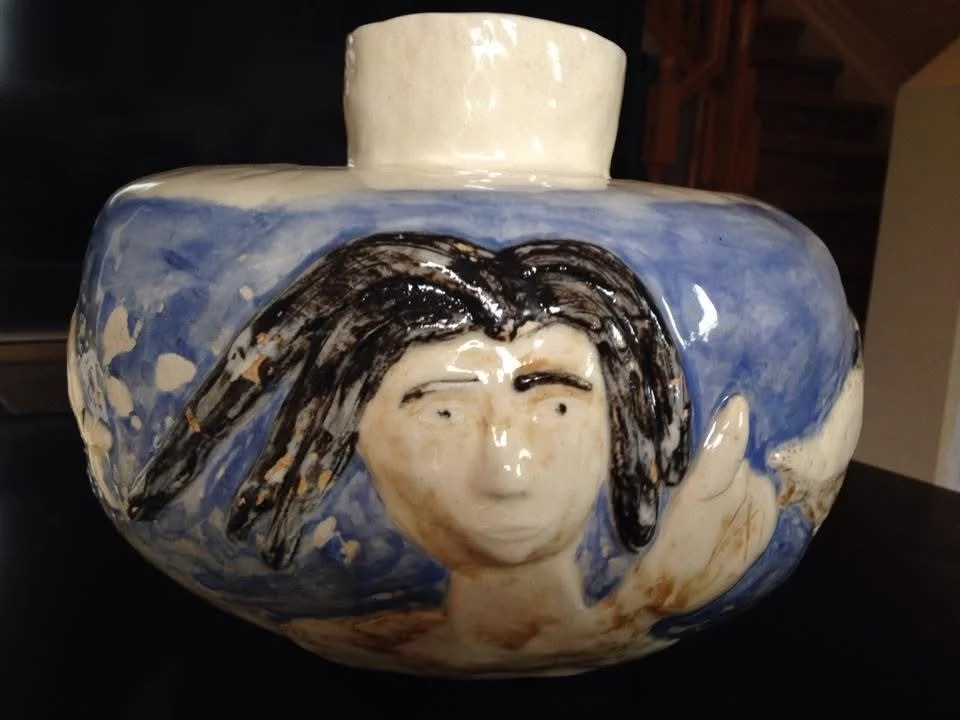
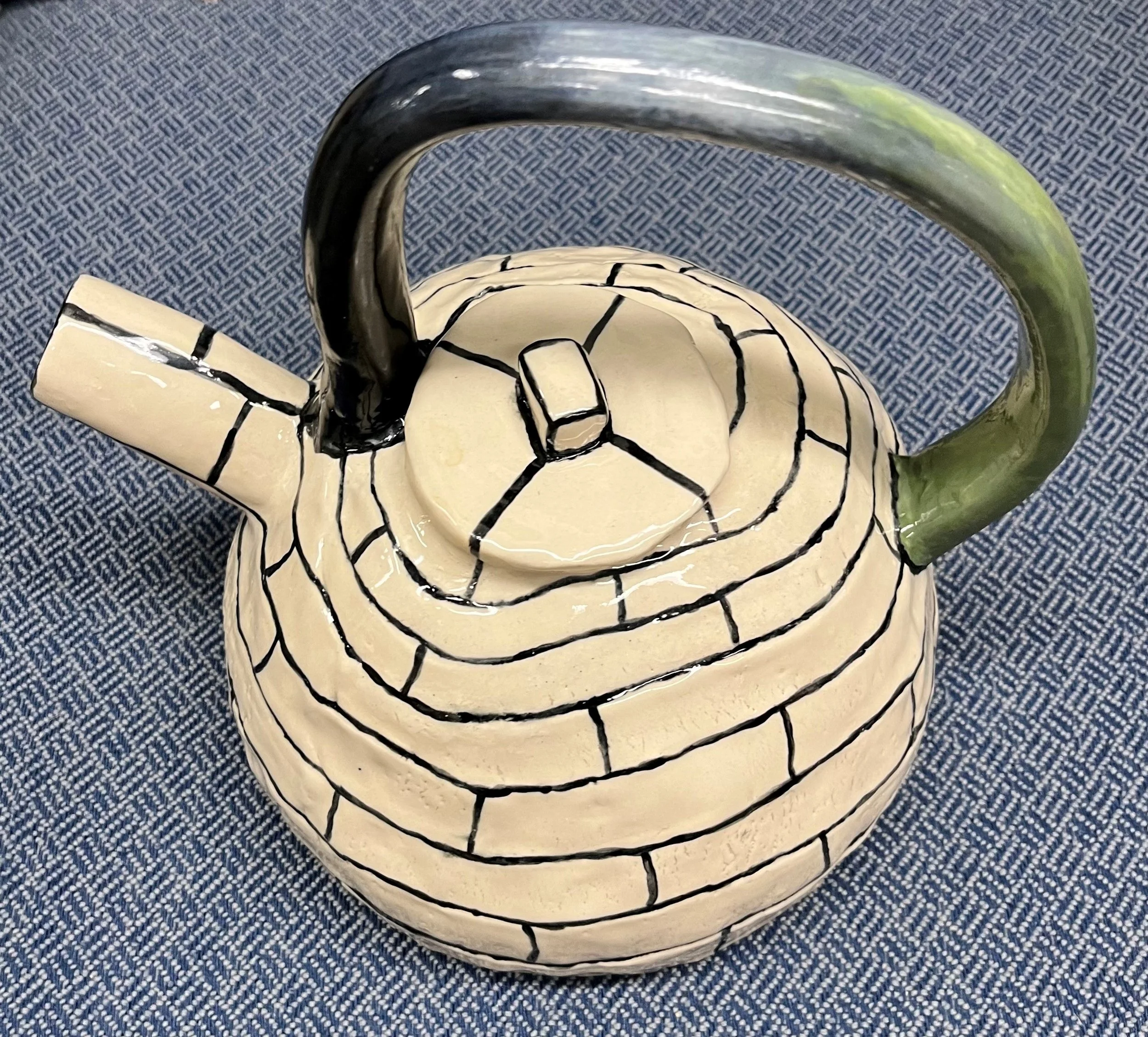
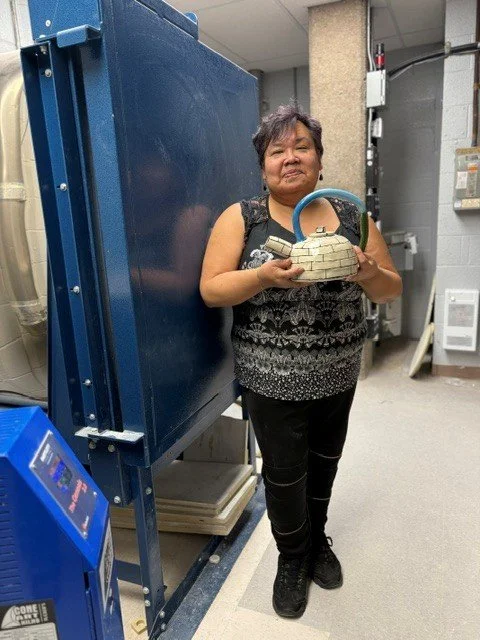
Cindy Kudloo is an Inuk ceramicist based in Ottawa working with porcelain to create functional yet decorative hand built ceramic iglu teapots. Cindy’s ceramic iglu teapots can really be used to steep tea inspired by her Inuit heritage. Cindy first learned how to make ceramics in Iqaluit when Nunavut Arctic College held pottery class. Cindy graduated from Ottawa School of Art’s Portfolio program majoring in ceramics and painting in 2014. Cindy has been making ceramic casserole dishes, mugs, and spoon rests with traditional Inuit tattoo designs. She now focuses on creating her iglu teapots and casserole dishes. Cindy won the Lillian Raport Memorial Fund for the Arts in the fall of 2014 for her ceramic vase of Sedna, sea goddess. She has yet to have her first art exhibit as she works full time in Ottawa.
What is your background and how did you start your journey in the art world?
“I am a Canadian Inuk (singular for Inuit) originally from Baker Lake, Nunavut, Canada. Art was one of my favourite classes when I was in school. My family has a background in visual arts. My great grandmother was a famous artist, Jessie Oonark, my grandmother would create prints, and one of my uncles used to carve Inuit figures depicting Inuit life out of soapstone. My passion is ceramics ever since I first took my first ceramics class in Iqaluit, Nunavut. This course taught me how to hand build and make ceramic pieces on the wheel. My interest in ceramics led me to my move to Ottawa to attend my art school, Ottawa School of Art. I first began painting when I attended art school and painting was one of my major subjects.”
What does your work aim to say? Does it comment on any current social or political issues?
“As an indigenous person, my work aims to depict how proud I am of my Inuit heritage. I wasn't always proud to be Inuk as I faced racism when I was away from home for school. My artwork depicts Inuit culture and does not really comment on current social or political Inuit issues at the moment. Now that I learned techniques in ceramics and painting, I can now focus on more political and controversial aspects of what contemporary Inuit face. Some of the pressing issues Canadian Inuit face include the high cost of living (housing shortages, food, heating fuel) because we have to ship everything up North from southern Canada.”
Do you plan your work in advance, or is it improvisation?
“My pottery is planned out in advance for the most part as I have more experience in ceramics than painting. Once in awhile, I have to change my ceramic piece to make it look more like a real iglu by adding more pieces or altering what I already created. My paintings are also planned in advance as I complete a drawing before starting my paintings. Since painting involves drawing with my brushes and color, sometimes I have to change my painting because I find painting more challenging as it is a two-dimensional depiction of my subject.”
Are there any art world trends you are following?
“Contemporary Inuit art has been evolving with the advent of digital Inuit art and the use of Artificial Intelligence. I found it interesting that other Inuit depict Inuit life and digitally create their piece from existing images. My uncle produces Inuit documentaries and movies. His latest movie included an amazing depiction of shamanism using Artificial Intelligence. There are several art sales that I participated in Ottawa to sell my artwork. I regularly attend Indigenous art markets and love to see what other Indigenous artists create using different media than I use. The internet is a great source of art ideas. Sometimes I come across artwork posted on Facebook and other art and craft websites like Pinterest and Etsy.”
What process, materials and techniques do you use to create your artwork?
“In order to hand build my ceramic iglu teapots, I use porcelain clay and make it almost like a real iglu. Use a roller to create the base and the ‘blocks’ of snow. The I cut out the round base of the iglu using a pin tool and then cut out lines of clay for the rows of snow. Score the outer edge of the base and the bottom of the line of snow with a fork or serrated edge, with a toothbrush, I add vinegar where I scored the clay to ‘glue’ the snow blocks onto the iglu base. Roll out as much clay as I need to create the snow blocks to create the dome and leaving a hole at the top to be able to pour water in when done. I make the lid and ensure it would cover the hole at the top. Create a snow block as the handle for the lid. I make a pulled handle for the teapot, using a long piece of clay and use water to pull the clay to make the shape of the handle. I roll out a small piece of clay to make the spout then score and use vinegar to attach the spout to the dome. When I complete making the teapot, I put on a layer of wax at the bottom of the iglu and lid, then both the iglu and lid so they don’t stick to the kiln shelf, then they are ready for the bisque fire. Once the teapot is taken out of the kiln, I wipe the whole teapot with a damp cloth to ensure there is no dust. I feel for any rough areas where it may cause scratches or cuts then use a sponge to smooth out the area. To make the piece look more like an iglu, I use black underglaze with a small brush to paint in the outline the blocks of snow. Multiple colours of underglaze are painted onto the handle for it to resemble the northern lights. A single layer of clear glaze is used to cover the piece to lock in the underglaze. It’s ready for the glaze fire, and hope for the best!”
What does your art mean to you?
“My art became therapeutic for me. I enjoy creating pieces that others like and are interested in. It means a lot to me when people are intrigued about my heritage when looking at my ceramic pieces. Growing up with an artistic family on both sides of my family created a pathway for me to take my own take of Inuit art using non-conventional art medium like ceramics. Most Inuit art in the past took the form of carvings and prints. I call the studio my ‘happy place’ and enjoy creating with other artists who enjoy creating pieces in the same medium I do. Ceramics comes more naturally to me than painting. I only first started painting when I started attending the Ottawa School of Art. People who buy my ceramic pieces like to be able to use it, a piece of functional art. People like to be able to use a teapot, casserole dish, spoon rest, or mugs that are unique and culturally relevant.”
What’s your favourite artwork and why?
“My favourite artwork is Michelangelo’s David in Florence. I went on a walking art tour to Italy one year and had the chance to see this sculpture for myself. Seeing the David was the highlight of my art tour. He was able to create this sculpture when other artists could not for decades. Where others saw failure, he saw this piece of marble as potential. His accuracy in this monumental sculpture is impressive, and he was even able to depict David’s tension before his battle with Goliath. My favourite piece of Inuit Art has to be the Enchanted Owl by Inuit artist Kanojuak Ashevak from Cape Dorset. This print created in 1960 depicts a two-toned owl with feathers that burst out like the sun’s rays. Canada Post created a stamp of this image in 1970 to commemorate the centennial of the Northwest Territories.”
Have you had any noteworthy exhibitions you'd like to share?
“I work full time so I have not had any exhibitions to date. I am still in the stage of showcasing my art and trying to widen my reach.”
Instagram: @Kudloos_Kreations