César Morant Varó
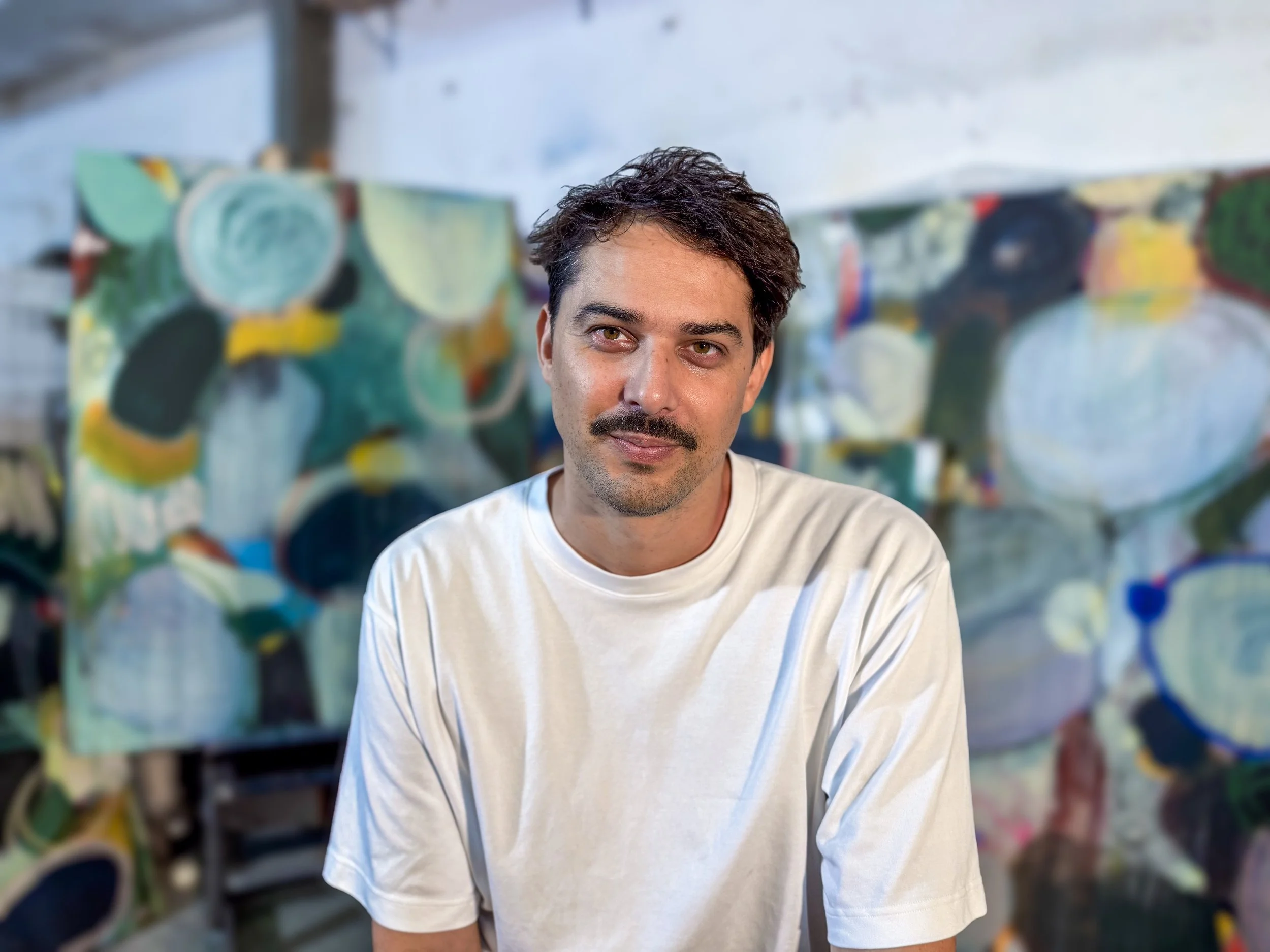
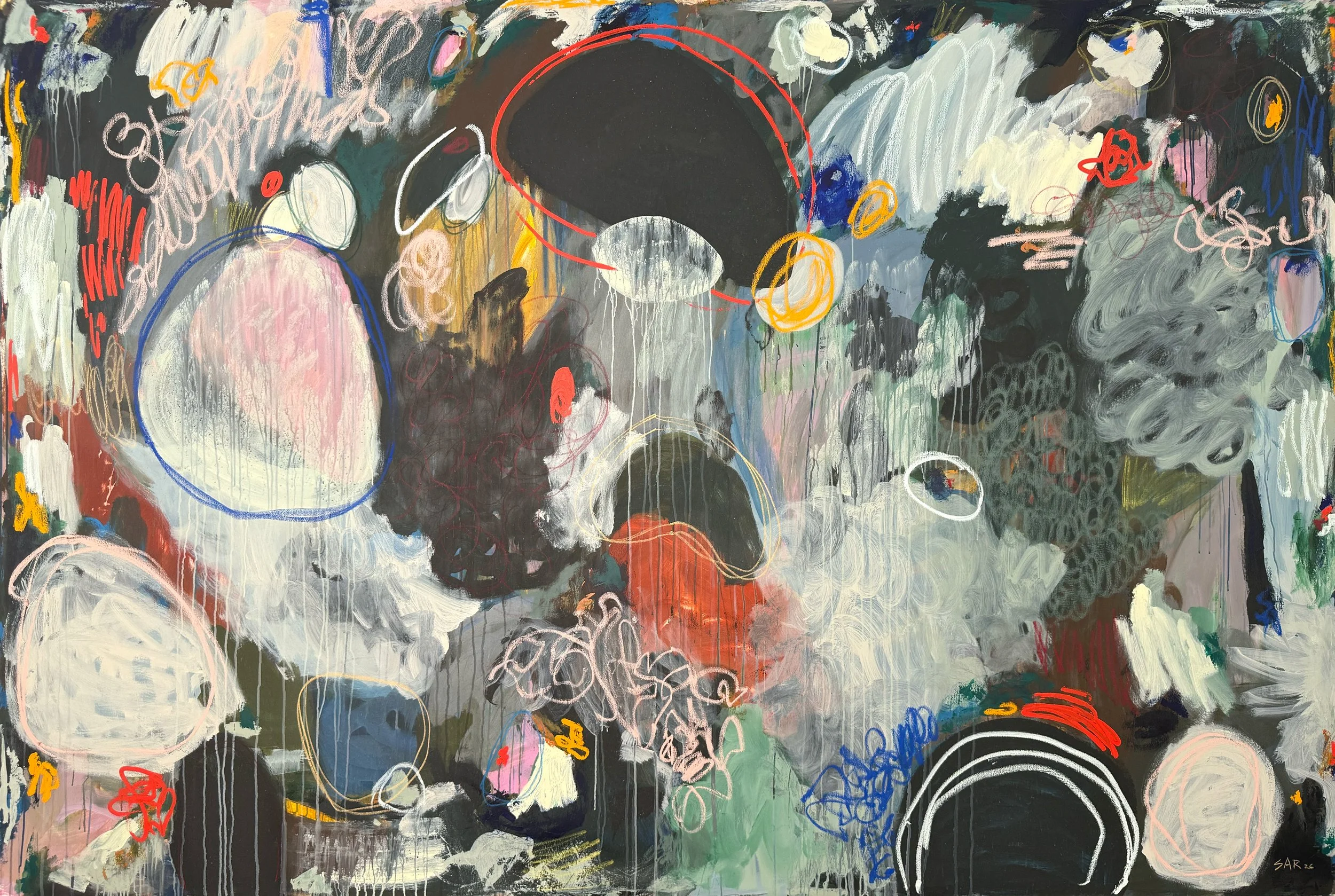
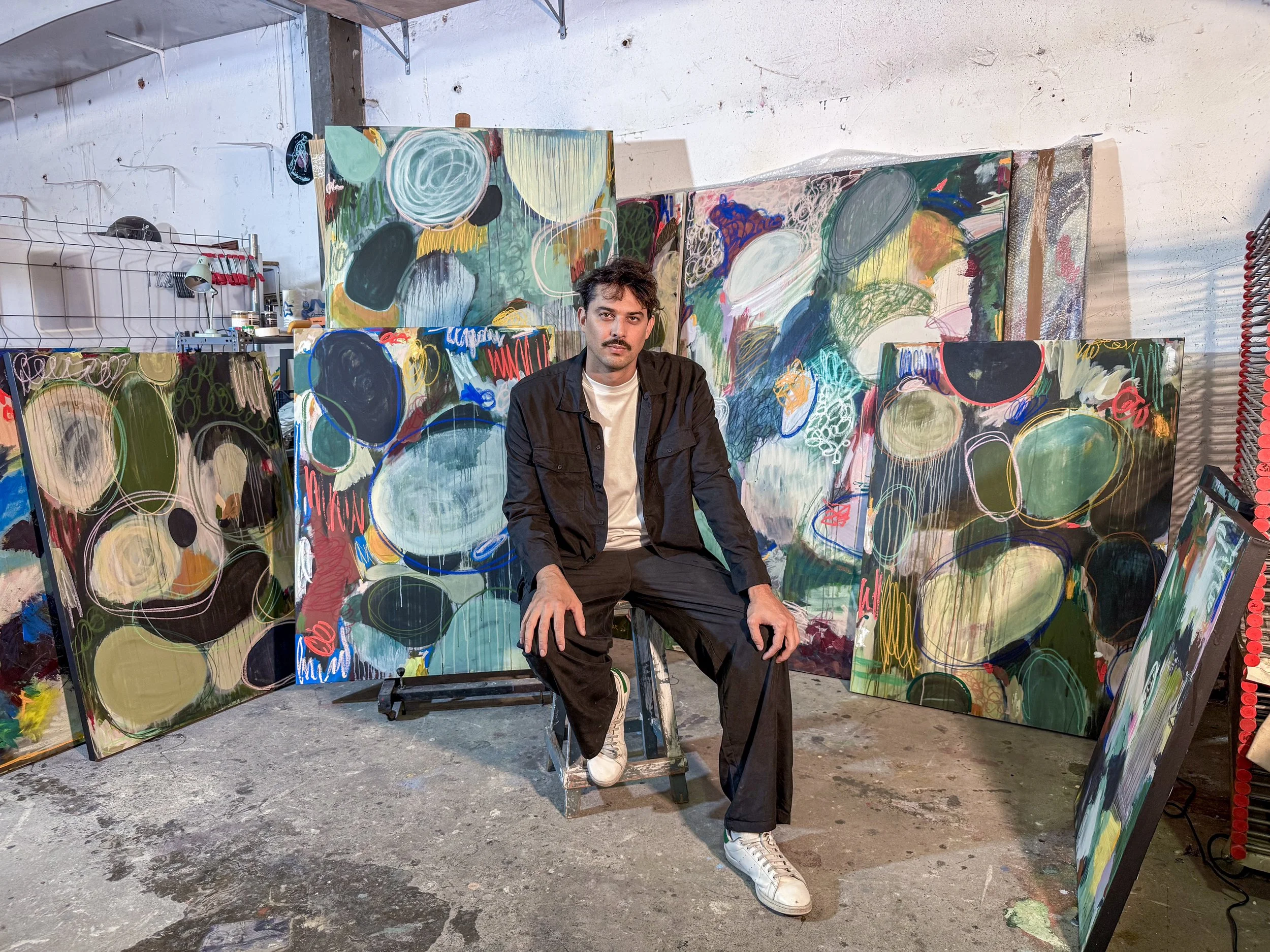
César Morant Varó (SAR) is a contemporary artist born in Almería in 1984 and based in Barcelona. With a background in Industrial Design, Product Design and Design Engineering, Morant spent more than fifteen years working internationally in design and creative direction between London and Barcelona before publicly developing his painting practice in 2024. His abstract paintings explore gesture, colour, material and transformation through an accumulative process of painting, covering, erasing and reconstructing. Working primarily with acrylic, oil and pastel on canvas, often at large scale, his practice considers painting as a dialogue between artist and artwork in which each intervention generates the conditions for the next. His recent body of work, UNMAKE, explores the idea that creation and destruction are not opposing forces but interconnected parts of the same process. In 2026, his work has been presented at NauART, BNEW Experience at DFactory Barcelona, and Abartium Galeria & Estudi. He has also begun working with Galería Alba Cabrera in Valencia.
What is your background and how did you start your journey in the art world?
“My background is in design. I studied Industrial Design, followed by postgraduate studies in Product Design and Design Engineering, and I have spent more than fifteen years working internationally as a designer and creative director, mainly between London and Barcelona. Throughout that time, I worked across many different disciplines — graphic design, product design, interiors, experiential design and installations — and collaborated with brands such as Audi, Apple, Meta, MAC Cosmetics and Paul&Shark. Experiential design was a particularly creative part of that journey for me. I loved working with space and creating temporary environments and installations where design, architecture and the user all become part of the same experience. Because these projects are often ephemeral, there is also a certain freedom to experiment, take risks and create things that can be unexpected or even a little crazy, with the ultimate purpose of creating a connection with the person experiencing them. Looking back, I can see a relationship between that work and my painting today. Scale, space and the relationship between the work and the viewer have always interested me. The medium has changed, but that desire to create something that people experience rather than simply look at has remained. Painting, however, gave me something completely different. There was no client, no brief and no functional problem to solve. It became a space where I could make decisions for completely different reasons. For years, that side of my practice remained private. In 2024, I made the decision to take painting seriously as an independent practice and began working much more intensely, particularly at larger scales. Since then, what initially felt like a very personal space has gradually become the center of my creative life. In a way, I don't feel that I suddenly became an artist in 2024. It feels more like twenty years of visual and creative experience eventually found another language.”
What inspires you?
“Inspiration for me often comes from very small things in everyday life. It can be a colour combination, a surface, a building, a material, a fragment of an image or simply something I notice while walking down the street. My three-year-old daughter is also a huge source of inspiration. Watching the way she sees the world is fascinating because she doesn't yet have the limits we gradually impose on creativity as adults. For her, things don't necessarily have to make sense or follow established rules. She can make connections that I would never make, and that freedom is something I find incredibly inspiring. I am also still very connected to design. Almost everything around us has already been created in some form, yet we continue finding ways to make things different or better. Sometimes the change is enormous, but very often it comes from something small: a new material, a different process, a new function, or simply combining existing elements in a way nobody had considered before. I think I approach painting in a similar way. I'm fascinated by what can happen through small changes — a different colour, another layer, covering part of a form or placing something unexpected next to it. One apparently small decision can completely change everything around it.”
What themes do you pursue? Is there an underlying message in your work?
“More than a specific theme or message, I think what I pursue is connection. Initially, that connection is between me and the painting. I increasingly think of the process as getting to know each other. I make an intervention, the painting gives something back to me, and I respond. Sometimes we understand each other immediately; sometimes we don't. That relationship develops through adding, removing, covering, scratching and rebuilding until eventually we reach a point where the conversation feels complete. But once the painting leaves the studio, that relationship is no longer mine alone. What interests me then is the connection it creates with other people. One of the things I find most beautiful about abstraction is that I don't need to tell the viewer what they are supposed to see or feel. Someone might see something organic — the seabed, cells, geological formations or other structures found in nature — while another person sees none of those things but experiences an emotion: happiness, sadness, excitement, calm or even discomfort. I also want that connection to change with time and distance. From across a room, you can have an immediate reading of one of my paintings — its colour, scale and overall composition. But when you move closer and begin looking at the details, you discover layers, marks, transparencies, interruptions and traces of what existed before. You can keep going deeper into the painting. For me, that's when the connection with the artwork becomes stronger. You are no longer simply looking at it; you are discovering it.”
How would you describe your work?
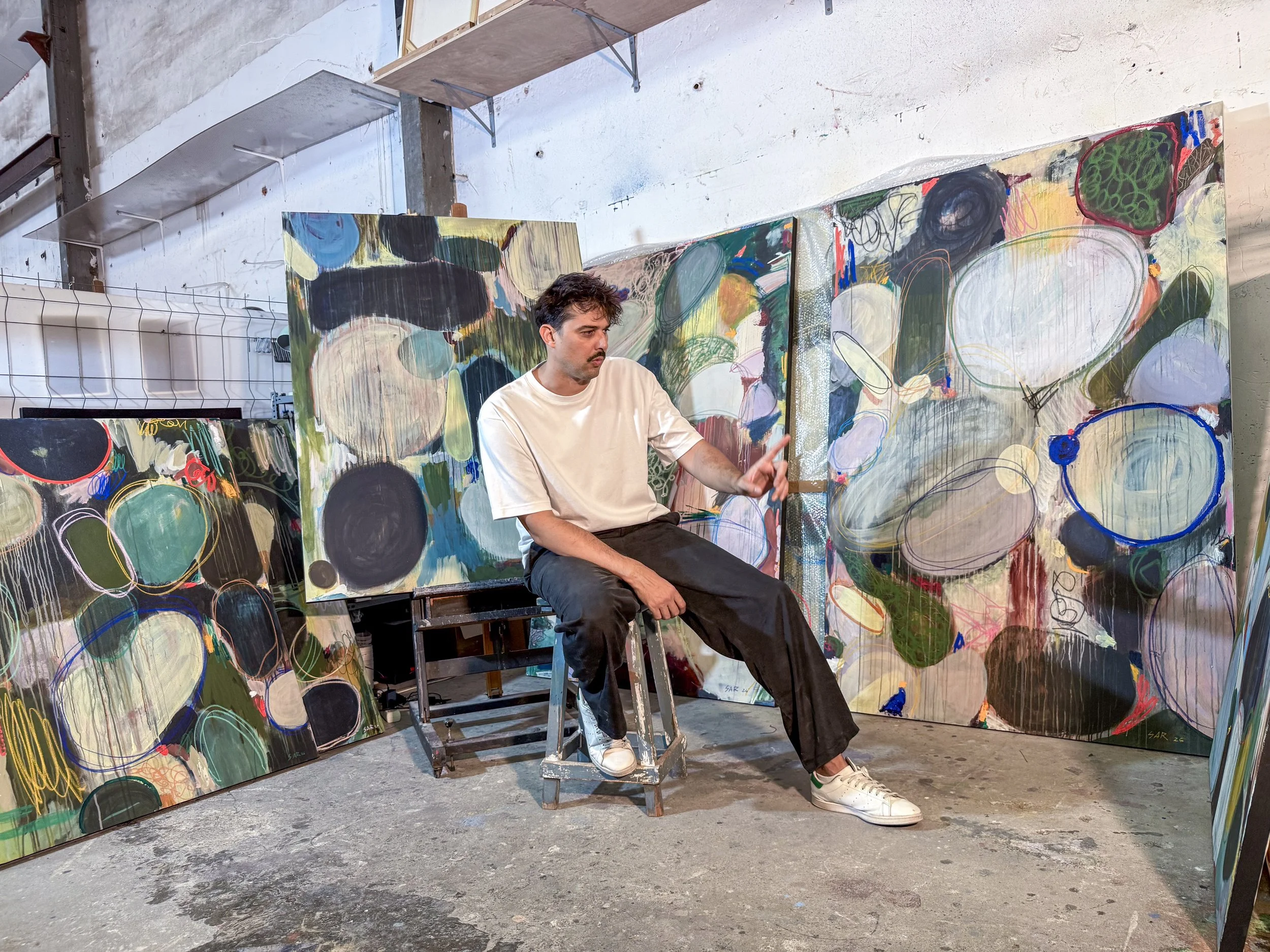
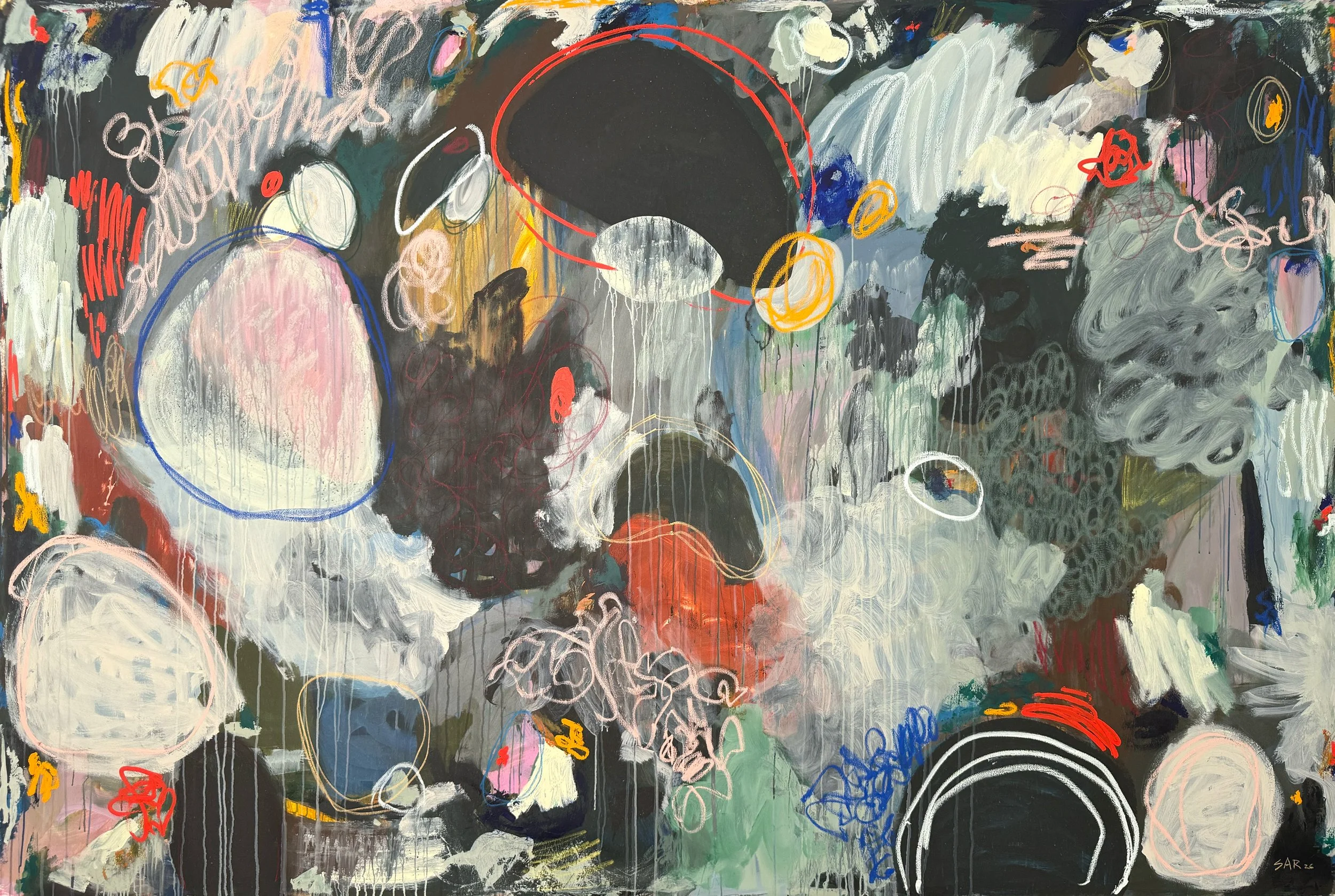
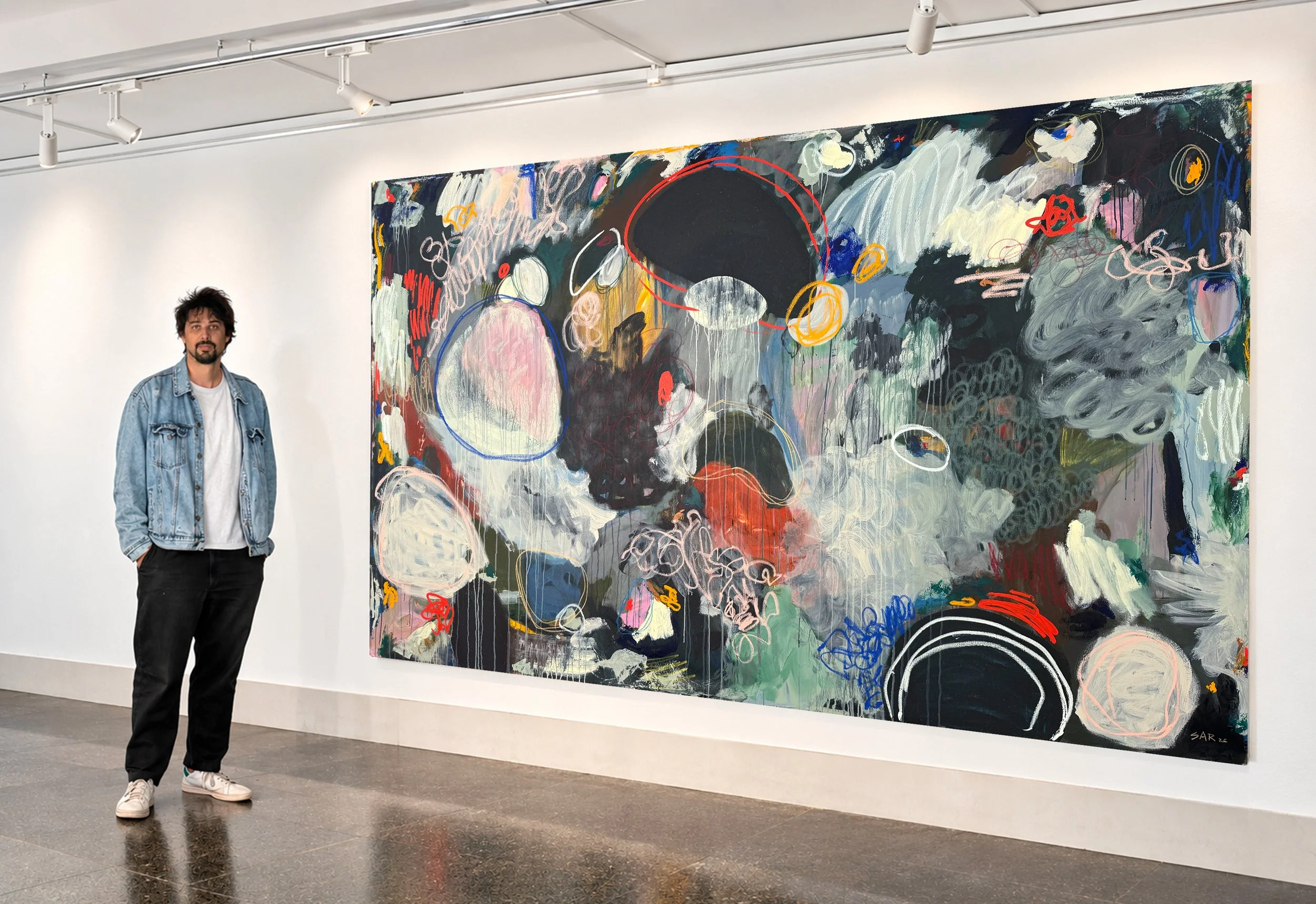
“I make contemporary abstract paintings, predominantly in large formats, using acrylic, oil and pastel on canvas. My paintings are constructed through many layers of paint. Very little exists completely independently; colours sit over other colours, forms cover previous forms, and traces of earlier decisions remain underneath the surface. Colour is extremely important to me, but particularly the relationship between colours. I am interested in what happens when they overlap, when one colour remains partially visible beneath another, or when two unexpected colours begin to affect the way we perceive them. The same happens with form. I often introduce new forms that interrupt or break existing ones. Something that initially felt complete can be divided, covered or transformed, and that intervention creates completely new shapes and relationships. So although the final painting may appear spontaneous, underneath it there can be many previous versions of the same work. I particularly enjoy working at large scale because it makes all of this physical. From a distance, you experience the composition as a whole; as you approach, the painting begins to reveal its construction, its imperfections and its history.”
Which artists influence you most?
“There are many artists I admire, but Mark Rothko is probably the one I have a particular weakness for. When I lived in London, I visited Tate Modern many times, and I have also spent a lot of time with his work at MoMA in New York. These are museums filled with extraordinary and incredibly renowned artists, but whenever I visit, Rothko is one of the artists I deliberately make time for. What fascinates me is how something that can initially appear so simple can actually be so complex.
At first you see large areas of colour and apparently very simple compositions, but when you stay with the painting, everything begins to change. You start seeing layers, edges, transparencies and subtle variations in colour. There is an incredible depth and emotional intensity behind that apparent simplicity. I think that idea — that a painting can reveal more the longer you spend with it — has stayed with me enormously. Claude Monet is another very important reference for me. I had always loved his work, but there was one experience that completely changed the way I understood it. I was fortunate enough to visit the Chichu Art Museum on Naoshima Island in Japan, designed by Tadao Ando, and experience Monet's Water Lilies there. I already admired Monet before that visit, but seeing those paintings in that space was something completely different. The scale of the works, the natural light, the architecture and the way you physically enter the space created an experience that went far beyond simply looking at a painting. That was when I really understood the magnificence of his work and completely fell in love with it. It reinforced something that is very important to me today: the experience of an artwork is not only about the work itself, but also about the space around it and the relationship the viewer creates with it. I have a similar personal connection with Jackson Pollock. I have spent time with his work at Tate Modern and MoMA, and he is another artist I will always stop for.
What attracts me is obviously the physicality of the process — that almost trance-like relationship between the artist, the body and the painting — but also something that can be easy to miss when you first encounter the apparent chaos of the work: its balance. There is an extraordinary sense of composition, rhythm and colour underneath all that energy. Then there is Aryz, a much more contemporary reference and one that I discovered in a very different way. I first really connected with his work during Barcelona Gallery Weekend 2025, when I visited his exhibition PRELUDIO at Galeria SENDA. I knew very little about him before walking into the gallery, and it was one of those unexpected encounters where you immediately connect with the work. I was fascinated by his use of colour and scale, but also by the way his practice moves naturally between the gallery and the street. I love the way he reinterprets imagery from sources such as anatomy and classical painting, taking something that already exists and transforming it completely through his own visual language. His work has also become part of my everyday experience of Barcelona. I regularly pass his mural on the façade of Sala Apolo, and even though I have seen it many times, I still find myself stopping to contemplate it. I love that a work of that scale can become part of the city and your daily life while still having the power to make you stop. That first encounter at SENDA stayed with me so much that afterwards I bought an artist's proof screen print of his work. It hangs in my home today and means a great deal to me. There is something special about living with the work of an artist you admire — your relationship with it continues to evolve over time.
These artists are very different from one another, and that's precisely what interests me. I don't think influence means trying to reproduce someone else's visual language. For me, it is about the way experiencing their work changes the way I think about my own. Rothko made me understand how something apparently simple can contain extraordinary complexity. Monet showed me how profoundly the space around an artwork can change the way we experience it. Pollock fascinates me because of the physical relationship between the artist and the painting, and the balance that can exist within apparent chaos. And Aryz reminds me that a strong artistic language can move between completely different scales and contexts — from a gallery, to the side of a building, to a work hanging in your home — and still create a connection. Ultimately, these are artists whose work makes me stop and spend time with it. I think that's probably the kind of connection I hope people can eventually have with my own work.”
What is your creative process like?
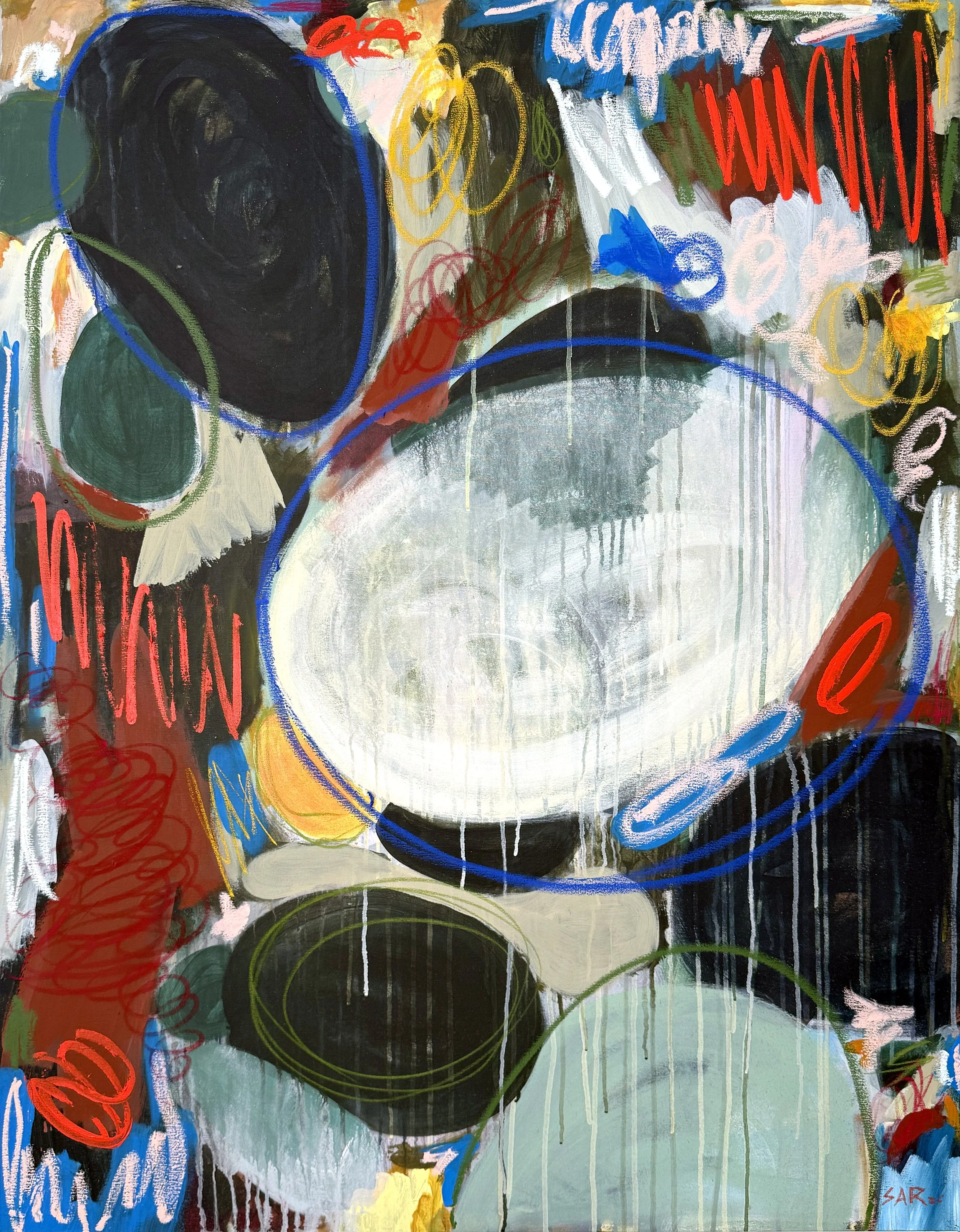
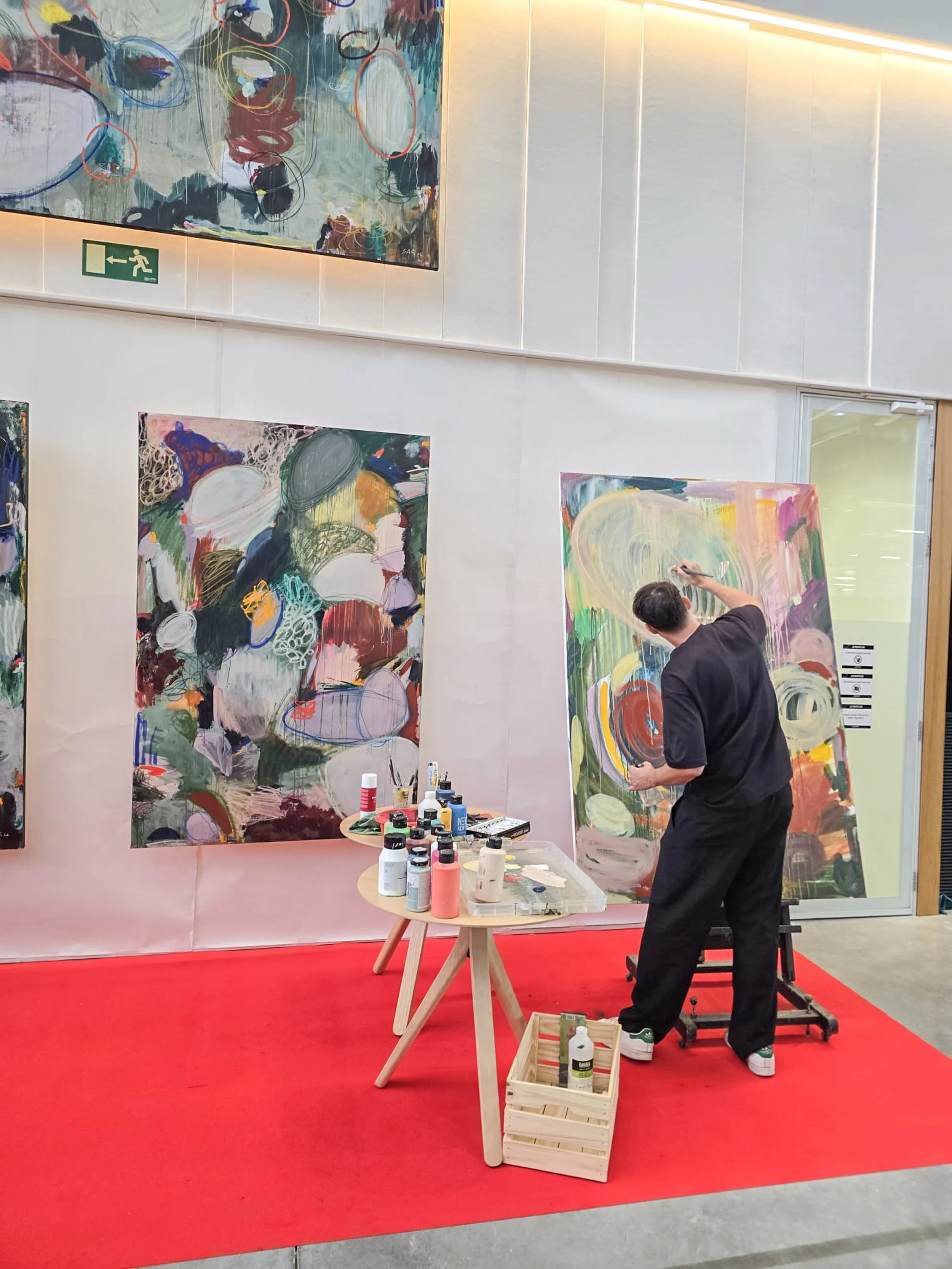
“For me, painting is a conversation. I normally begin by making an intervention on the canvas. From that point onwards, the process becomes a sequence of actions and responses. I work, step away, look, and try to understand what the painting is giving back to me. Then I respond. Sometimes the response is to add something. Other times it is to erase, cover, scratch or destroy something that has been there for days. There are moments when that conversation becomes very intense and a painting can change enormously within a few hours. At other times, we don't seem to understand each other at all, and the best decision is simply to stop. A painting might then remain untouched for days, weeks or even months before I see something in it that allows the conversation to continue. This is where the idea of UNMAKE, my new body of work, really comes from. I realised that destruction, correction and removal were not failures in the process — they were part of the process. Making and unmaking became inseparable. The interesting thing is that nothing is completely erased. Previous decisions remain underneath the surface as colour, texture, edges or traces. The painting gradually becomes a record of everything that has happened between us. Knowing when to stop is probably the hardest part. A painting is finished when our conversation is over and I feel it is ready to start a new one with someone else.”
What is an artist’s role in society and how do you see that evolving?
“I am slightly uncomfortable with the idea that an artist has one defined role in society. I think art becomes less interesting when we decide in advance what it is supposed to do. Some artists confront political or social issues directly. Others document their time, question systems, create beauty, provoke discomfort or simply make something that changes the way another person looks at the world for a moment. I think all of those positions can be valid. What interests me personally is that art creates a space where not everything has to be immediately useful or explained. We live in a culture that increasingly rewards speed, clarity and instant consumption. Art can do almost the opposite. A painting can ask you to spend time with something without giving you an immediate answer. As technology makes image-making faster and more accessible, I suspect the physical presence of an artwork — its scale, material, imperfections and evidence of the human hand — may become even more meaningful.”
Have you had any noteworthy exhibitions you'd like to share?
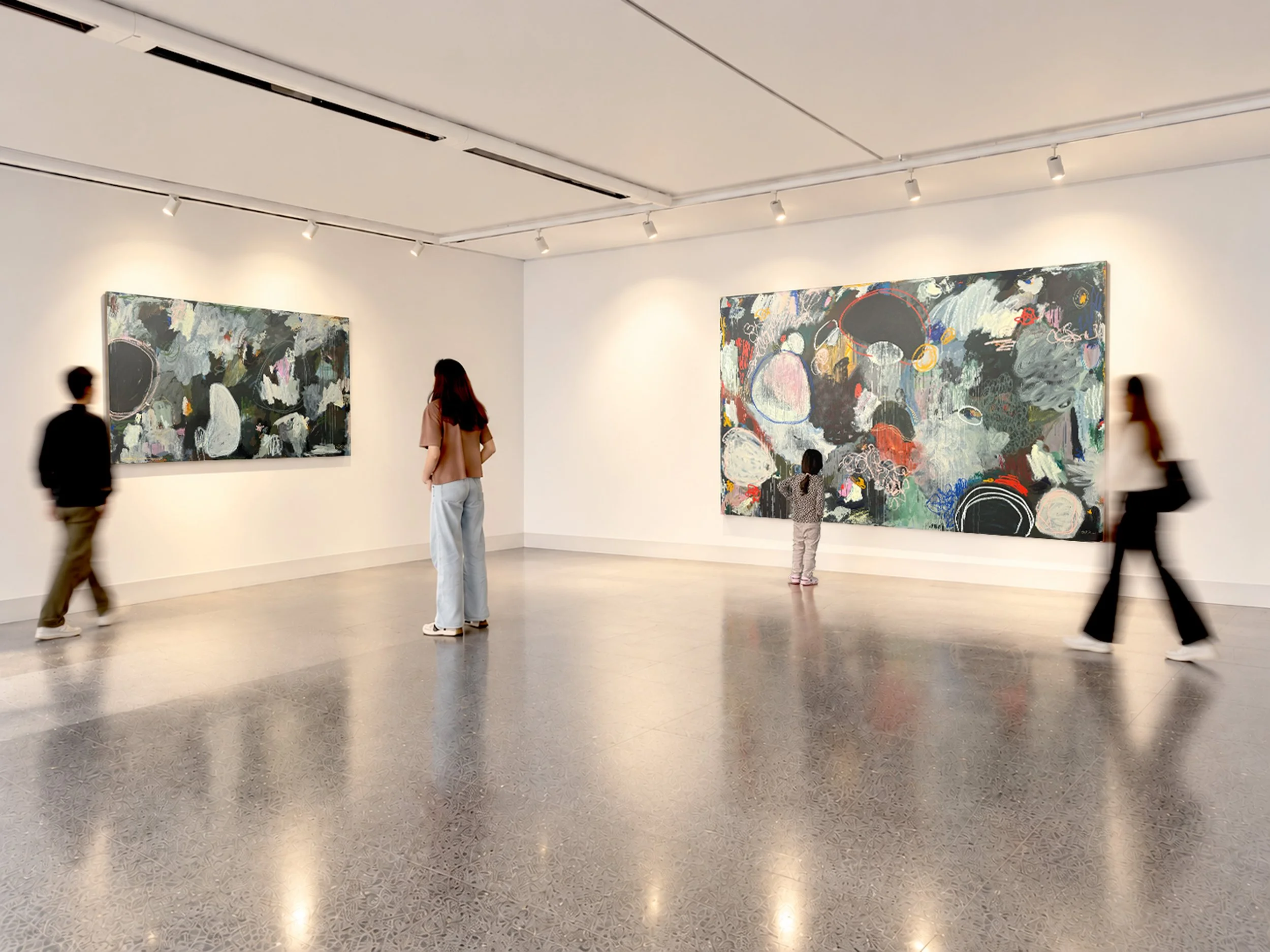
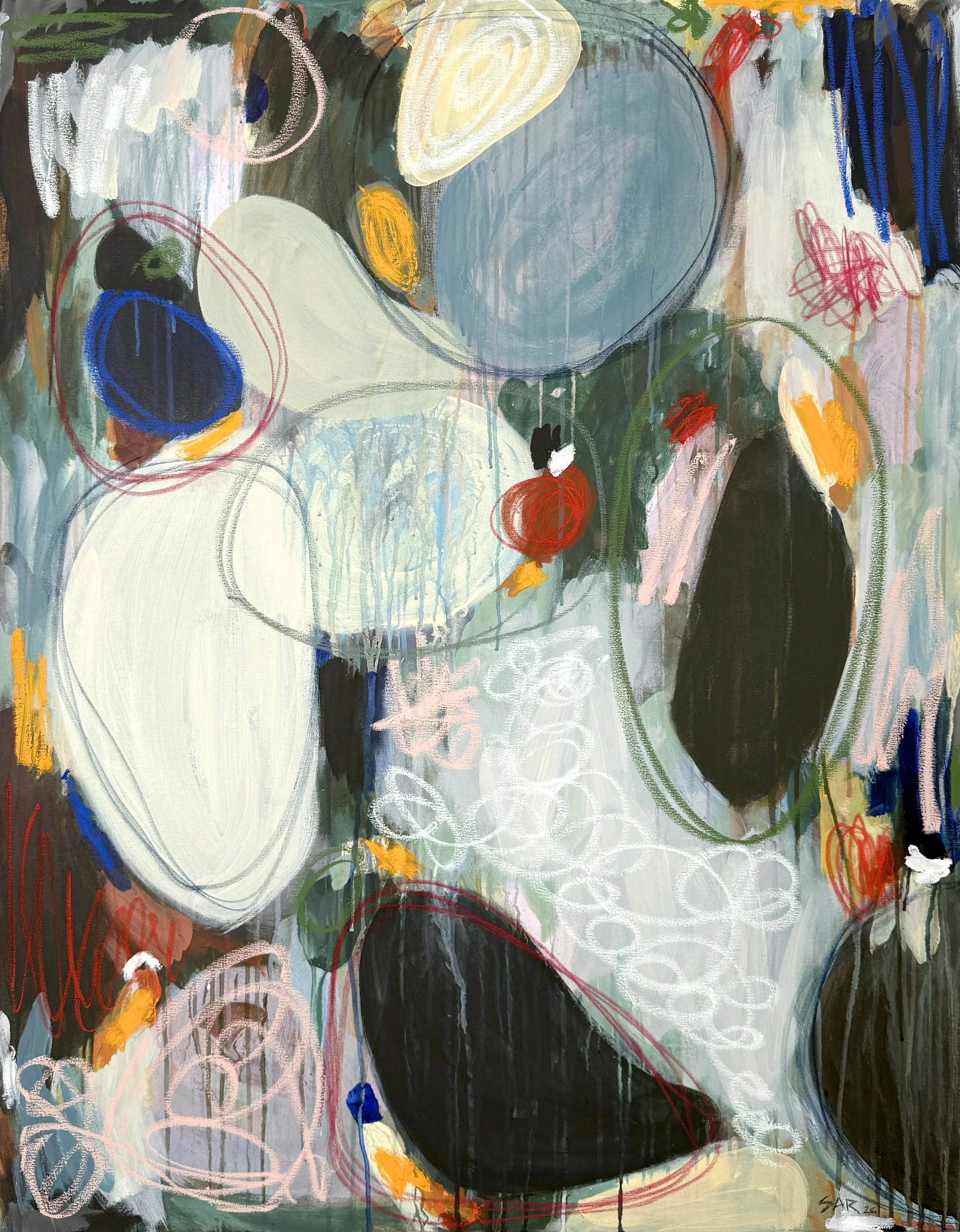
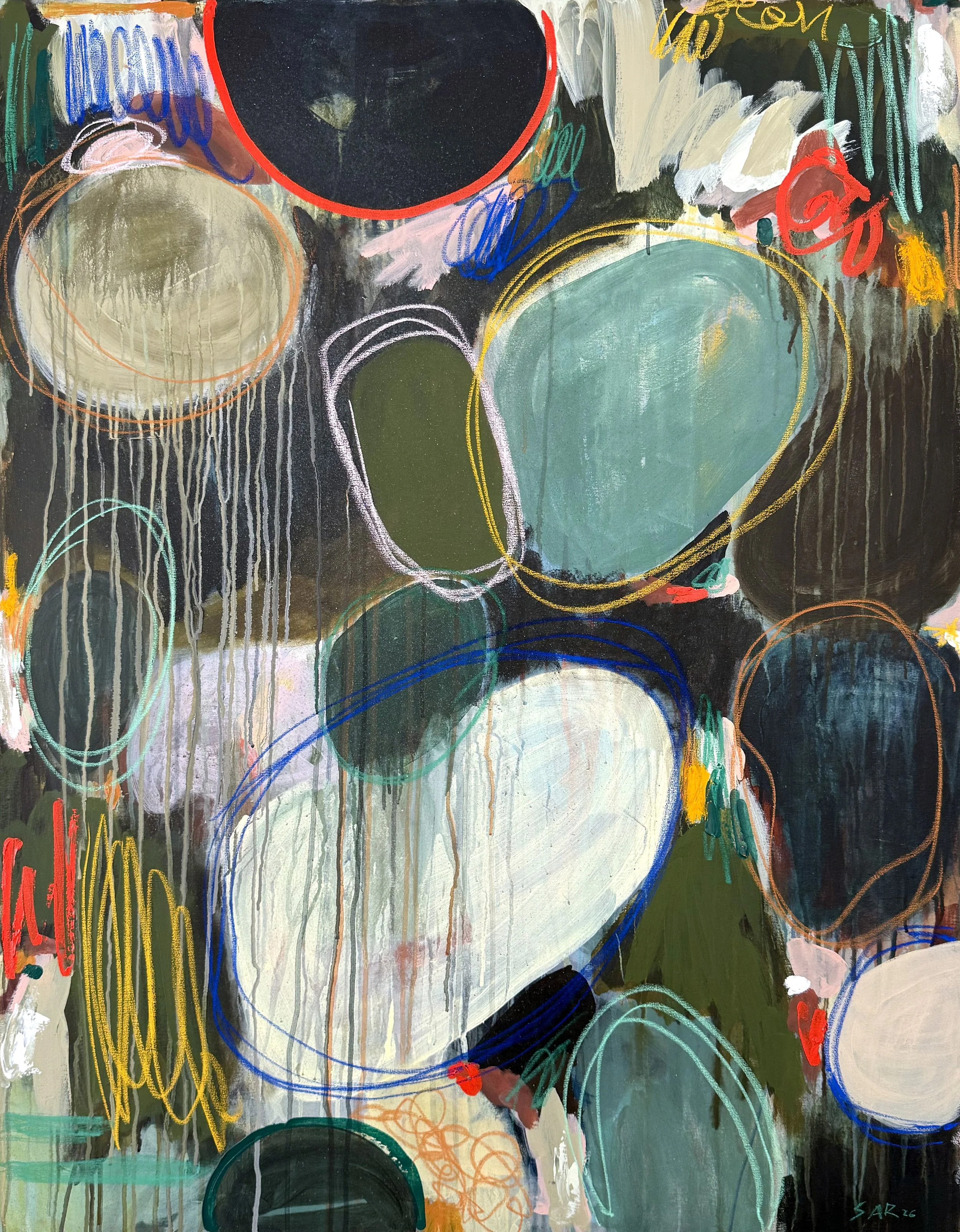
“2026 has been a particularly important year for me because it is the year my painting practice has really moved from the privacy of the studio into a public and professional context. I participated in Pasiones at NauART in Barcelona, followed by BNEW Experience 2026 at DFactory Barcelona, where I presented large-format work in a very architectural environment. More recently, I have been part of Collective Contemporary at Abartium Galeria & Estudi in Barcelona, exhibiting within a group that includes established contemporary artists such as Albert Ràfols-Casamada and Iñaki Ruiz de Eguino. Seeing my work presented in that context, in dialogue with artists from different generations and at very different stages in their careers, has been particularly meaningful to me.
But beyond the exhibitions themselves, one of the things I have found most rewarding is simply seeing the paintings leave the studio. There is something quite powerful about seeing a work that you have spent so much time alone with suddenly hanging in a public space, available for anyone to experience. I particularly enjoy watching people stop in front of the paintings, look at them closely and discuss what they see. Sometimes people come and speak to me about a work and describe something completely different from what I experienced while making it. They might see a landscape, the seabed, a cellular structure, an emotion or a memory that had never occurred to me. I find that incredibly beautiful. For months, the painting has been a conversation between the artwork and me. Once it enters an exhibition, I have to let go of that relationship and allow it to begin completely new conversations with other people. That experience has reinforced something that is becoming increasingly central to my practice: I may create the work, but I don't want to dictate how it should be experienced. The artist starts the conversation, but doesn't get to decide where it ends.”