Interview
Castien Dowling
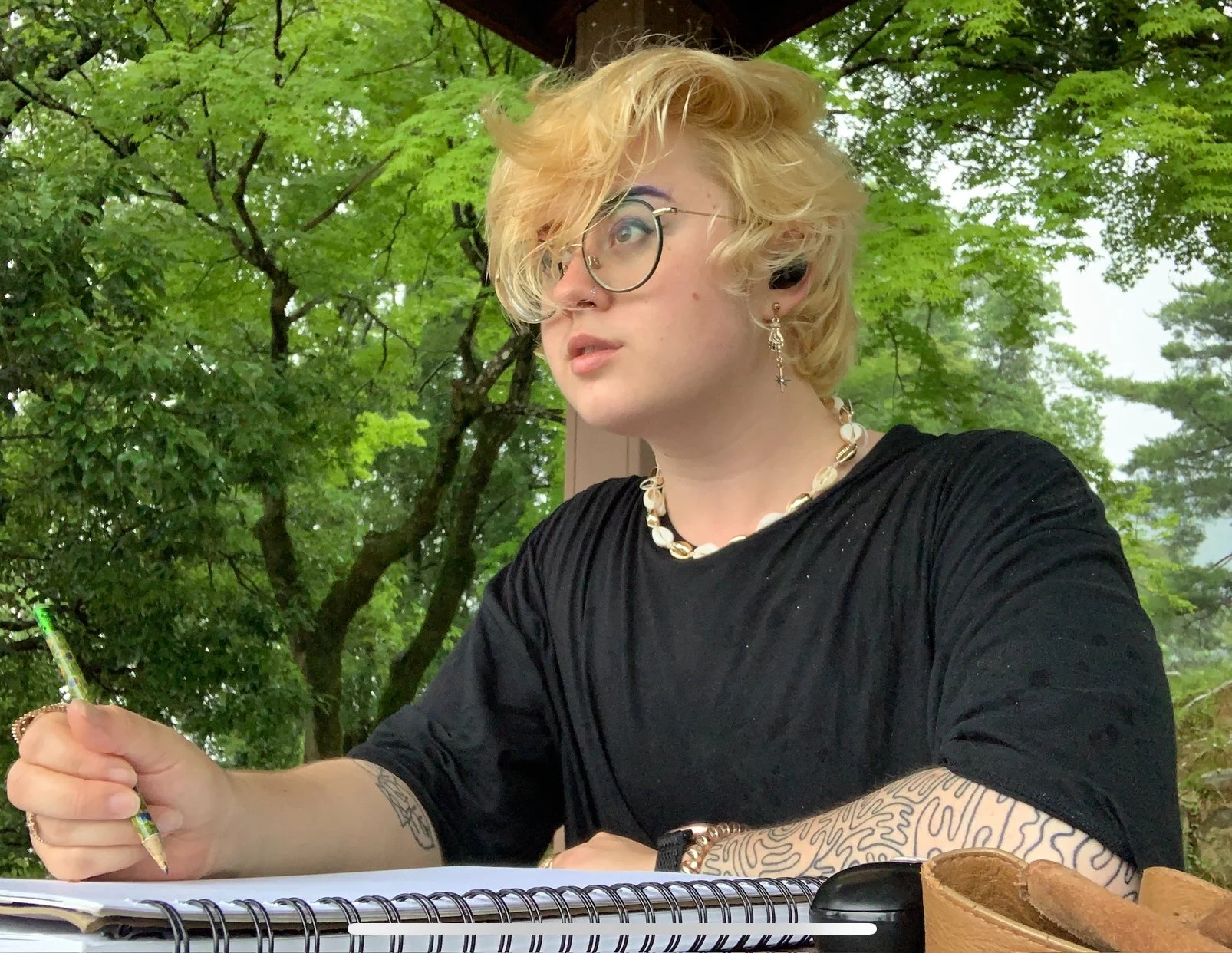
Castien is an artist obsessed with color and pattern and how they combine to create abstract and figurative pieces. Born with synesthesia, a perceptual phenomenon causing them to think in flashes and swirls of color rather than language, Castien uses their work to bring their reality into the physical world. “I believe an abstract piece deserves the same amount of detailed attention; color fields need surprises leaning into symbolism, a reason for the creation beyond utilitarian craft, because for me, it truly is that much more.”
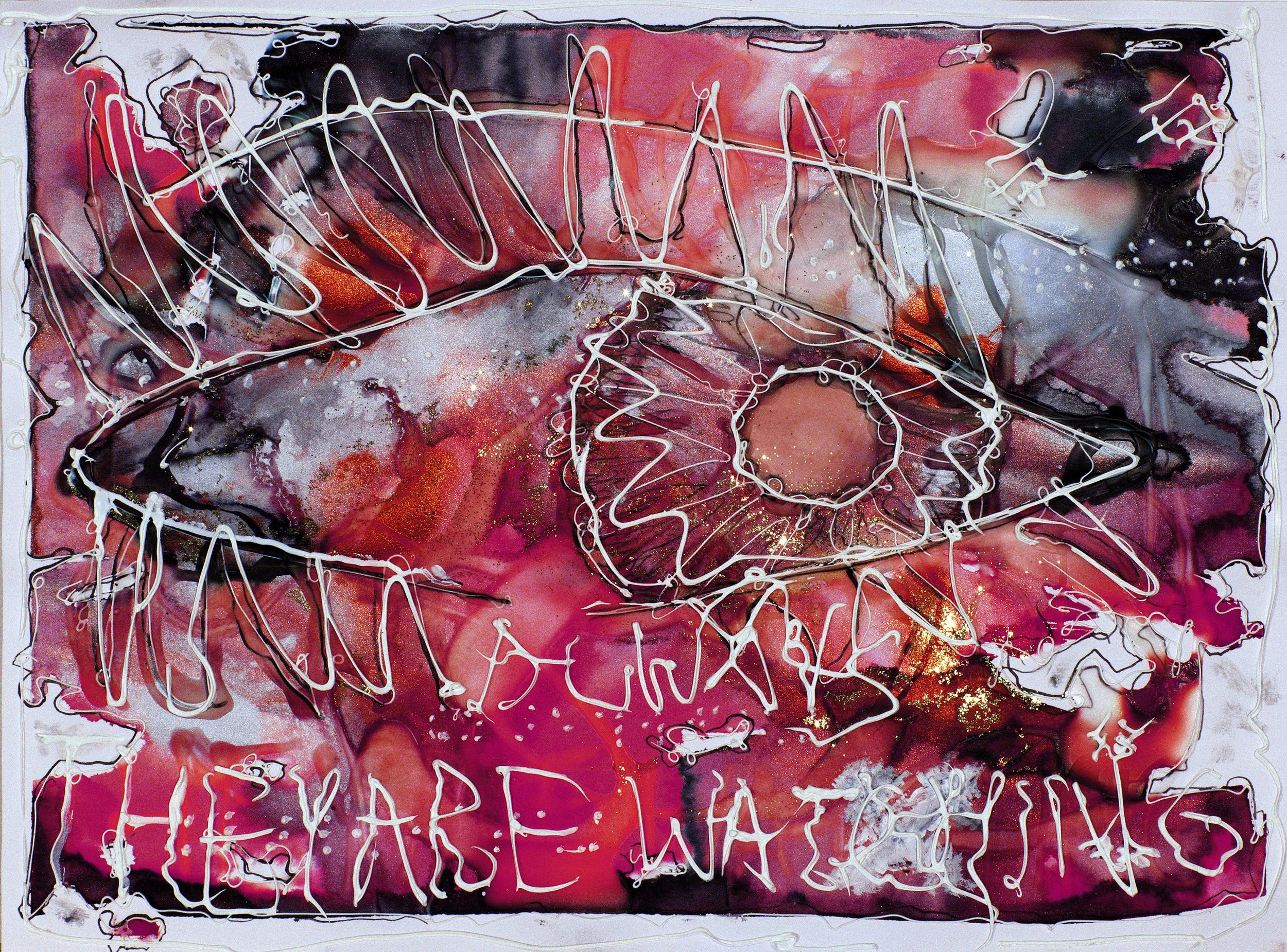
More than just abstractions, their patterns and color fields contain their inner narrative. “On the surface, my art looks divided, abstract and representational, two vastly different aesthetics. I have been able to combine these seemingly contrasting styles, the representational to carry the story, the abstract to give form to the intangible and inexplicable, and I view these as my most successful pieces. It is easy to tell a narrative about a narrative; it is harder to tell one about an abstraction. And that is what makes including abstraction in storytelling so compelling for me, the creation of a visual for that which does not have one.”
What is your background and how did you start your journey in the art world?
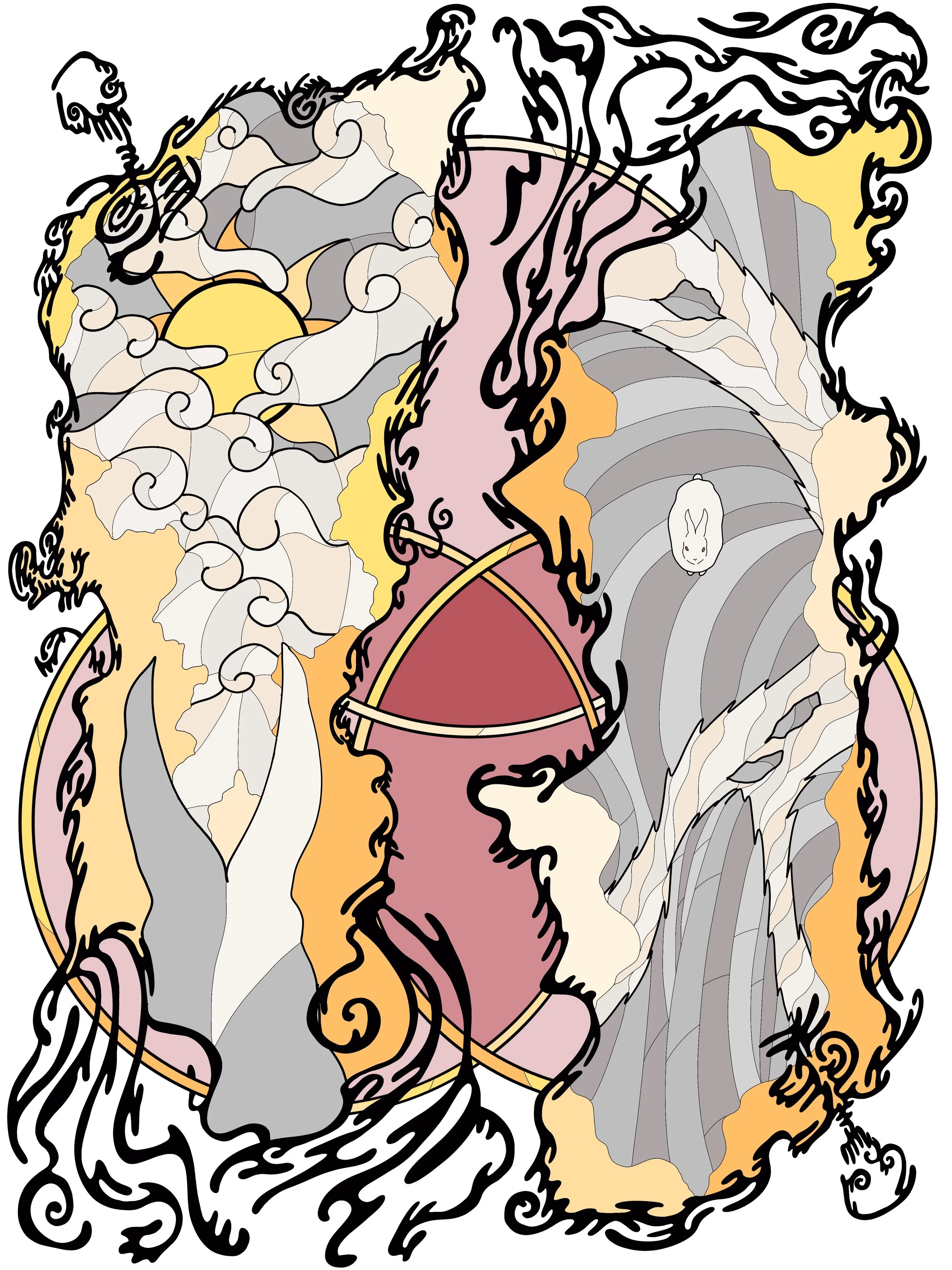
“I like to tell people I don't paint just because I can, but because I have to; as someone with synesthesia, I think in colors. Every activation of a sense triggers a color, pattern, and sometimes even full images. When I make art, I'm really putting my thoughts down on paper. Language alone is not enough for me, I need shape and light and sturdy paper, and maybe I'll be able to get close to ‘saying’ what's on my mind. Synesthesia is a neurological phenomenon, but more importantly to me, it is a thought process. The images that represent certain concepts change over time, and this is where my introduction to the art world comes in. Through a high school internship program I got to work at a stained glass window studio. I liked it so much that when my contract ended, I showed up the next day anyway. After a week of coming back, my boss handed me a check for $100 and told me he'd see me next week. It should come as no shock that it was incredibly different from the usual emo drawings of a high schooler, but it did to me. Rebuilding and repairing centuries-old cathedral windows, handling beautiful fine art, discovering what someone thought was a priceless Chagall passed down through their family line was actually plastic, and working with professional artists opened me and my internal symbology up and up and up. It's a powerful thing to find an artwork that changes the way you think, and I was lucky enough to work on reparing and remaking enough to imact my art even all these years later.”
What does your work aim to say? Does it comment on any current social or political issues?
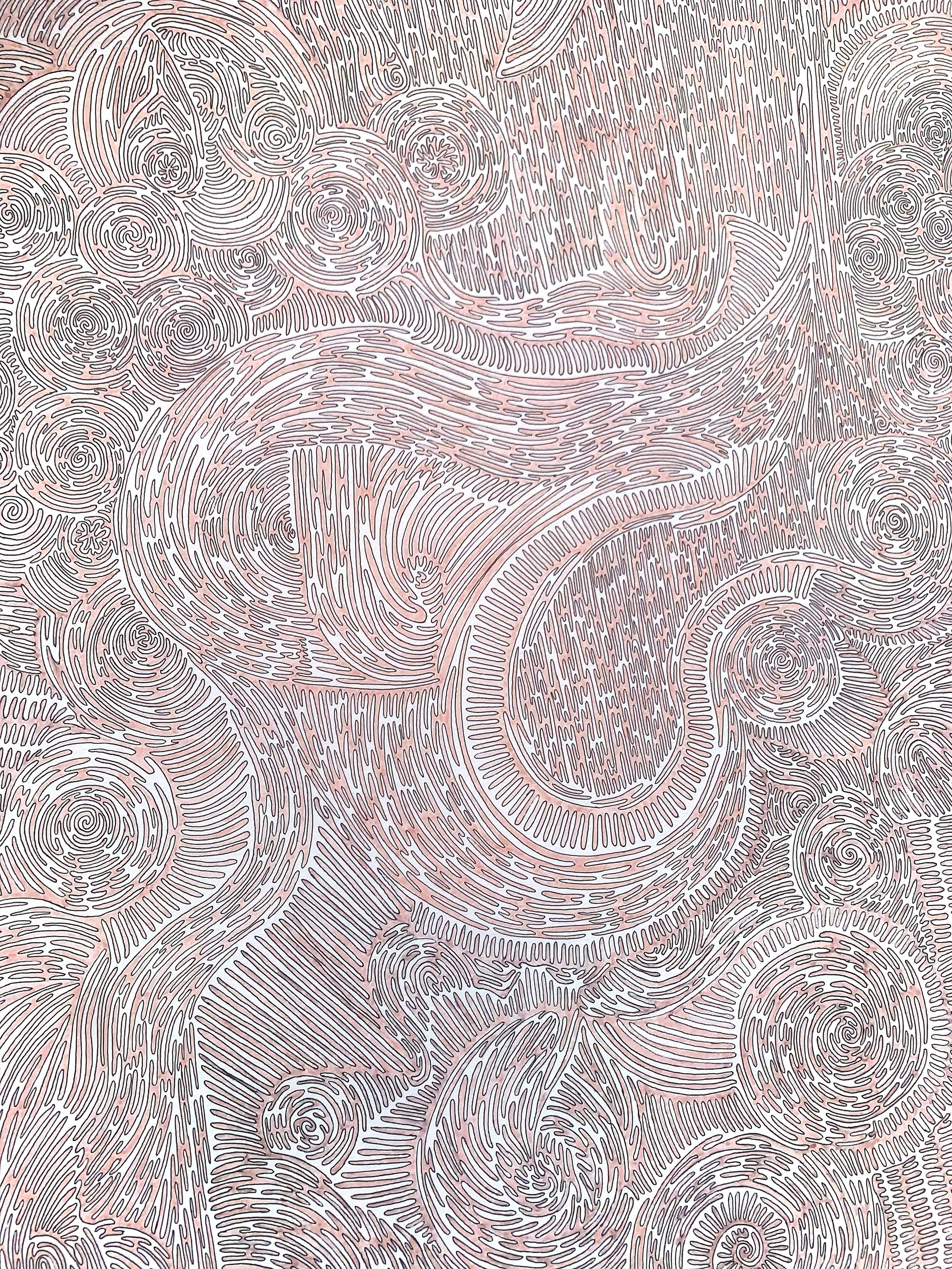
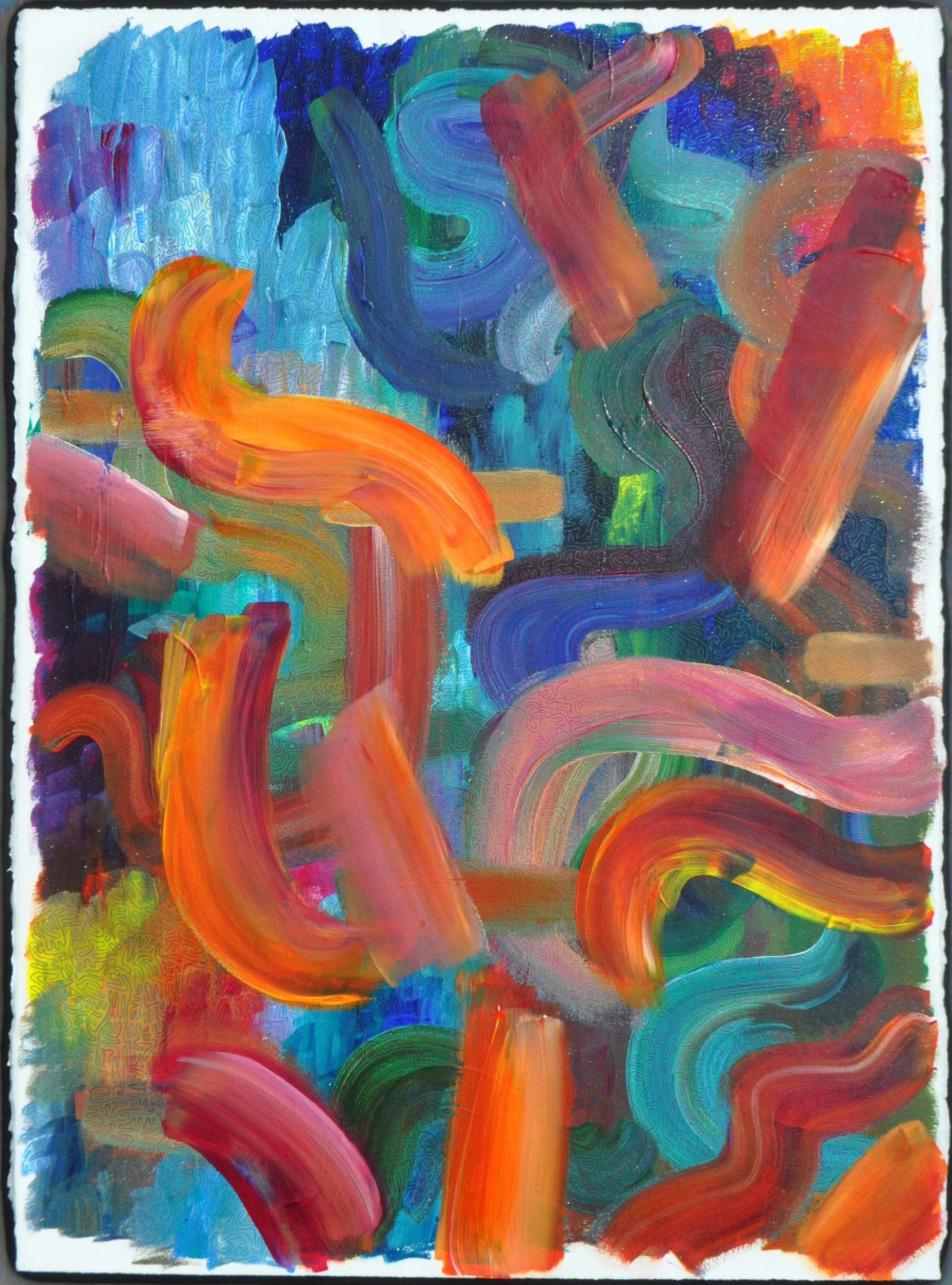
“As an out and proud queer artist, my artwork is inherently political. There is no way to remove my identity from my artwork. The death of the artist is not strong enough to deny the fact that these paintings are my thought process made physical. ‘Burren’ is an abstract painting to the outsider, but the rainbow of brushstrokes details the process of leaving Texas for the queer safe-haven of Chicago and the world of opportunities I finally, in safety, had the stamina to reach out and grab. My artwork aims to be bold and emotional in a political climate that has led LGBTQ+ people to become refugees from the violent systemic hate of the current United States. My figurative work shows unapologetic trans and genderqueer bodies in all stages of transition and being, interspersed with colorfields of the complex thoughts I need to get out on paper faster than it takes to translate into something figurative and blatantly understandable, and pieces that simply brought me joy to make in the days when the Lemkin Institute for Genocide Prevention and Human Security released a warning of American genocidal tendencies towards transgender people. I often wish my art weren't political, but in times such as these, even contentedness can be labeled radical.”
Do you plan your work in advance, or is it improvisation?
“The joy is in the discovery! The unpredictable show of the hand and process, figuring out what next to do and never being sure until it is done. Each piece is an investigation into how to convey my point or a study of a new material's reaction. Of course, I have to start with some sketch to branch off of, but the initial idea is very bare-bones. Seeing my own pieces appear on the page is on par with watching a mystery thriller for me. What is more exciting than being on the edge of your seat to find out what happens next? And I get to be the one to decide what each twist and turn gets to be! There is nothing like the satisfaction of curiosity being fulfilled.”
Are there any art world trends are you following?
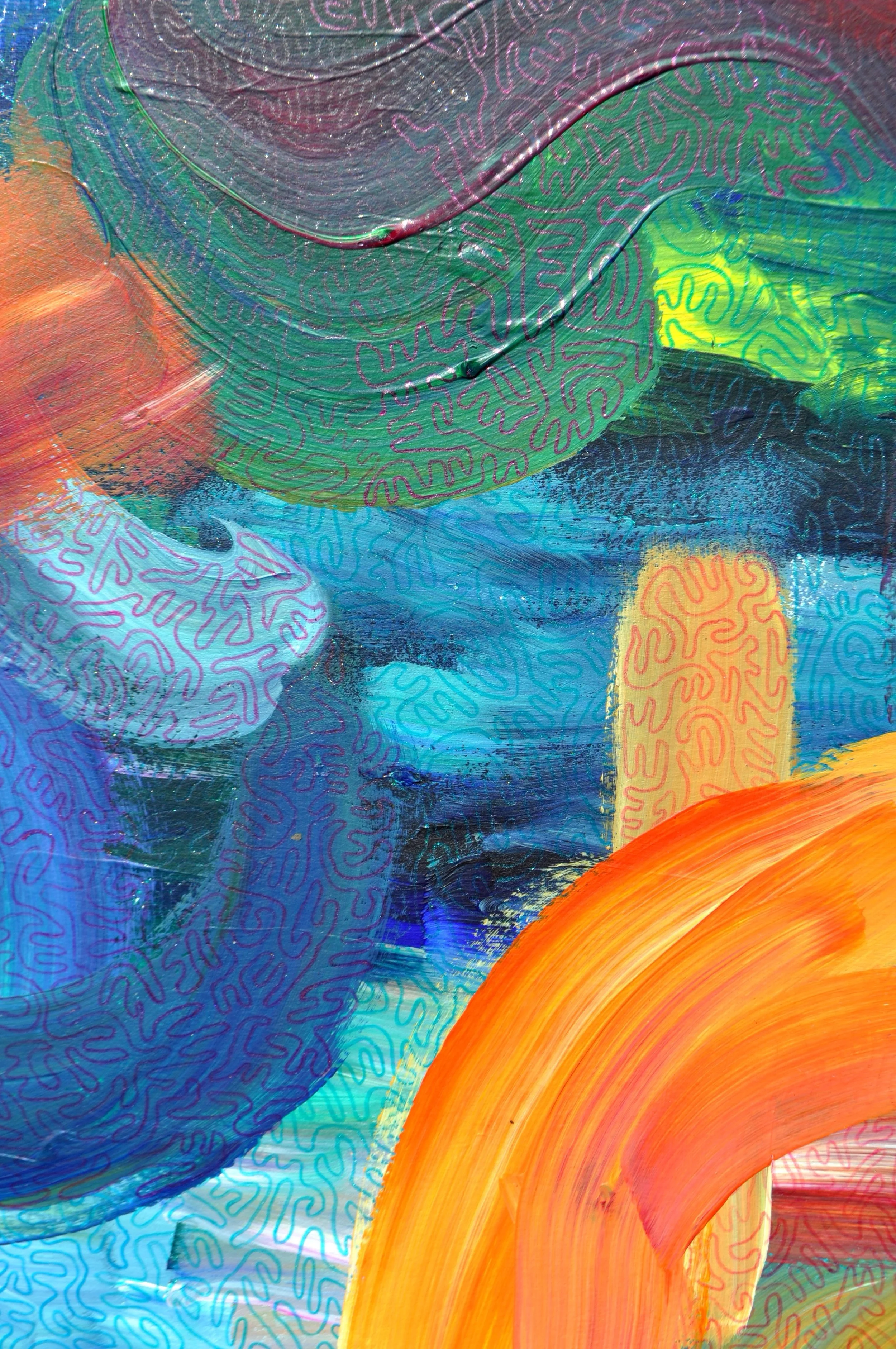
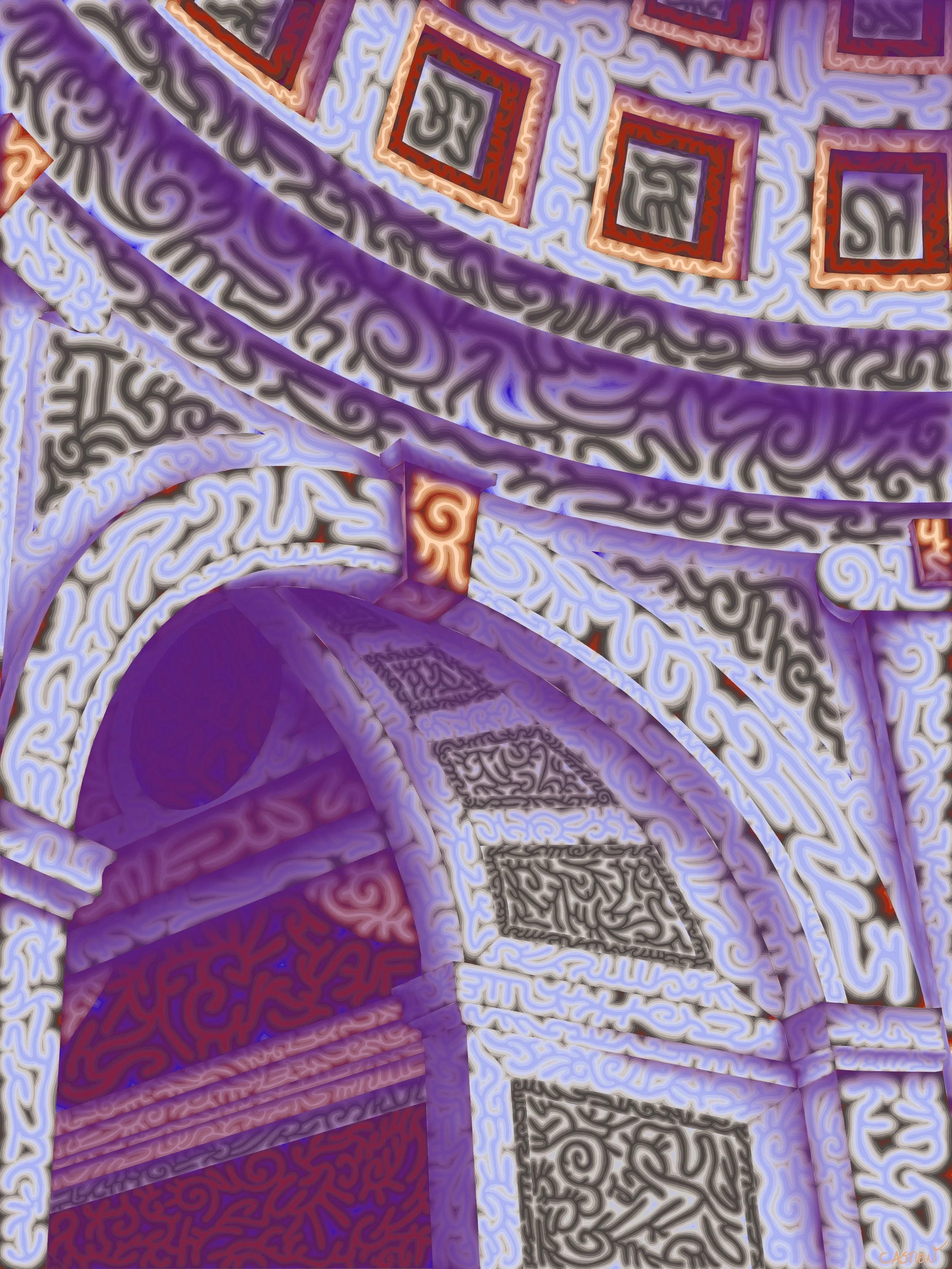
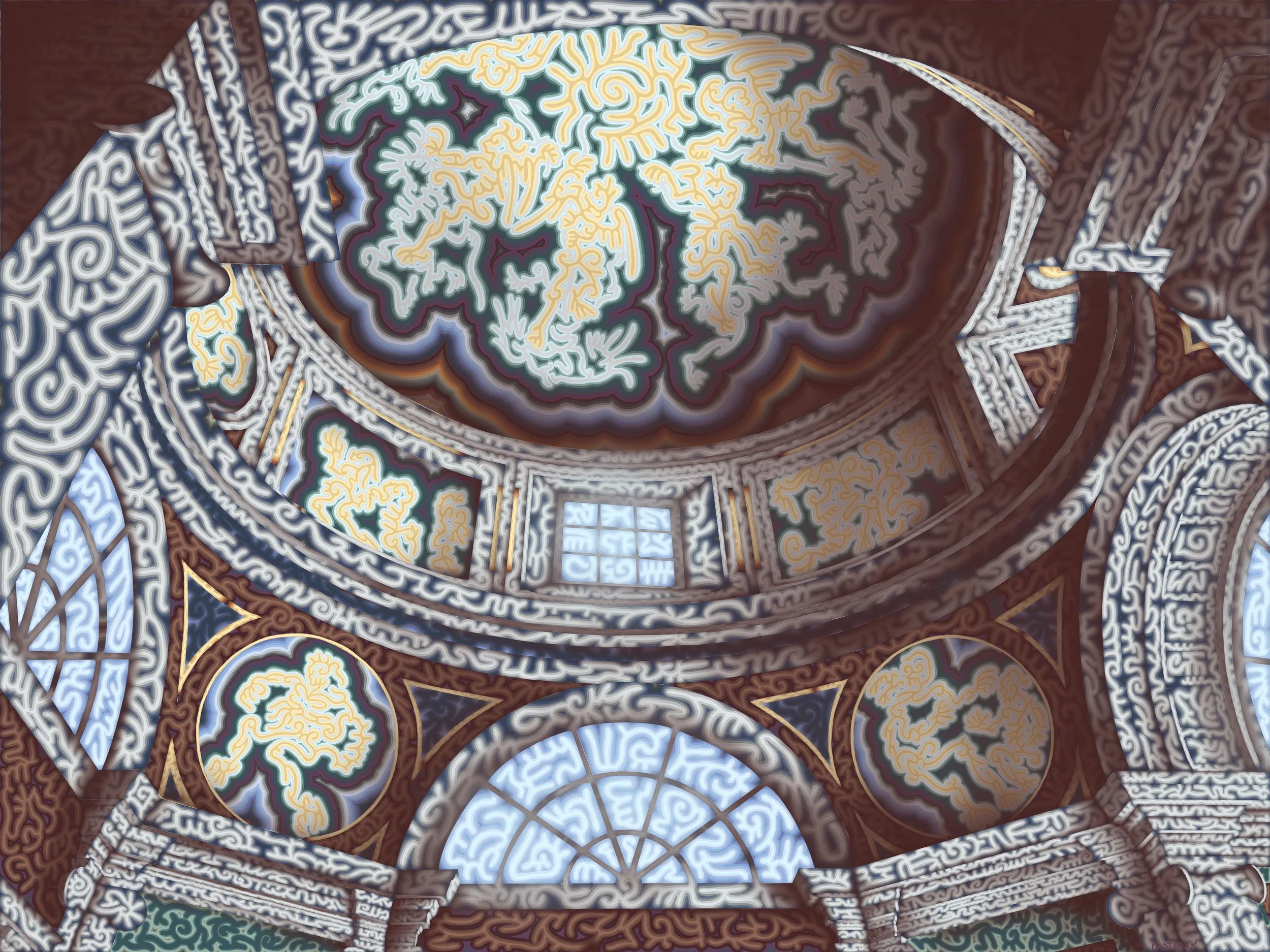
“The resurgence in the power of the labyrinth and its emphasis on purposeful time to think has me overjoyed. When surrounded by things that make you question what's the point of anything, here is a purposefully beautiful space that says the entire point is to think, observe, take in, and analyze. A labyrinth is different from a maze; yes, there is an ending point to get to, but it is a road devoid of choices, a path to lose yourself on as you think about the choices in every other part of life. It is unashamedly dramatic, something meant to be ornate and beautiful to better connect you to what is outside of its beauty. Ultimately, a winding labyrinth is an artwork that leads to the understanding of something else, and I could not be more glad to see so many artists creating to connect themselves to the greater world around them. We make ‘the point,’ we make our reasons for living. The pattern of the labyrinth is a symbol of that.”
What process, materials and techniques do you use to create your artwork?
“I love things that take time and effort. Details and layers that show the degree to which an artist wrestled with an idea. The thickness of artworks painted over, the video processes of digital works being wiped completely clean until, at long last, the goal is reached. I start my works with hours ahead of me, so I know I can paint and repaint scenes to my heart's content. I tend to start out with a labyrinth. Be it digital, acrylic, or pen and ink, patterns allow for the time to warm up my hands and think. This is where the synesthesia comes in; it shows me the colors to work with, where to place them, and follow them across my vision. It's a lot like the afterimage when you look at the sun out of the corner of your eye. The light has burned itself into your retina in one specific place; you cannot look at the afterimage dead on for details, and if you try, if you try to chase it across your vision, it will slide farther and farther away. This is the speed at which my synesthetic thoughts switch through images and colors. I simply have to keep thinking and drawing until I can gather enough, until there is an artwork in front of me.”
What does your art mean to you?
“My art is me. It is my thoughts, my understanding of myself and the world. To others, we are our actions, what they can see and understand of us. To ourselves, we are our thoughts. There is always a difference.”
What’s your favourite artwork and why?
“With all honesty, my favorite artwork is the desk of Leopold and Rudolf Blaschka preserved in the Harvard Natural History Museum. It is the lampworking table where the father-son duo created over 4,300 glass models of plants for scientific study. The collection is not only, in my opinion, scientific artistry at its finest, but also the height of glasswork master craft. Each glass flower is made to scale, not just in petal and leaf size, but in the textures as well. The first several times I was able to visit the show, I cried. But it is not any of these flowers that I hold in my heart as my favorite; it is their work table. It is their tools. My thought process is my art, my art is my thought process; the Blaschka's art was their process, their discoveries in science, in glass, and in art. This desk bears all the scorch marks that come from working with molten glass on wood, of heavy wrought-iron tools placed and dropped on its surface for generations. It is the thought process of not just one artist, but many. The HNHM was wise to put it beyond glass, not just for the wit of it, but also to keep me from crying on it like the altar to creation I view it as. I fear saltwater is not great for conservation.”
Have you had any noteworthy exhibitions you'd like to share?
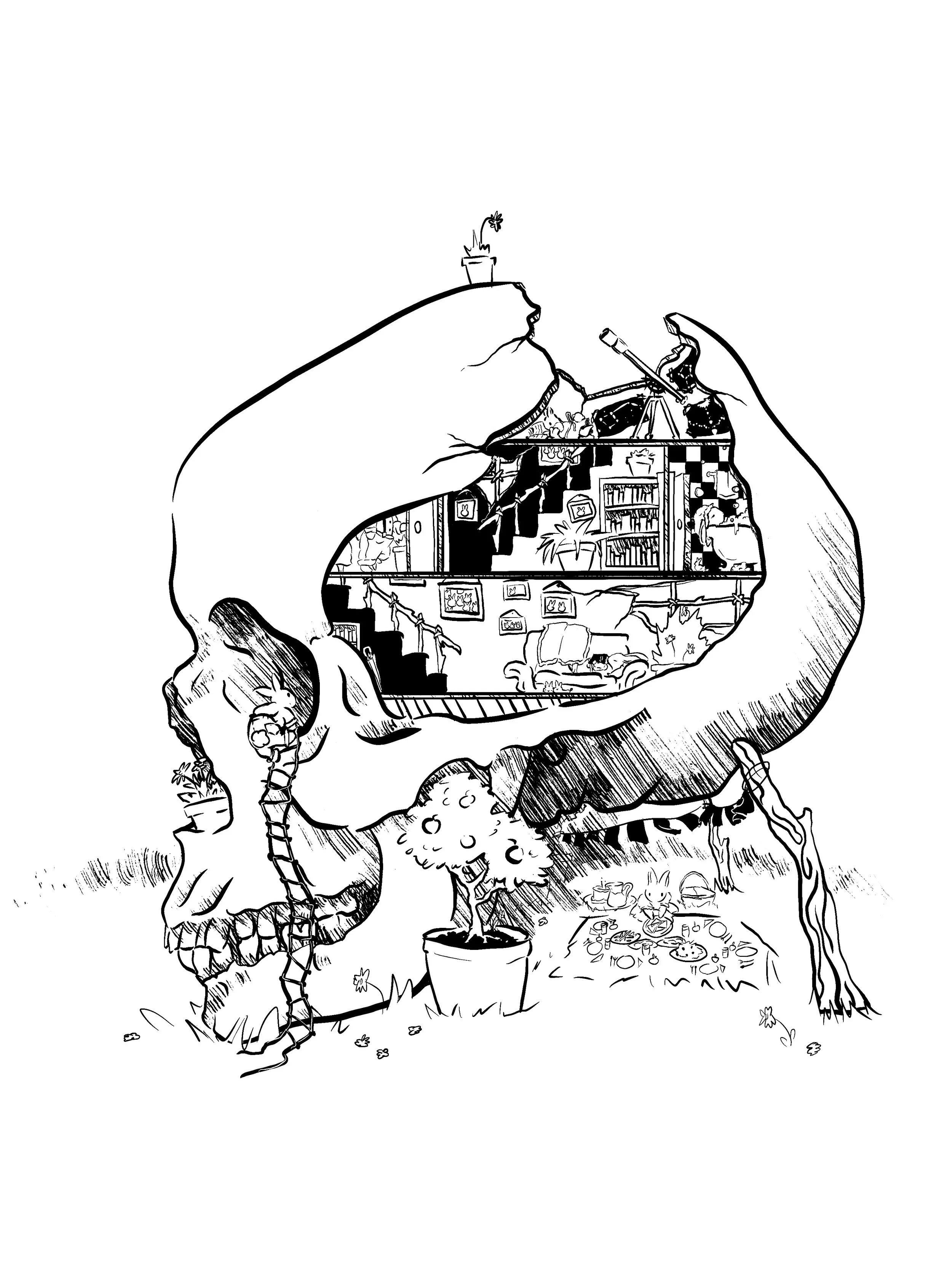
“I had a truly fantastic time at the International Society for the Study of Time's conference hosted by the Japanese Society for Time Studies at the Yamahuchi University, getting to talk about depictions of time in comic arts and how they have changed over time was an honor. I am so glad to have been welcomed back as an artist for the upcoming show at the University of Cagliari; more patterns and labyrinths are to come! Moreover, I have the upcoming shows at 55 Mont Cenis in Paris, Lower Rock Gardens in Brighton, and Zesde Vogelstraat in Amsterdam!”