Interview
Brian C. Hailes
Brian C. Hailes is an artist, illustrator, writer, and storyteller whose work bridges the traditions of academic painting with the imaginative possibilities of contemporary fantasy and narrative art. His paintings draw deeply from the romanticism, beauty, and technical mastery of artists such as John William Waterhouse, William-Adolphe Bouguereau, Solomon Joseph Solomon, and Lawrence Alma-Tadema, while embracing the dramatic storytelling and imaginative compositions of modern masters such as Frank Frazetta and Michael Whelan. Hailes has written and illustrated more than 60 published titles, including the illustrated novels Hotel California, Avila, Defender of Llyans, and Blink, as well as the graphic novels Devil’s Triangle and Dragon’s Gait. His illustration work has appeared in numerous books and publications, including several American Girl titles and Continuum from Arcana Comics. In 2002, Hailes received the L. Ron Hubbard Illustrators of the Future Award, an honor that led to his later appointment as an official judge for the competition.

His paintings have been featured in the annual Infected by Art anthology from 2017 through 2026. Having established the Draw It With Me Art Academy in Alpine, Utah (DrawItWithMe.com), and working from his studio near Salt Lake, Hailes continues to explore the intersection of classical beauty, mythology, literature, and speculative imagination through painting, illustration, writing, and visual storytelling.
What is your background and how did you start your journey in the art world?
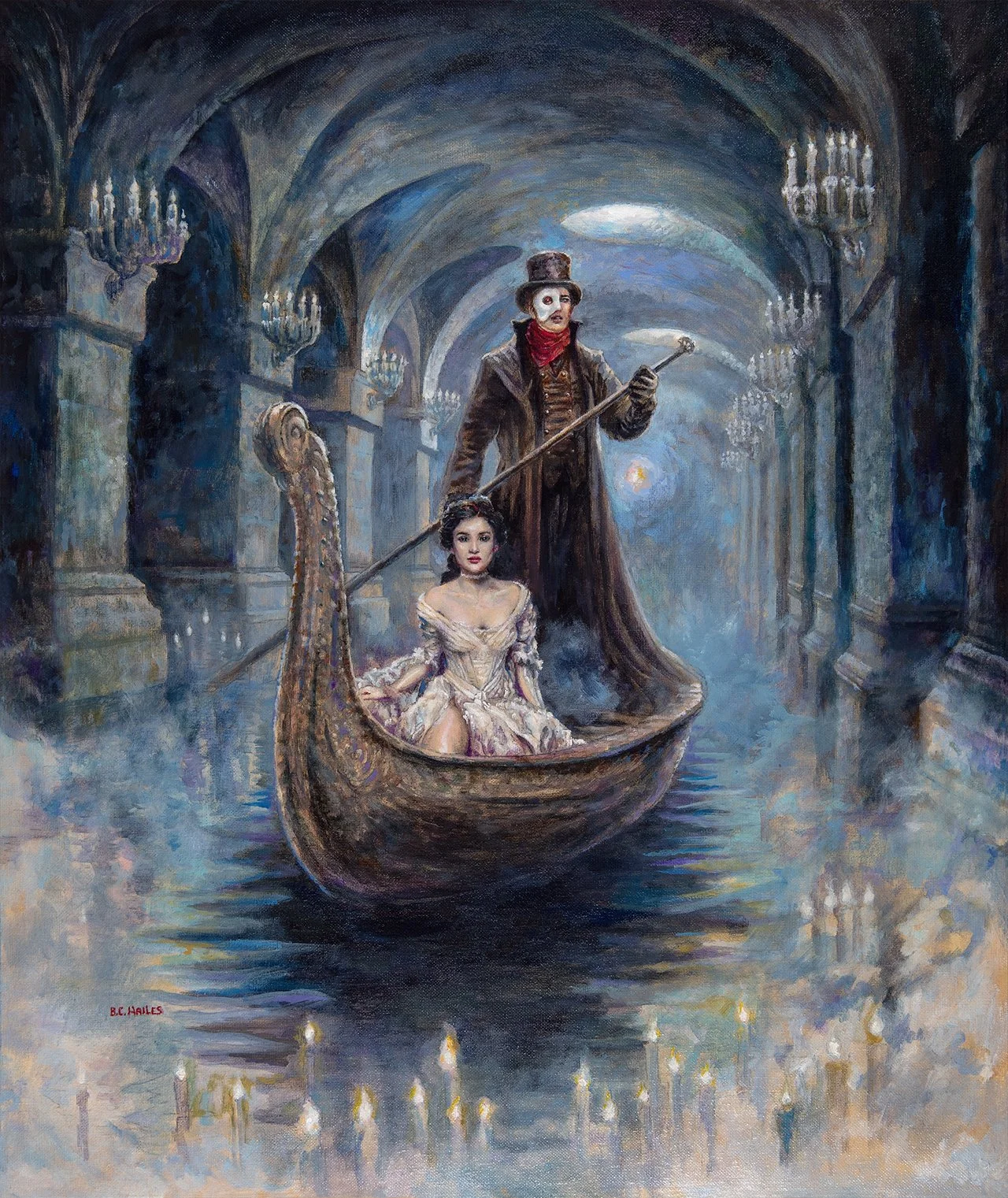
“My formal background is rooted in illustration and design, but I’ve always moved freely between disciplines. Over the years, I’ve worked as an illustrator, designer, writer, and storyteller, creating and illustrating more than sixty published titles, including novels, graphic novels, and children’s books. I’ve also worked in production, design, and animation. Each of those experiences has influenced the way I approach fine art because I tend to think of a painting not simply as an arrangement of beautiful forms, but as a moment within a larger narrative. Today, I see my work as a meeting point between those traditions. Whether I’m painting mythology, literature, history, or an imagined world, I’m ultimately interested in the same thing that fascinated me as a child: using an image to tell a story and inviting the viewer to step into it.”
What inspires you?
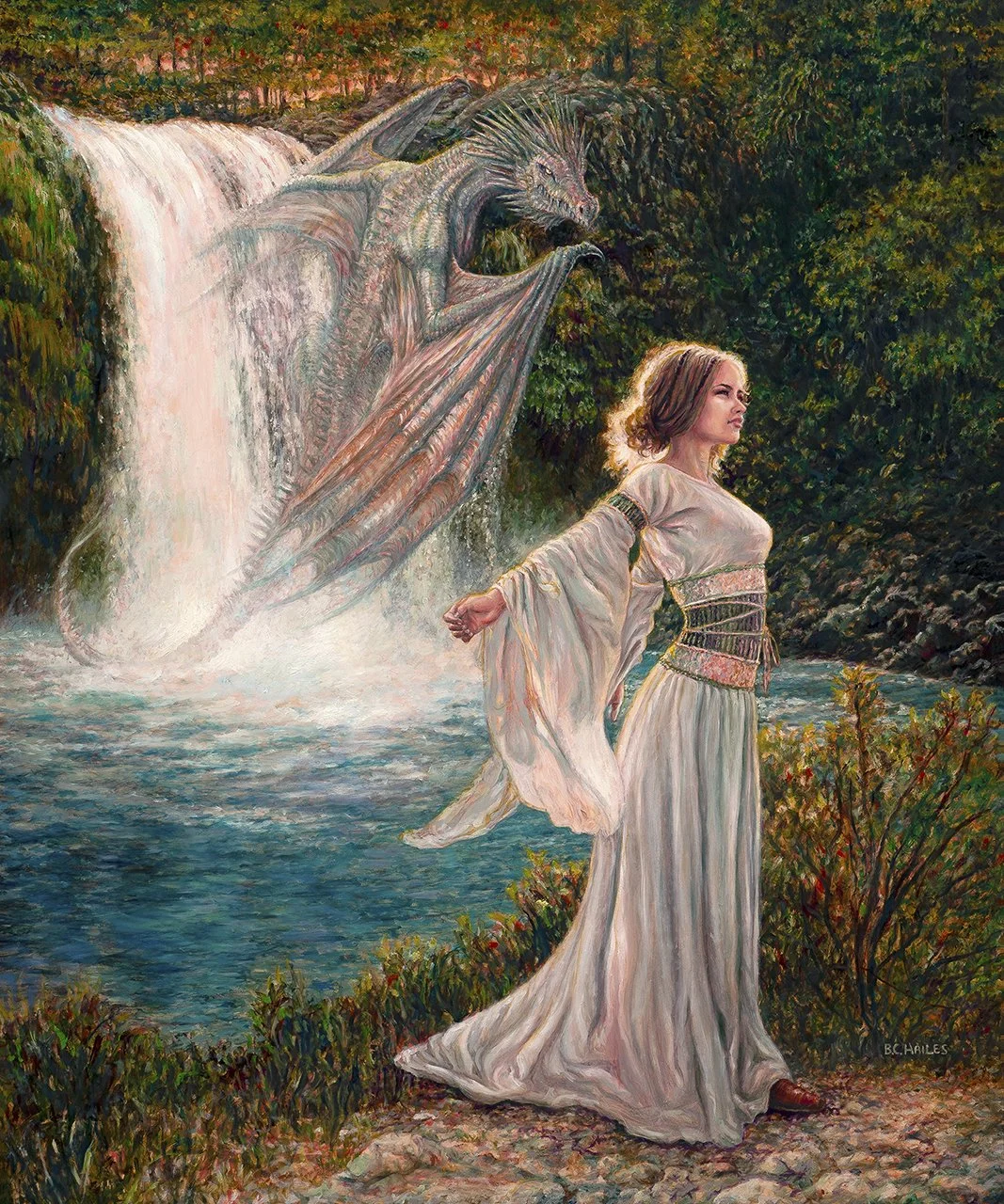
“I’m inspired most by stories—particularly stories that have survived for generations because they continue to say something meaningful about the human experience. Mythology, literature, history, and folklore all provide an endless reservoir of characters, conflicts, and moments that can be translated into visual language. I’m especially drawn to the space between beauty and darkness: love and loss, heroism and failure, temptation and redemption, innocence and experience. A compelling character (or characters) caught at a pivotal moment can be far more interesting to me than simply painting something beautiful. I want the viewer to wonder what happened just before the moment depicted, and what might happen immediately afterward. Beyond art, I find inspiration in ordinary experiences—the landscape, old books, music, architecture, nature, and simply observing people. Sometimes the most interesting ideas come from something completely unexpected. World travel certainly resides high on my priority list of sought after experience. Ultimately, I think I’m inspired by the possibility of making an image that feels as though it has existed somewhere before—a forgotten scene from a myth, a dream, or a story that the viewer somehow remembers and relates to.”
What themes do you pursue? Is there an underlying message in your work?
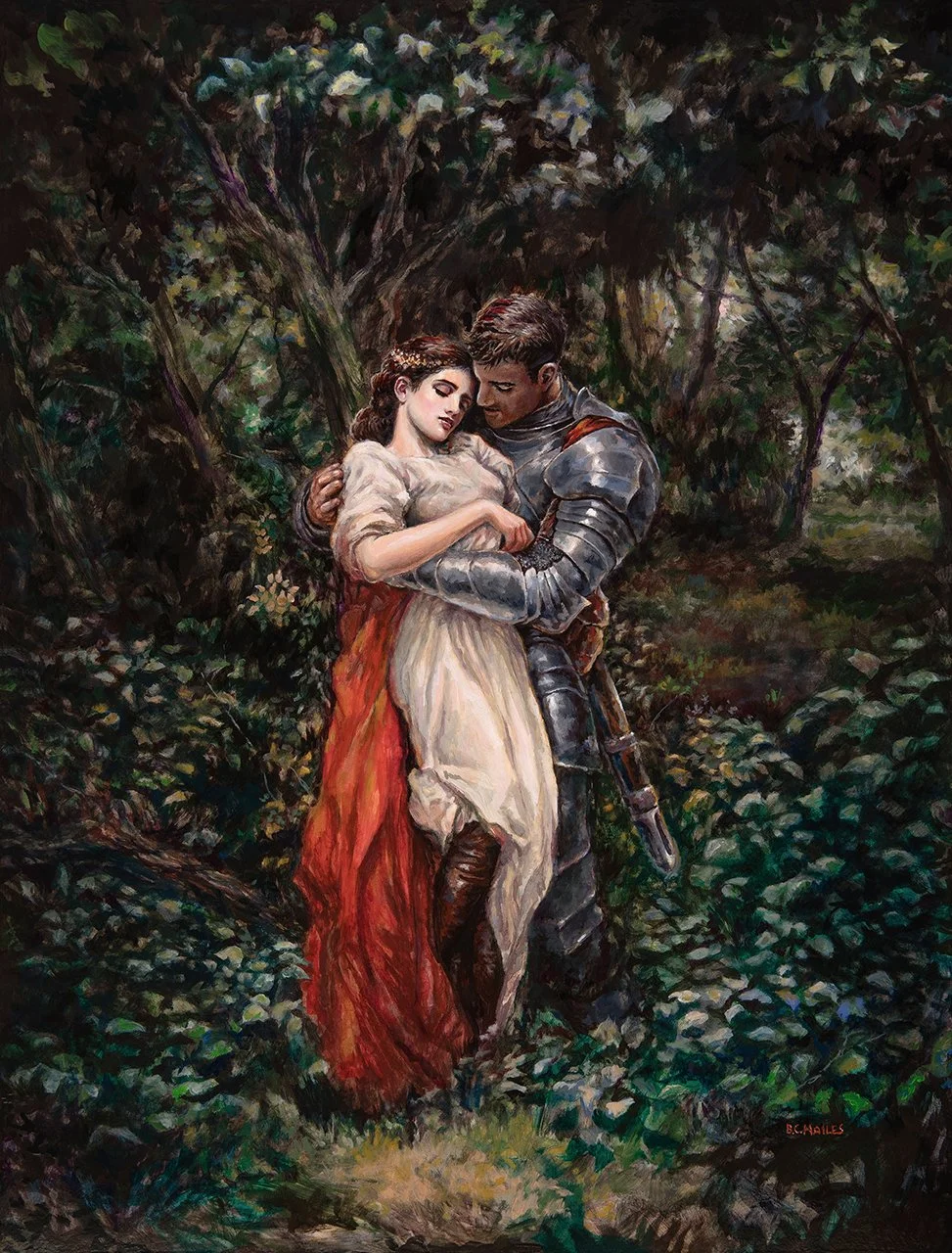
“The themes I return to most often are morality, resilience, redemption, love, temptation, and the choices people make when confronted with difficult circumstances. I’m drawn to stories in which characters are tested—where there is something at stake emotionally or morally, and where light juxtaposes darkness. A recurring theme in my work is the tension between the ideal and the imperfect. I’m fascinated by flawed people who nevertheless strive for something greater than themselves. Mythology and literature are particularly rich in this regard because their characters often embody very human contradictions. They can be heroic and selfish, noble and foolish, capable of extraordinary courage and terrible mistakes. That complexity is what makes them worth painting. I don’t necessarily approach a painting with the intention of delivering a specific message. I’d rather create a situation that invites the viewer to bring something of themselves to it. A painting of two characters standing together, for example, might be about love, betrayal, sacrifice, longing, or simply the uncertainty of a choice. The story can change depending on who is looking at it and what classic literature or myth it might be based upon. If there is an underlying message throughout my work, I think it is ultimately one of hope. Life is complicated, and people are imperfect, but I believe there is something deeply compelling about the human capacity to endure, to change, to forgive, and to choose something better. Even when I paint darker subjects, I’m usually searching for that small element of light within them. For me, art is most powerful when it doesn't tell the viewer exactly what to think but gives them something worth thinking about.”
How would you describe your work?
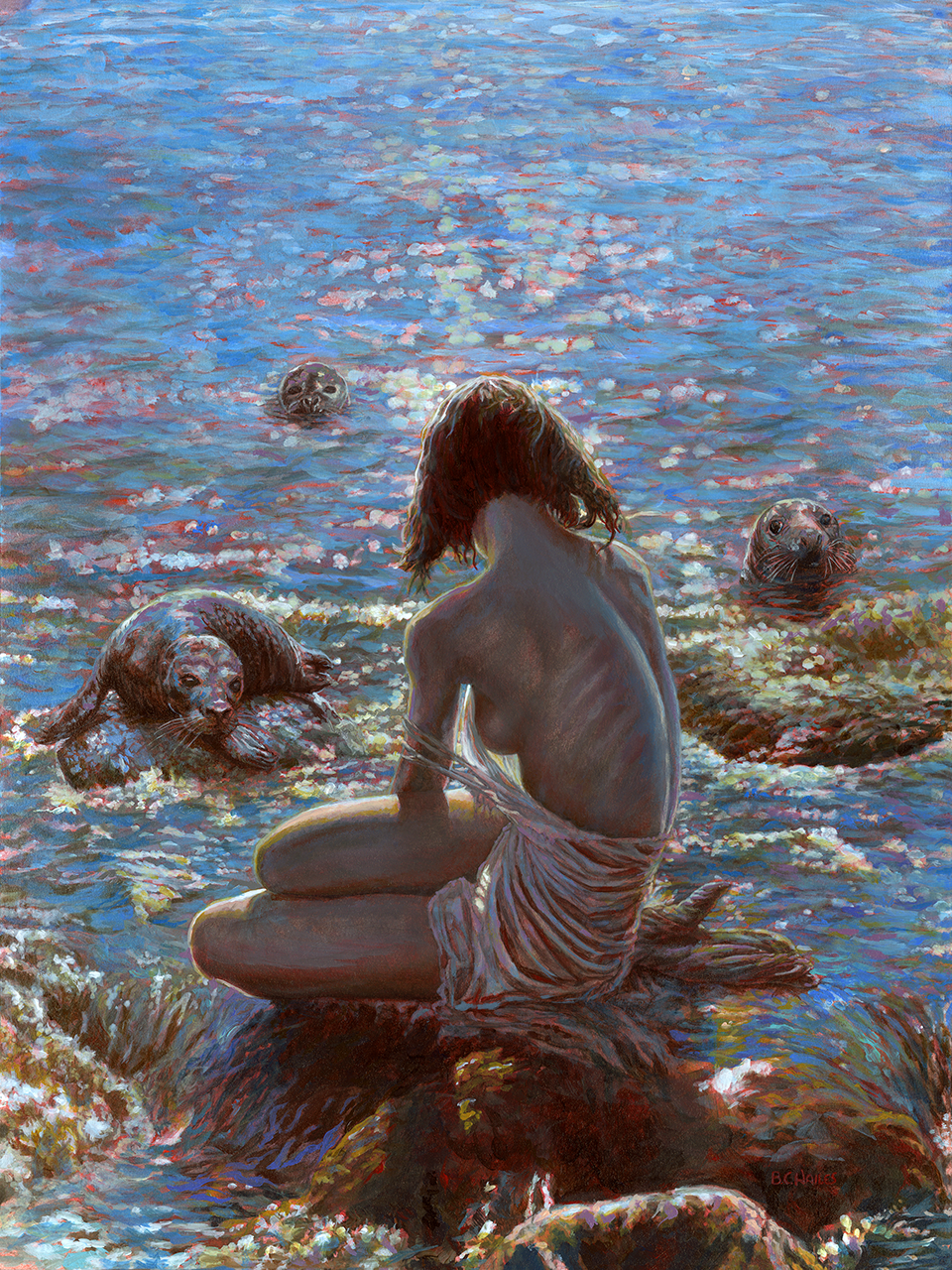
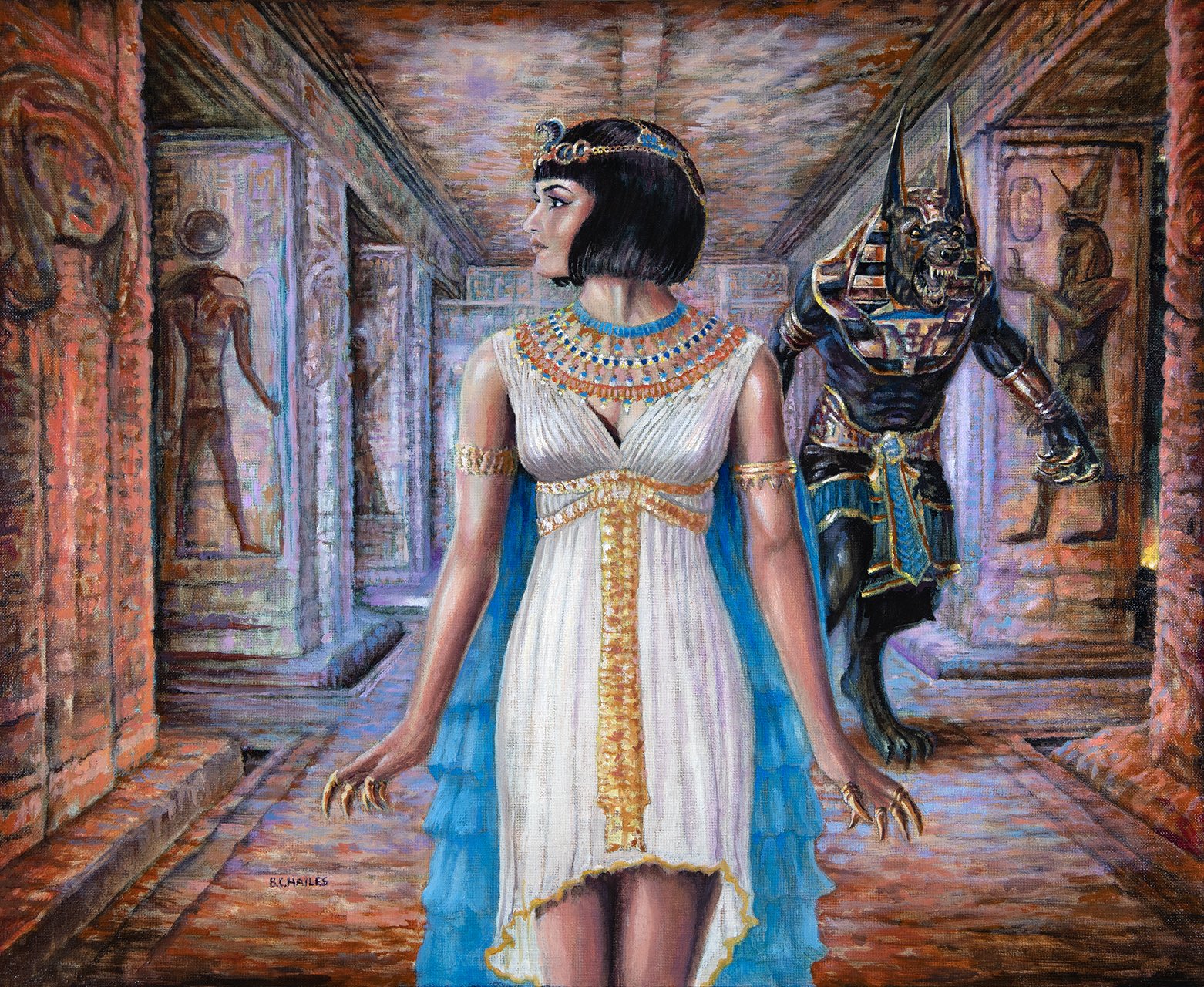
“I would describe my work as narrative fine art rooted in the traditions of classical painting but shaped by my background as an illustrator and storyteller. I’m interested in paintings that do more than present an attractive subject—I want them to suggest a story, a mood, and a world beyond the edges of the canvas. Much of my work draws from mythology, literature, history, and fantasy, often bringing familiar characters or stories into a new visual context. Visually, I’m drawn to the beauty and discipline of classical painting—careful drawing, strong composition, atmospheric light, expressive figures, and rich color. At the same time, my years working in illustration, graphic novels, and animation have given me a strong appreciation for visual storytelling and cinematic composition. I think that combination naturally finds its way into my paintings. There is often a romantic or fantastical quality to the work, but I try to anchor it in something recognizably human. Whether I’m painting a mythological figure, a literary character, or an entirely imagined scene, I want the emotion to land.”
Which artists influence you most?
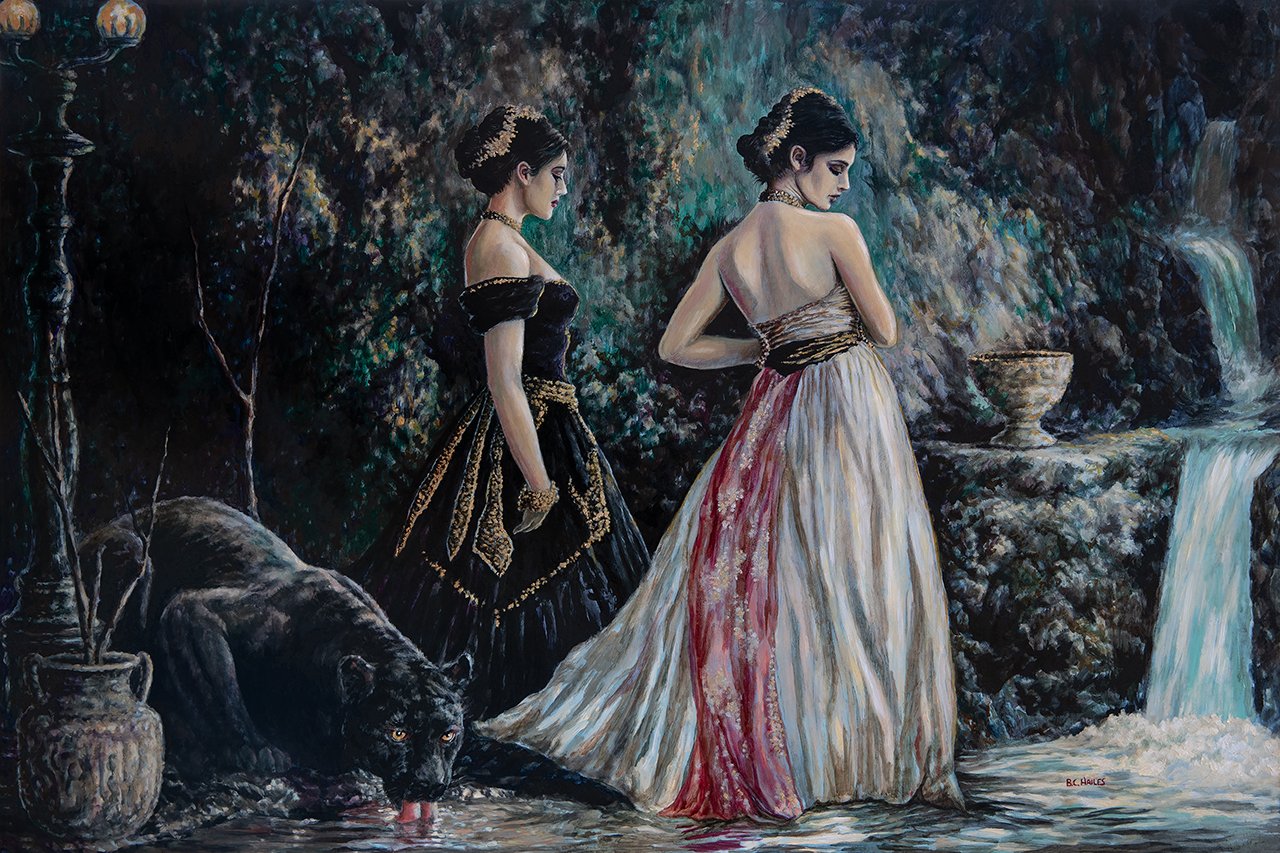
“As my career developed, I increasingly returned to traditional oil painting and the classical traditions that first captivated me. Artists such as John William Waterhouse, William-Adolphe Bouguereau, Solomon Joseph Solomon, and Lawrence Alma-Tadema have been profound influences, particularly in their mastery of figure, atmosphere, light, and storytelling. At the same time, modern masters such as Frank Frazetta and Michael Whelan showed me that classical draftsmanship and imaginative storytelling could coexist with a distinctly contemporary sensibility.”
What is your creative process like?
“My creative process usually begins with a story or an image that I can’t quite get out of my head. Sometimes it comes from a book, a myth, a historical figure, or a simple visual idea from a client or patron. I tend to let ideas develop for a while before I begin the painting process. I’m interested in discovering what the image is really about before worrying too much about how it will look. From there, I work through various sketches and reference, gradually refining the composition, figures, lighting, and environment. Because of my background in illustration, I’m very conscious of composition and visual storytelling. I want the eye to move naturally through the painting, but I also want there to be enough ambiguity that the viewer can discover something for themselves. I ask myself: What is the primary focus of the piece? And secondary? Tertiary? Once I begin the painting, I generally work in oils and build the image gradually, layer by layer. I enjoy the traditional process of establishing the drawing and larger shapes first along with a flat color wash to eliminate any white from the board or canvas at the start.
Then I develop the values, color, atmosphere, and finer details. I try not to rush that process. Some paintings come together quickly, while others require considerable reworking before they begin to feel right. I believe every painting goes through an ‘ugly stage’. The key is to expect this and keep working through it. I also leave room for accidents and discoveries. A painting rarely ends exactly where I thought it would when I started. Sometimes a change in the lighting or expression will completely alter the emotional character of a scene, and I’ve learned to follow those discoveries rather than fight them. The final stage is usually less about adding and more about editing—deciding what needs emphasis, what can remain understated, and what should simply be left alone. I think that restraint is important. A painting doesn't need to explain everything. It’s more about the mood. For me, the most satisfying part of the process is when the painting finally seems to acquire a life of its own. At that point, I’m no longer simply putting paint on a panel; I’m discovering the story that was there all along.”
What is an artist’s role in society and how do you see that evolving?
“I think an artist’s role in society is ultimately to help us see. We live in a world filled with information and imagery, but seeing something and truly seeing it are two different things. Artists have the opportunity to slow people down, to make them notice beauty, ask questions, consider another perspective, or perhaps recognize something about themselves. I also believe artists have a responsibility to create more than decoration. Art can challenge us, but it can also encourage us. It can remind us of compassion, sacrifice, love, and the possibility of becoming something better than we are. Some of the greatest works of art throughout history have endured because they speak to something fundamental in the human experience. For me, that sense of responsibility is particularly important. I don’t believe art has to be didactic or preach a particular message.
In fact, I think subtlety is often more powerful. A painting can present a beautiful or difficult moment and simply invite the viewer to contemplate it. If that experience causes someone to feel something, remember something, or think a little differently, then the work has accomplished something meaningful. I suspect the artist’s role will become even more important as technology makes it increasingly easy to produce images. When images can be generated almost instantaneously, the value of the human experience behind an image becomes more significant, not less. Technique will always matter, but so will intention, perspective, experience, and the reason an artist felt compelled to create something in the first place. I hope the future of art doesn’t become a competition between humans and technology, but a deeper appreciation for what human beings bring to the creative process. We have the ability not only to make images, but to give them meaning. That, to me, is something worth protecting.”
Have you had any noteworthy exhibitions you'd like to share?
“I’ve been fortunate to have my work included in a variety of exhibitions and showcases over the years, both through my illustration career (FanX, San Diego Comic Con, Conduit, LTUE) and my more recent focus on fine art (Springville Museum of Art, various art festivals and local shows). Each has offered a different kind of opportunity to put the work in front of people and, just as importantly, to see how viewers respond to it outside the studio. One of the things I’ve particularly enjoyed is exhibiting my traditional oil paintings alongside work from other accomplished artists. There is something very different about experiencing a painting in person. You can see the physicality of the brushwork, the surface, the scale, and the subtle changes in color and value in a way that simply doesn’t translate completely through a photograph to a screen. My work has also benefited from opportunities connected to the speculative-fiction and illustration communities (New York’s Society of Illustrators, Spectrum, and Infected by Art). Those experiences are meaningful to me because they reflect the two sides of what I do—the traditional fine-art influence and the lifelong love of imaginative storytelling. I’ve never been particularly interested in exhibiting simply for the sake of having my name on a wall. I’m more interested in finding the right context for the work and reaching people who are genuinely interested in narrative, craftsmanship, and the enduring traditions of representational art. I’m also at an interesting point in my career where I’m increasingly looking toward exhibitions that allow the paintings to stand on their own as fine art. After spending many years working in illustration, publishing, design, and animation, it’s exciting to bring that accumulated experience back into the studio and explore where the paintings can go next.”