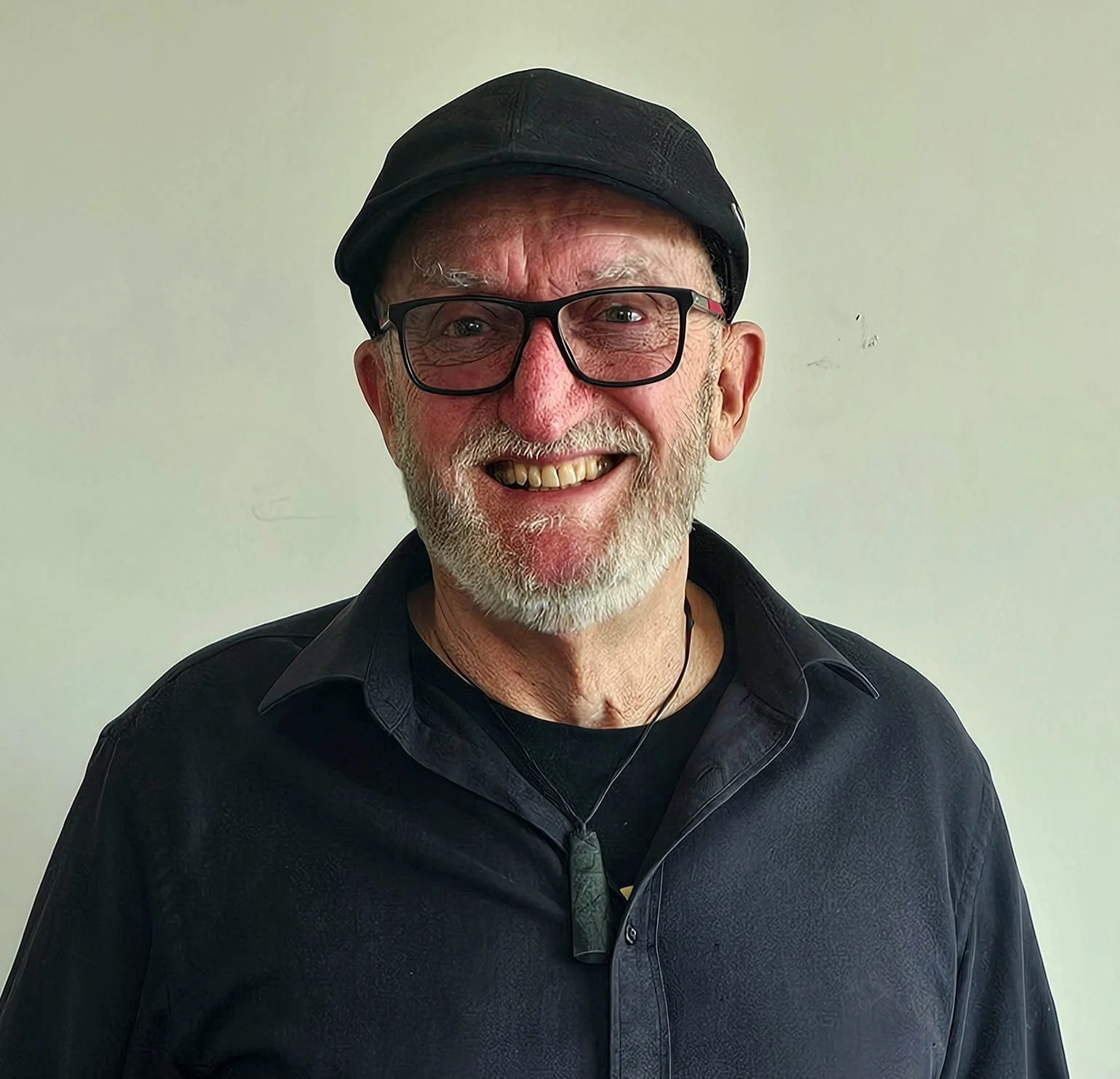
Bill Rainey
Bill Rainey is a New Zealand-based landscape painter whose expressive realism is shaped by a lifelong connection to the mountains and coastlines of Aotearoa. A former climber, he often paints places he has physically traversed, allowing lived experience to guide his sense of mood, scale, and atmosphere. His background in mediation and governance informs the emotional storytelling in his work, where themes of solitude, memory, resilience, and spiritual reflection emerge through layered acrylic textures and intuitive, gestural brushwork. What began as a personal refuge has evolved into a distinctive visual language that captures the quiet intensity of wild places. Bill’s work is exhibited locally and held in private collections in New Zealand and abroad.
What is your background and how did you start your journey in the art world?
“My professional background is in mediation and governance, helping people navigate complex emotional and financial terrain. Art began as a personal outlet, an intuitive response to the landscapes I’ve loved since childhood. My early passion for climbing introduced me to the raw beauty of New Zealand’s mountains, and that awe has never left me. Over time, my creative practice deepened, evolving into exhibitions and a growing online presence.”
What inspires you?
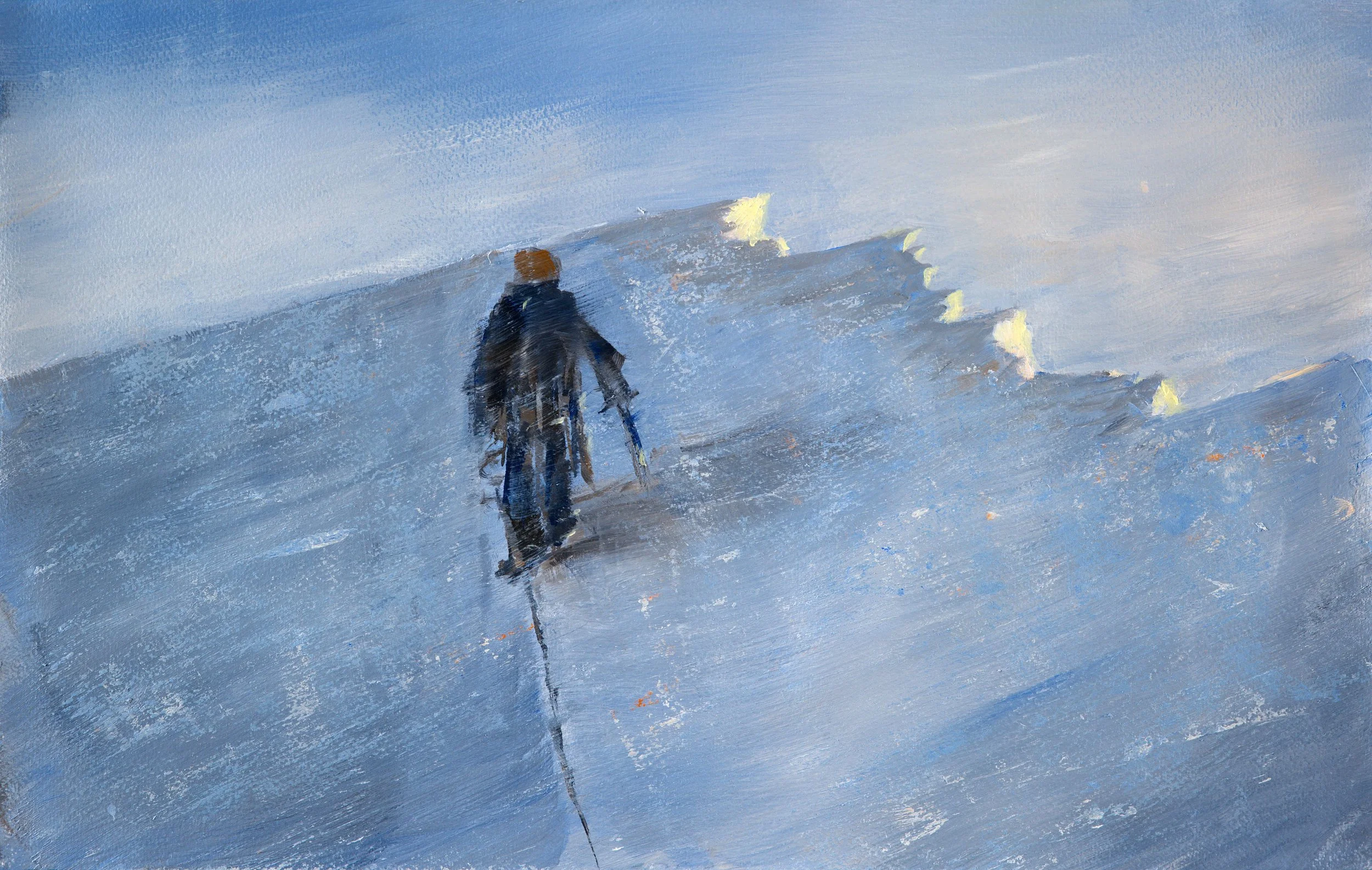
“I’m inspired by the vast, shifting landscapes of Aotearoa, places where light, weather, and terrain create moments of awe and quiet intensity. In the mountains and along the coast, it’s the feeling of being small in a big landscape that drives my work. I paint to capture the mood and atmosphere of these moments, the emotional imprint they leave long after the view itself is gone.”
What themes do you pursue? Is there an underlying message in your work?
“My work explores the emotional relationship between people and the vast landscapes of Aotearoa/NZ. I’m drawn to themes of solitude, awe, resilience, and the quiet moments that occur in high, exposed places. Rather than documenting a scene, I aim to capture how it feels, the atmosphere, the movement, the sense of being small within something immense. The underlying message is simple: these landscapes hold both power and peace, and in them we can find moments of clarity, connection, and reflection.”
How would you describe your work?
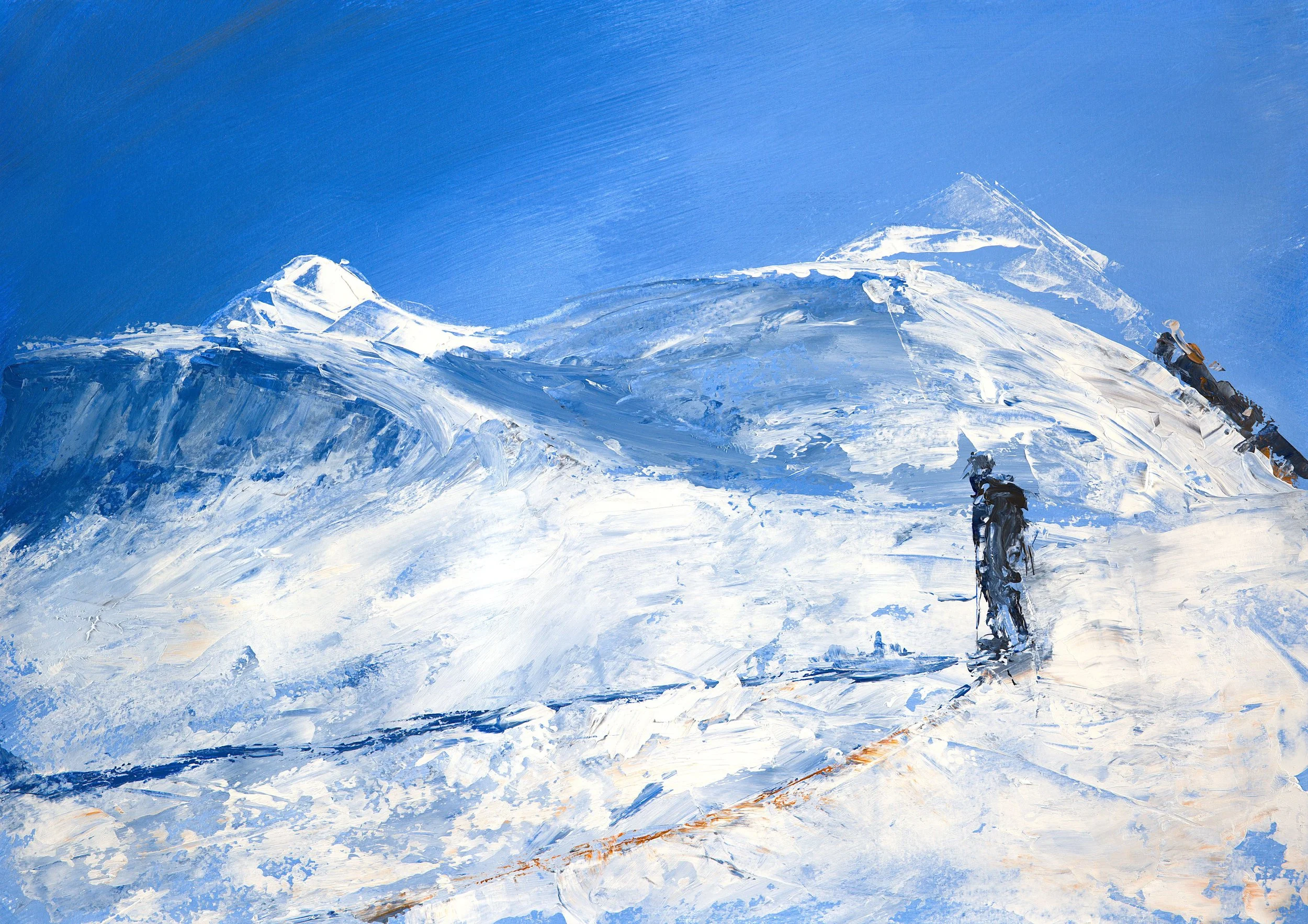
“My work is expressive, atmospheric, and rooted in the landscapes of Aotearoa. I paint the emotional experience of mountains, coastlines, and skies, the mood, movement, and shifting light that define these places. Rather than aiming for exact detail, I use bold brushwork, texture, and colour to evoke the feeling of being there: the quiet, the vastness, and the sense of connection to something larger than ourselves.”
Which artists influence you most?
“Douglas Badcock’s work has long inspired me, his ability to capture the essence of New Zealand’s landscapes is unmatched. I also admire Colin McCahon’s spiritual depth, Gerhard Richter’s abstraction, and the poetic minimalism of Agnes Martin. Each of these artists has shaped my approach to emotional storytelling through visual form.”
What is your creative process like?
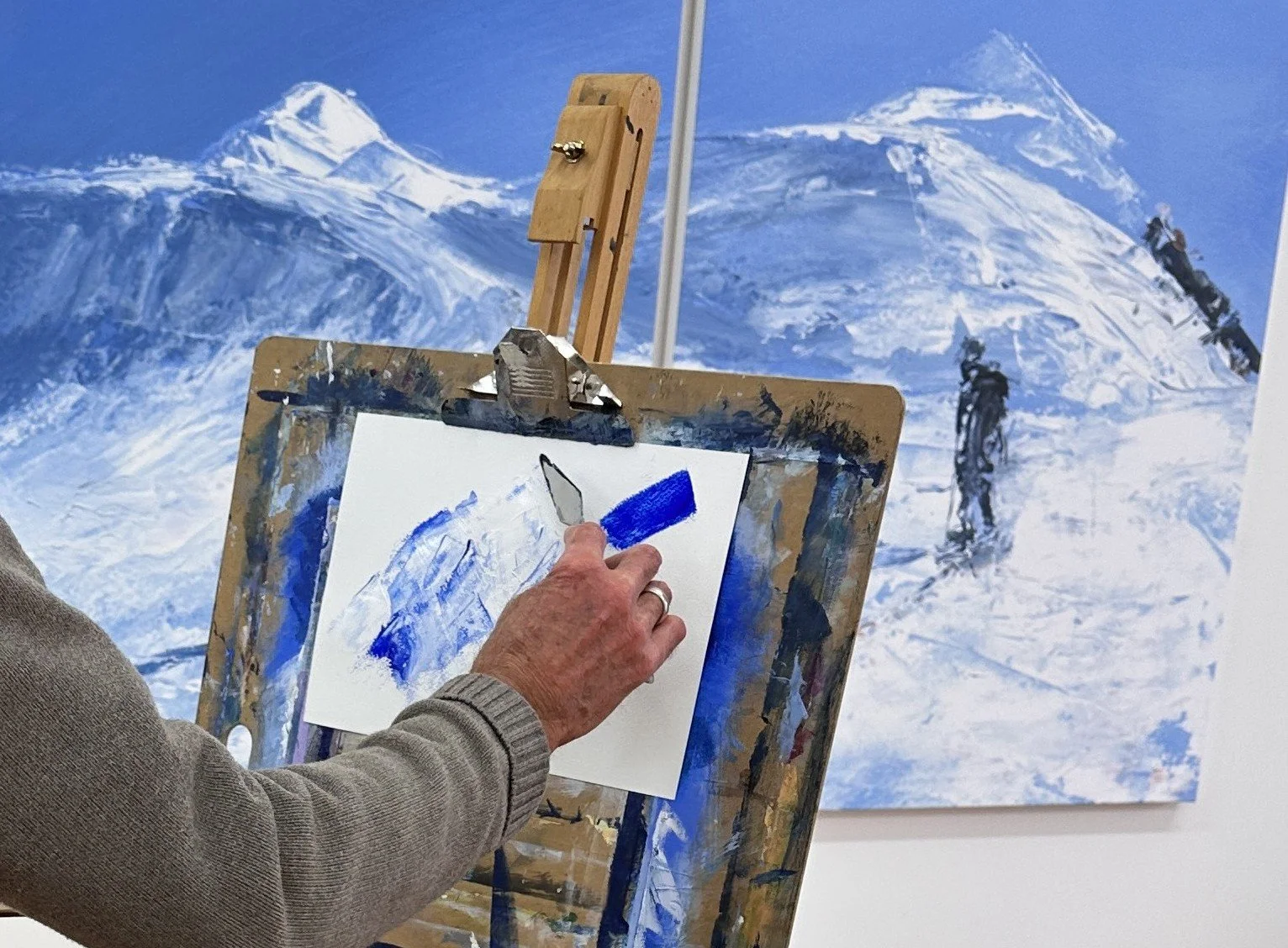
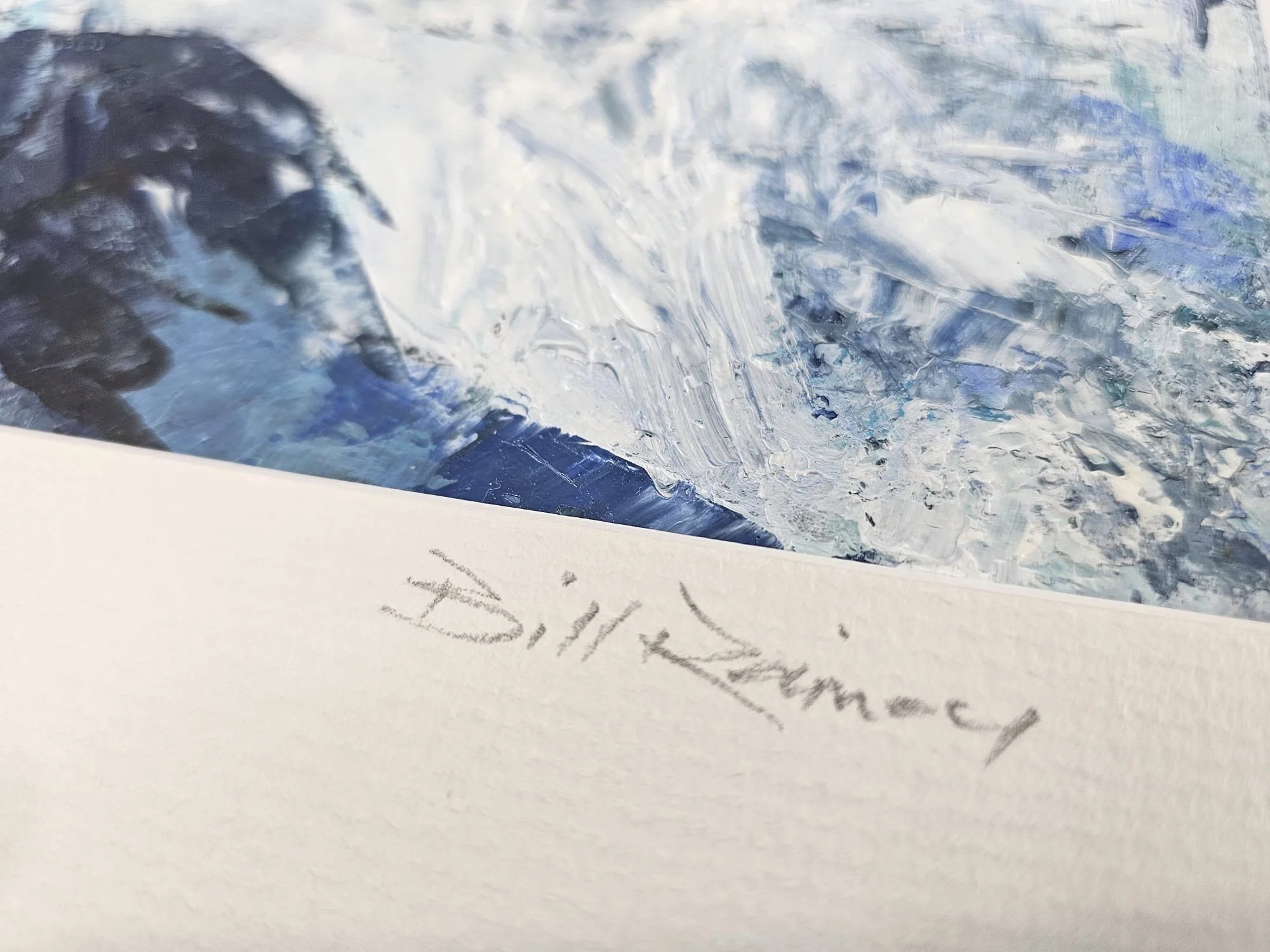
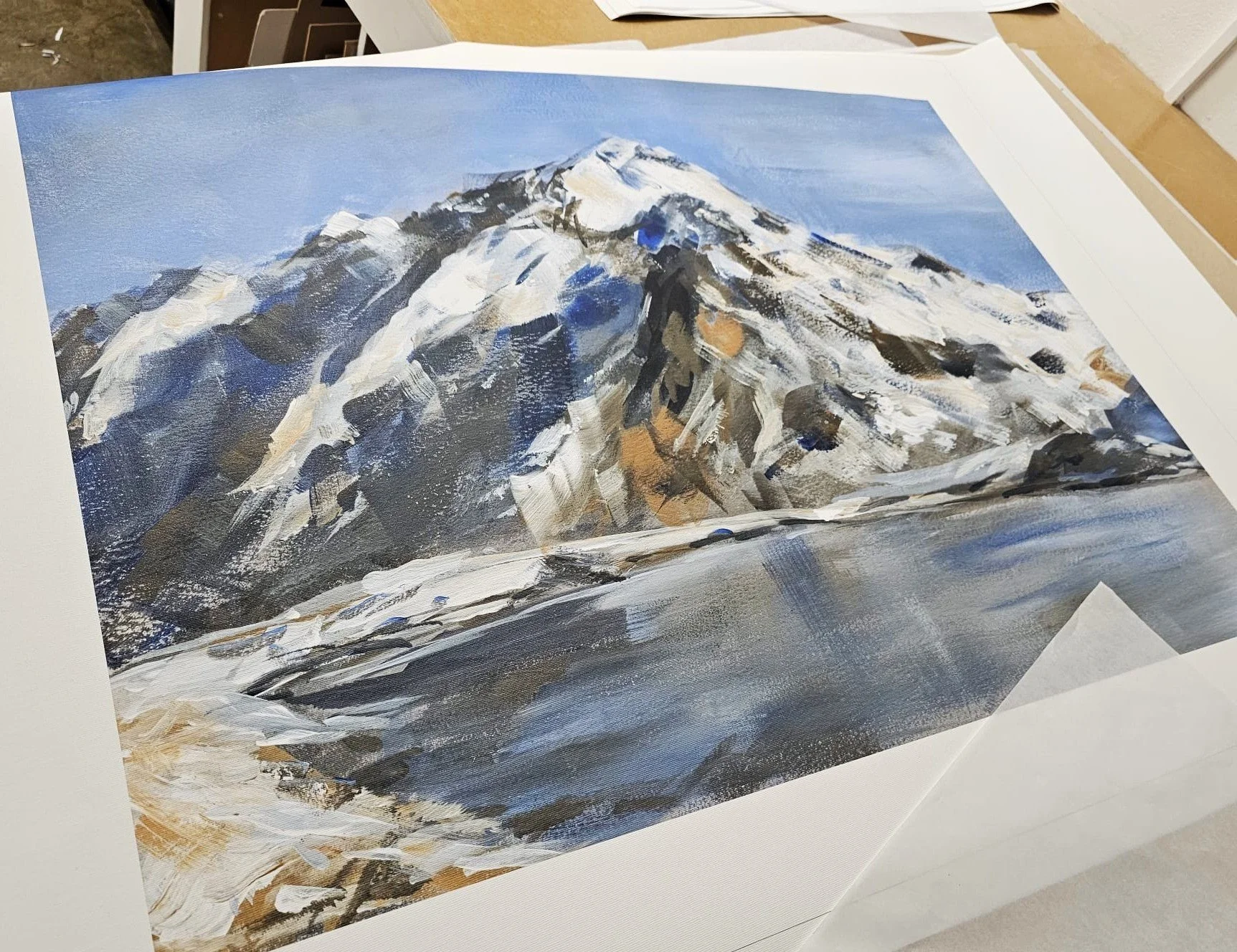
“My process begins with field observations, studying light behaviour, atmospheric conditions, and the underlying geometry of a landscape. Back in the studio, I work primarily in acrylics for their fast-drying time and ability to build layered surface complexity. I start with a loose underpainting to establish value structure and directional flow, then develop the piece through successive passes of opaque and semi‑transparent layers. I use a combination of brushes and palette knives to create contrasting textures: broad, gestural strokes to generate movement in sky and snowfields, and sharper, knife‑applied marks to articulate rock faces, edges, and areas of tension. Much of the painting comes from pushing wet‑into‑dry interactions, letting the acrylic drag, skip, or break across previous layers to mimic the fractured surfaces and shifting atmospheres found in alpine environments.
Throughout the process, I work intuitively rather than photographically, allowing the memory of the landscape to guide adjustments in colour temperature, edge softness, and compositional weight. The goal is a surface that feels alive, a balance of control and spontaneity that reflects both the physical structure of the place and the emotional impression it left on me.”
What is an artist’s role in society and how do you see that evolving?
“Artists are emotional cartographers, we map what can’t be easily spoken. In a world increasingly driven by speed and distraction, I believe artists play a vital role in grounding people emotionally and spiritually. That role will only deepen as society seeks meaning and connection.”
Have you had any noteworthy exhibitions you'd like to share?
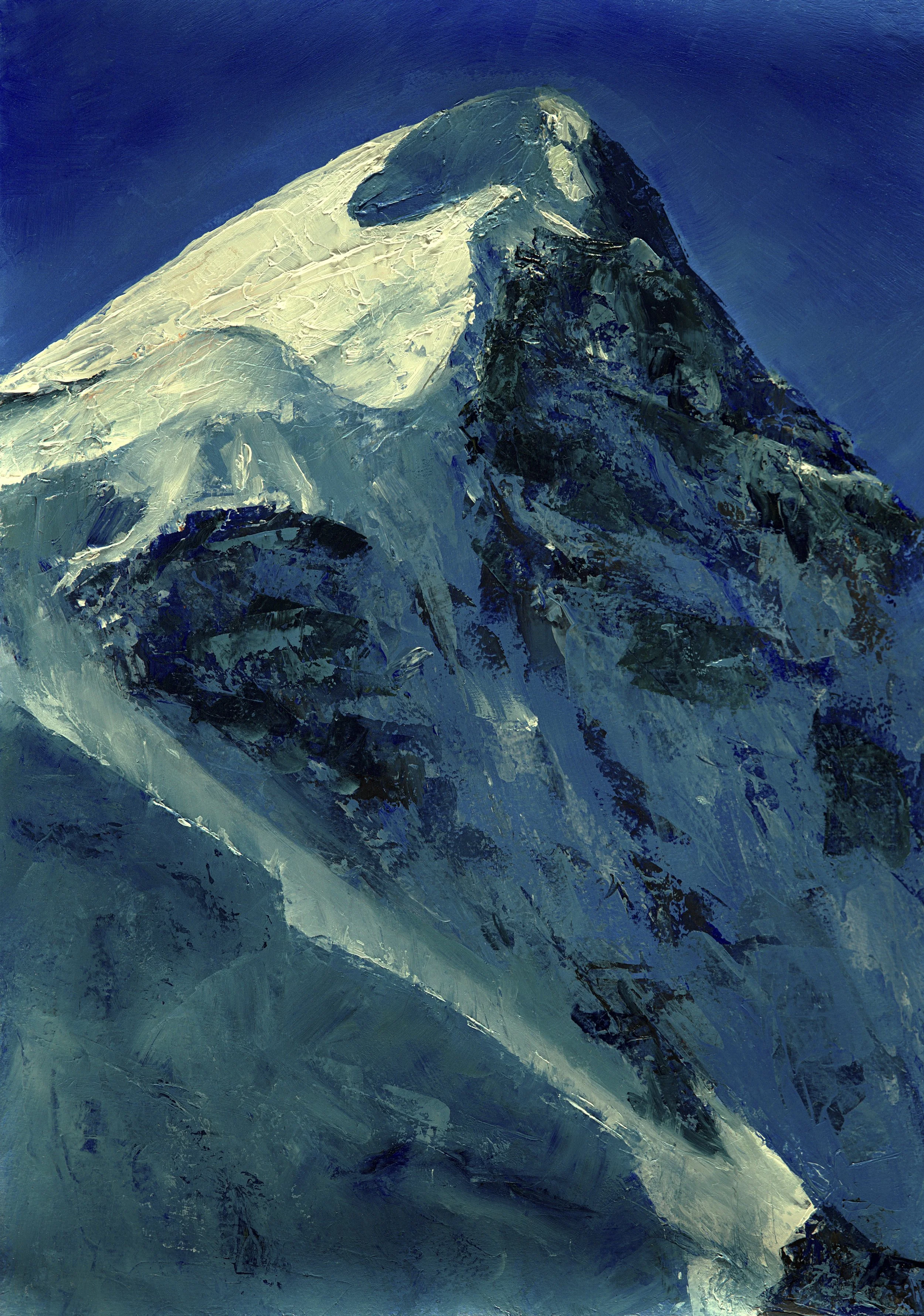
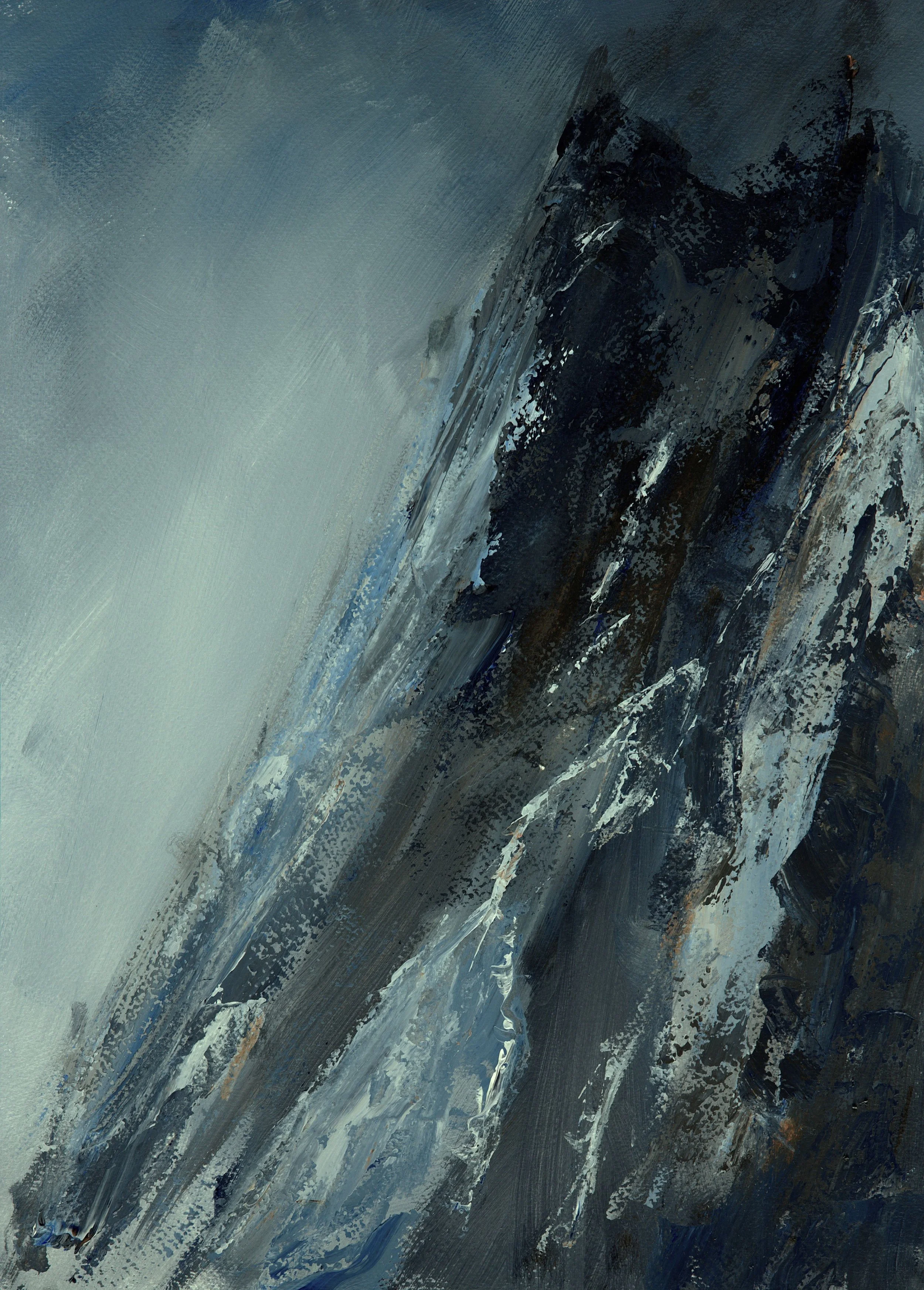
“My ‘Mountain High’ collection was recently exhibited locally and received heartfelt responses. It’s now available online via my website at billrainey.art. I’m exploring partnerships with lodges and retreats to bring the work into spaces of reflection and healing.”