Interview
Anthony Litjes
Anthony Litjes is a Dutch multidisciplinary artist, architect, researcher, and writer whose practice investigates the invisible forces that shape contemporary life. Working at the intersection of art, architecture, science, and technology, he creates immersive installations, sculptures, and spatial interventions that explore themes of energy, power, ecology, perception, and human existence. With more than three decades of experience in architecture, Litjes approaches art through a spatial and systems-based perspective. His work transforms physical phenomena—including electricity, magnetism, light, sound, and natural processes—into sensory experiences that challenge conventional boundaries between the visible and the invisible, the natural and the artificial, and the scientific and the poetic. Central to his artistic practice is an ongoing investigation into the relationship between humanity and its technological environment.
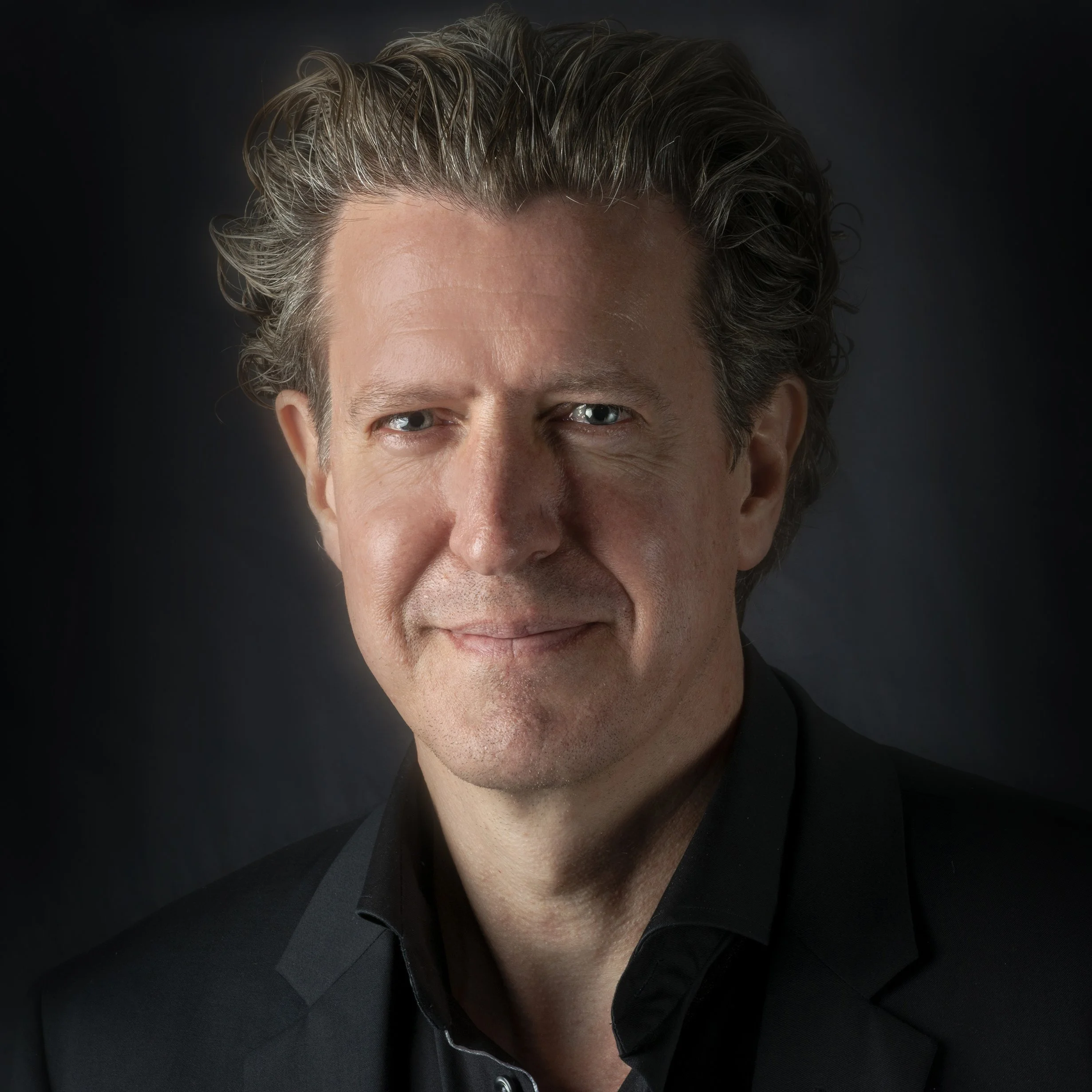
His installations often employ industrial materials, high-voltage electrical systems, and kinetic elements to reveal hidden energies and expose the tensions between progress, consumption, vulnerability, and ecological responsibility. Rather than offering definitive answers, his works invite reflection on the complex networks that connect humans, technology, and the living world. As both an architect and artist, Litjes views space as an active medium capable of influencing perception, emotion, and social interaction. His projects draw from research across architecture, environmental science, philosophy, and cultural theory, resulting in works that combine conceptual depth with striking visual and physical presence. Alongside his artistic practice, Litjes is engaged in research, writing, and interdisciplinary collaboration, exploring regenerative design, sustainability, and the future relationship between culture, technology, and nature. His work seeks to bridge disciplinary boundaries, creating new dialogues between artistic imagination, scientific inquiry, and architectural thinking. Anthony Litjes lives and works in the Netherlands.
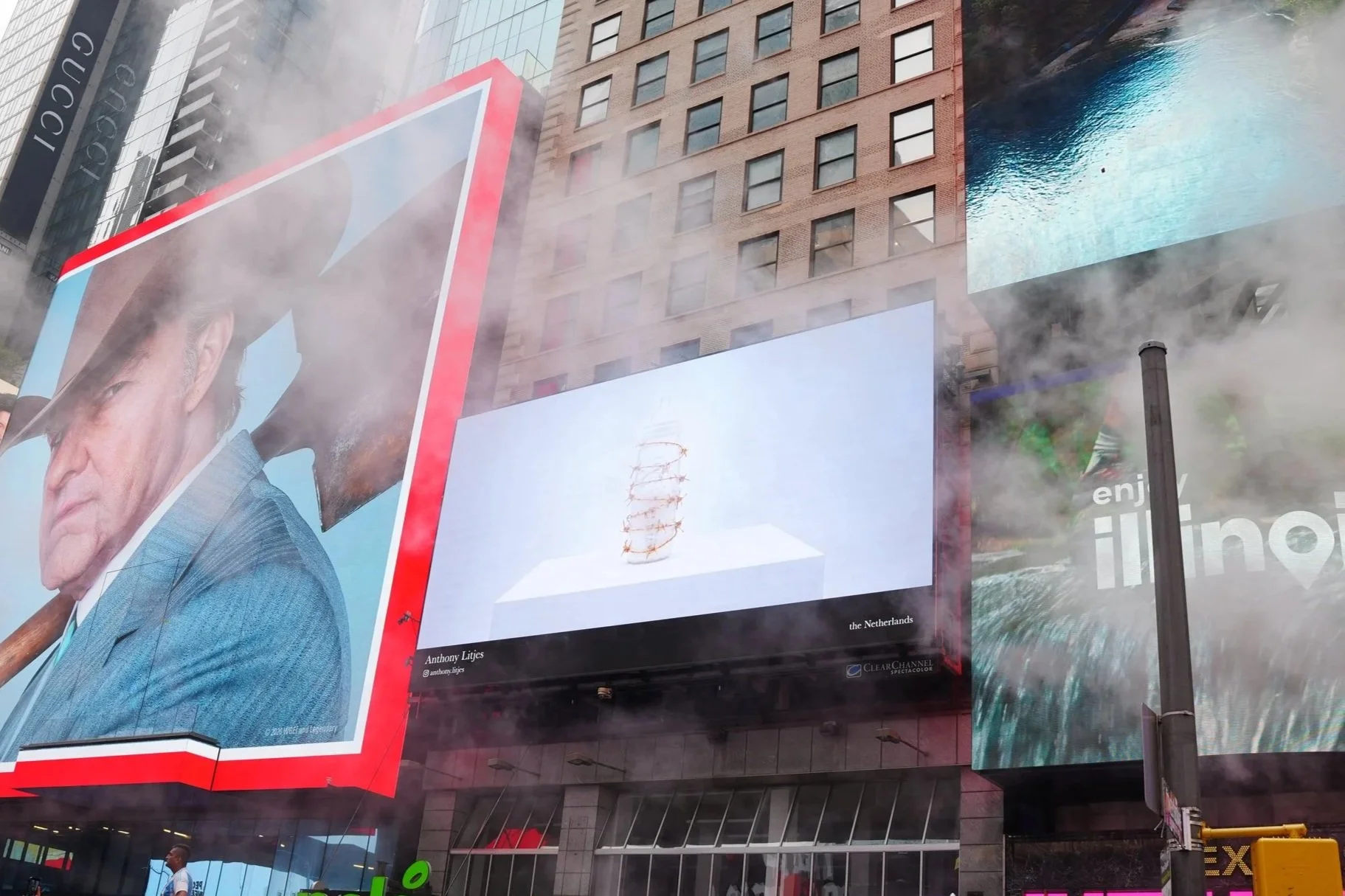
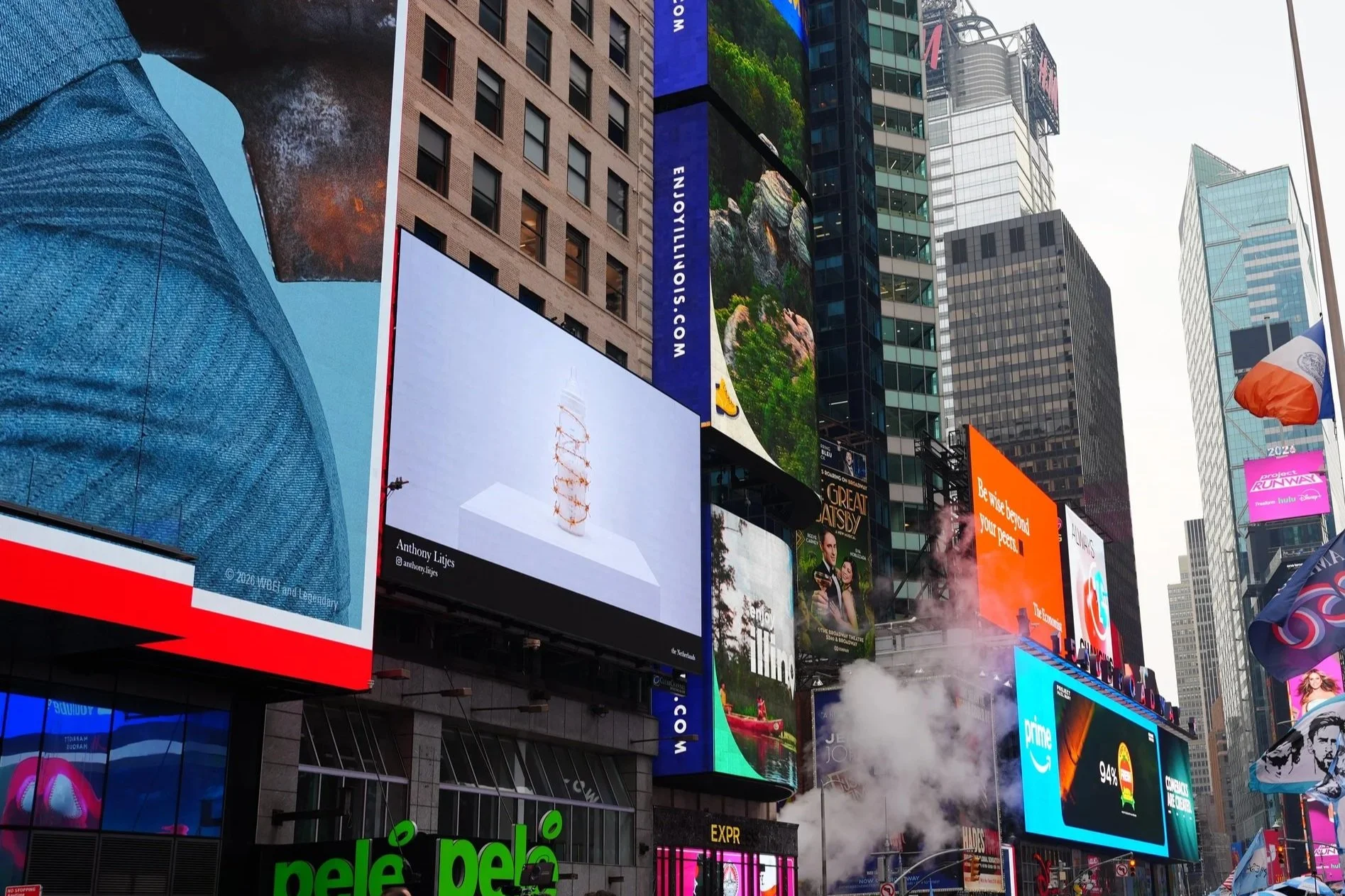
Anthony’s work was featured in Times Square, New York as part of Artistcloseup’s international open call for visual artists.
What is your background and how did you start your journey in the art world?
“As a child, I was always drawing and painting. I made all kinds of stuff because I like to work with my hands. The interest in art, architecture has always been there. I had a teacher at my first schoolyears, who told stories about Corbusier and Picasso. But in the later years, I followed first a building engineer education and got a degree. But the art was calling too, so I went tot ARTez and finished it and got a StartStipendium to work with. Later on, I also got a architect degree. My mind is mostly busy with ideas or concepts that can lead to new work. I make installations mostly and sometimes I take a sidestep to painting of photography.”
What does your work aim to say? Does it comment on any current social or political issues?
“My work is a reflection of what I see and what is going on in the world. I like to make objects that make you think, it should trigger you.”
Do you plan your work in advance, or is it improvisation?
“I work from an idea of concept but during the process it can change. If there is an exhibition, then you have to improvise sometimes, because it's not all you can plan for.”
Are there any art world trends are you following?
“I don't follow trends, because I am what I am, and trends don't always fit my thinking or work method.”
What process, materials and techniques do you use to create your artwork?
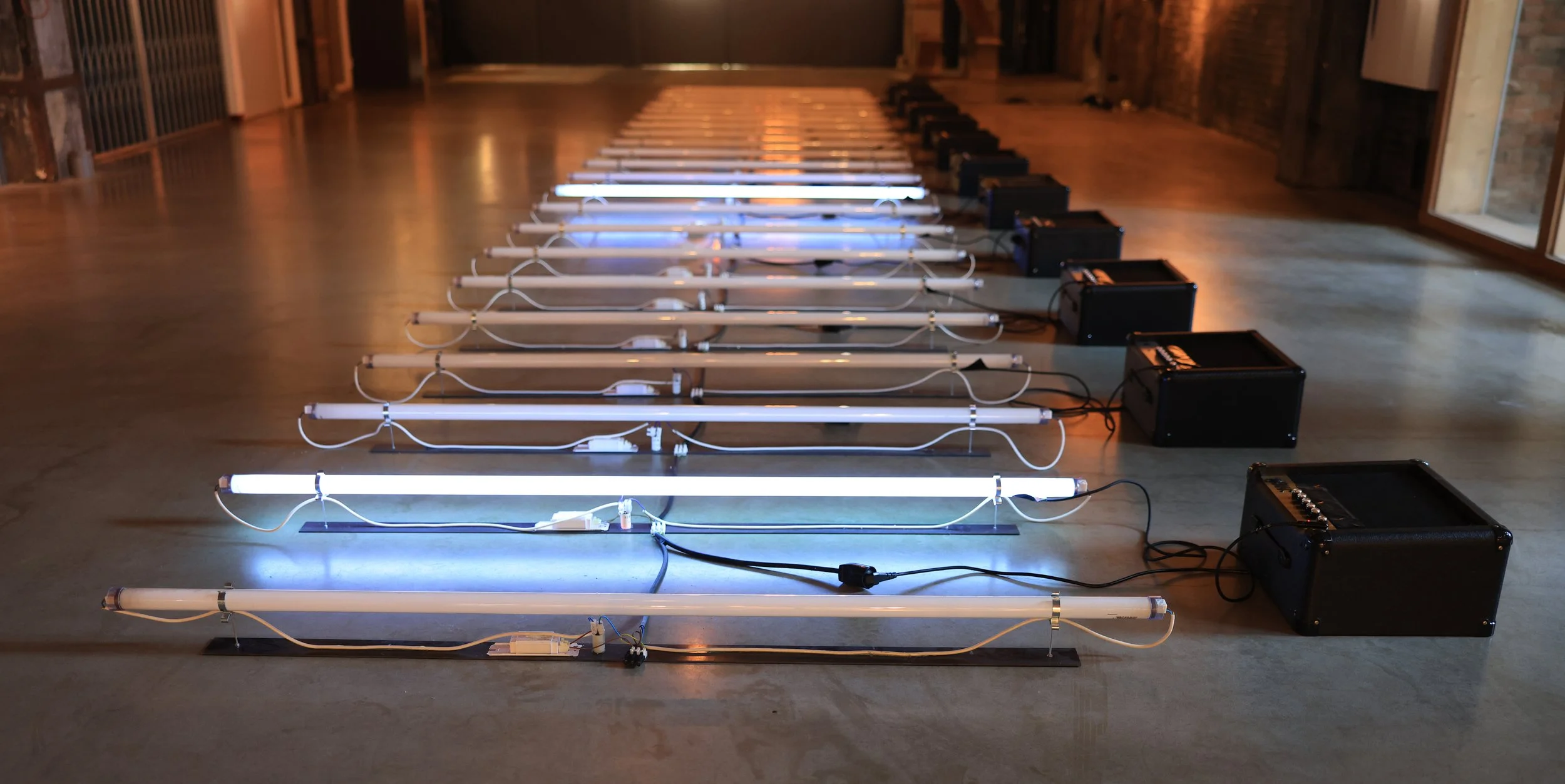
“I make 3D work, so I am bound by the rules of physics, that's my limitation, but also the budget that I have to work with. I use electronic, flames, water, propane or other gasses, paint, steel, artificial materials, AC/DC and photography. You start with an idea and then the process demands sometimes other choices. The conclusion is the work that you finish. And then it can start all over again, it's like a dominio effect.”
What does your art mean to you?
“Art is a state of mind. You see things differently and you make other stories. In fact you make stories with your work, not by words but by an object or performance. Nothing is always wat it seems to be, like quantum physics.”
What’s your favourite artwork and why?
“I can't choose art is a moment and the meaning of that moment. So, at one time it can mean everything and in another time it loses it's impact. Only great works don't have an end date. I like my work Ouroboros, because it's about now and then, its about nature and physics, artificial and natural. Like quantum physics says, in the core its all the same.”
Have you had any noteworthy exhibitions you'd like to share?
“I will be participating with BigArt 2026, it's is preparation and also the Dutch Design Week 2026.”
Website: www.adaenterprises.info
Instagram: @anthony.litjes
Other links: www.linkedin.com/in/anthony-litjes