
Interview
Andrew Milne
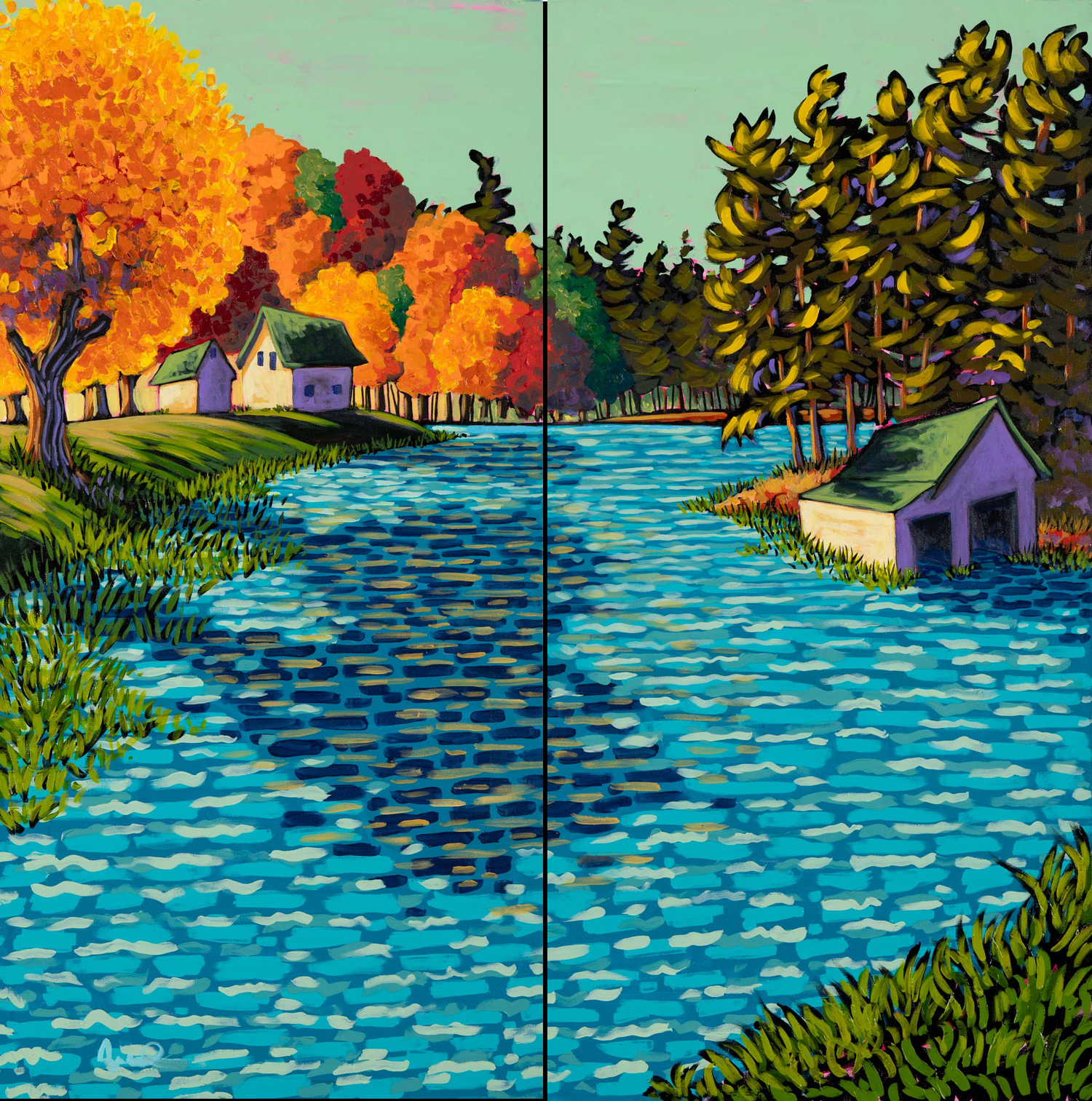
Andrew Milne is a contemporary landscape artist based in Ottawa, Ontario. Inspired by the rugged Canadian Shield and lake country, his work explores atmosphere, memory, perception, and the emotional connection people have with place. Working in a contemporary impressionistic style, Milne combines bold colour, expressive linework, and layered compositions to create landscapes that feel lived in rather than merely observed.
His paintings are rooted in the idea of “sense of place” and the belief that landscapes carry memory, emotion, and personal history. Rather than documenting a location exactly as it appears, Milne is interested in how a place lingers in us after we leave it. Through both studio and plein air painting, he explores light, weather, movement, and atmosphere as emotional experiences as much as visual ones.
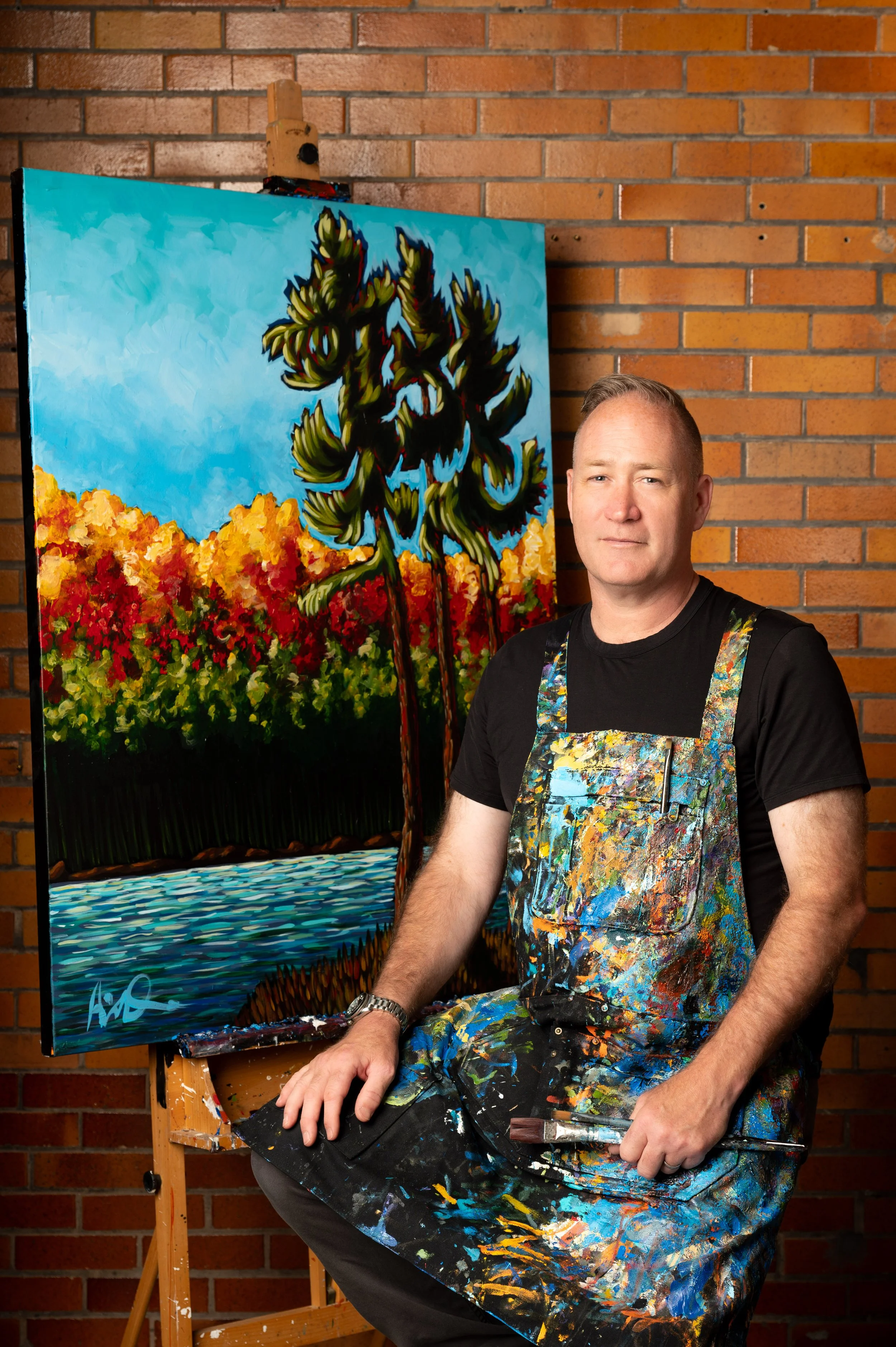
Influenced by artists such as Henri de Toulouse-Lautrec, Tom Thomson, the Group of Seven, and Christo, Milne’s work balances observation with interpretation. His paintings often move between representation and abstraction through flattened forms, bold contrast, and expressive colour relationships.
At the center of Milne’s practice is the idea of attention. In a culture that moves increasingly fast and digitally, his work invites viewers to slow down, observe more carefully, and reconnect with landscapes and moments that might otherwise pass unnoticed. Painting, for Milne, is both an act of observation and an act of reflection.
What is your background and how did you start your journey in the art world?
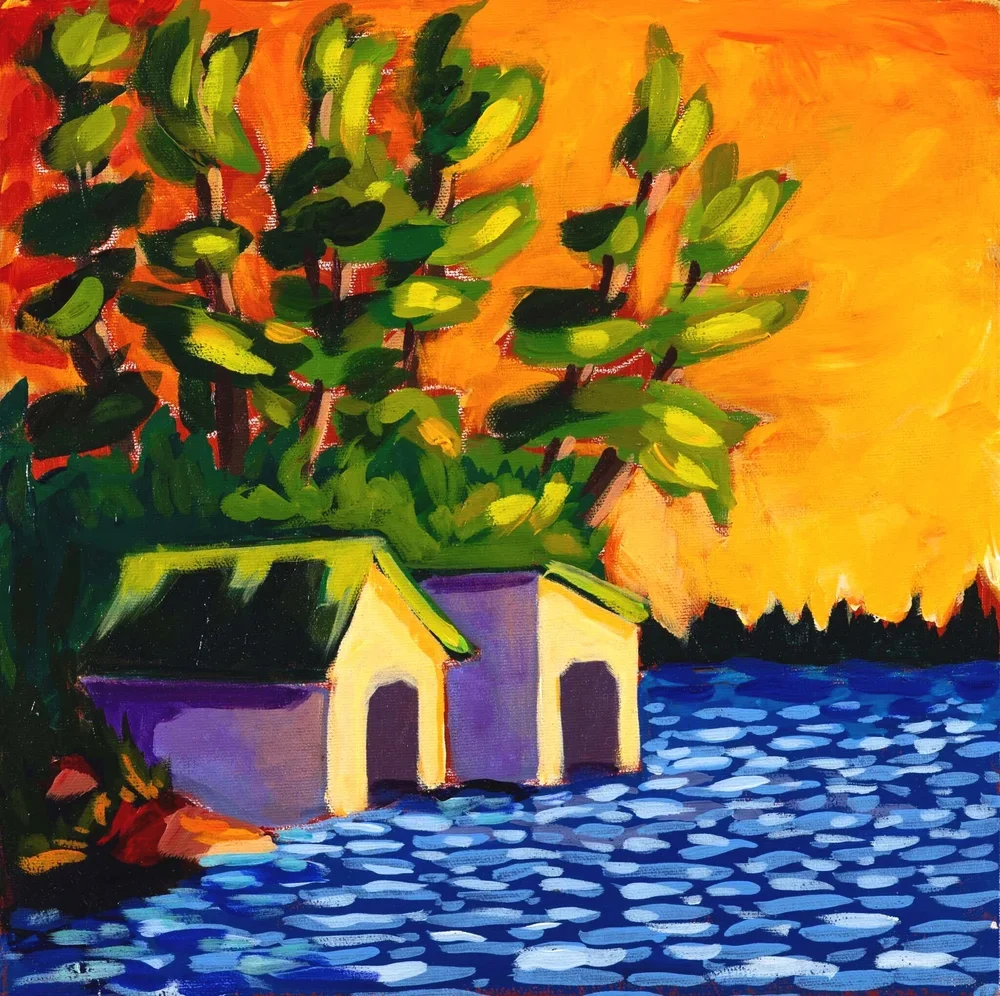
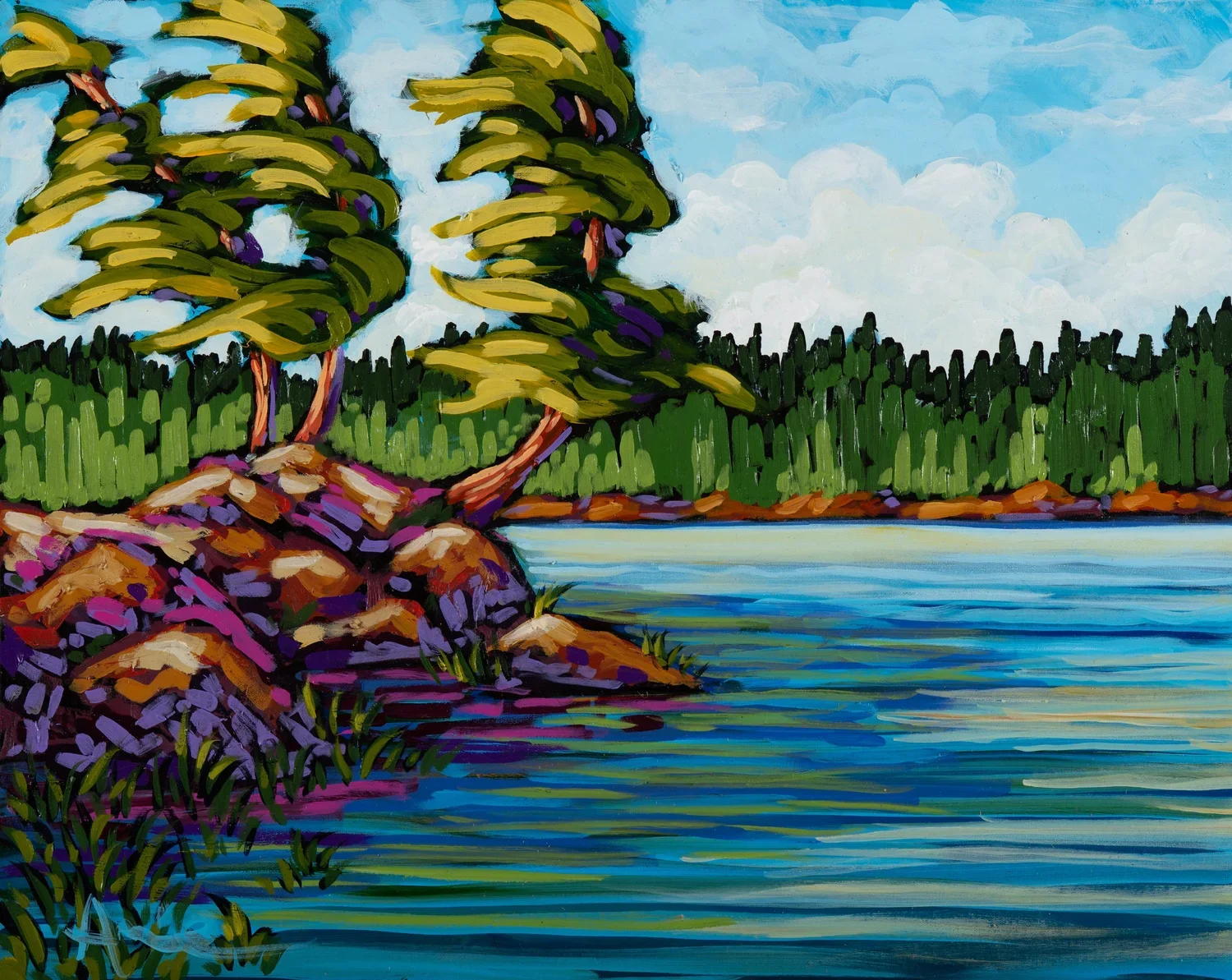
“I’ve always been drawn to art and visual storytelling, especially landscapes and places that carry emotion and memory. Growing up around Eastern Ontario and the Rideau Lakes shaped the way I see the world. The changing skies, reflective water, exposed rock, and wind swept pines became part of my visual language long before I ever thought seriously about becoming an artist.
My journey into the art world evolved gradually through observation, experimentation, and a growing desire to create work that felt personal and authentic. At a certain point, I realized people were connecting emotionally with the paintings. Collectors would often share stories about lakes they grew up around, family cottages, or moments the work reminded them of. That response changed the way I thought about painting.
Over time, my work moved toward a more contemporary impressionistic approach focused less on documenting a scene and more on capturing atmosphere, energy, and the emotional feeling of a place.”
What inspires you?
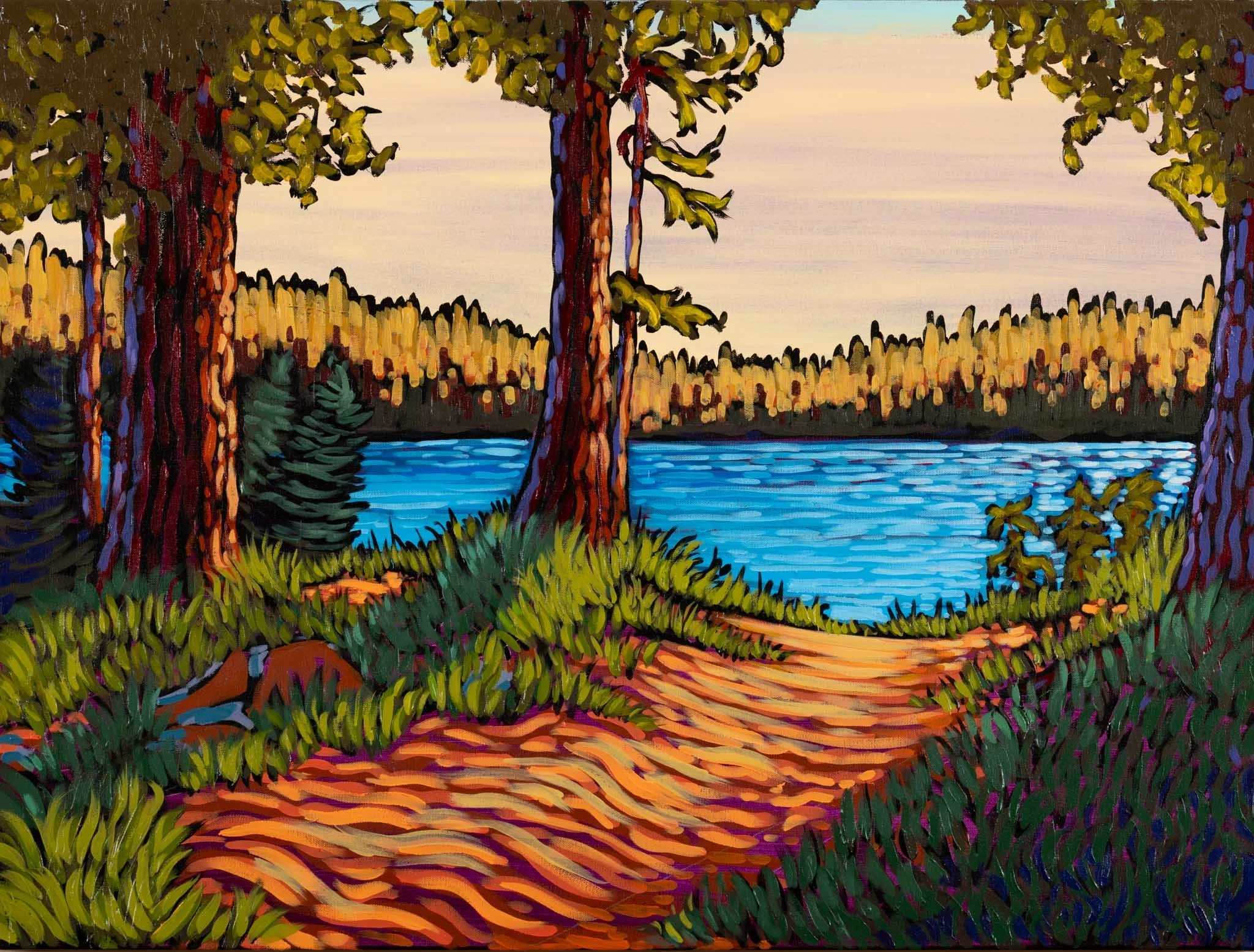
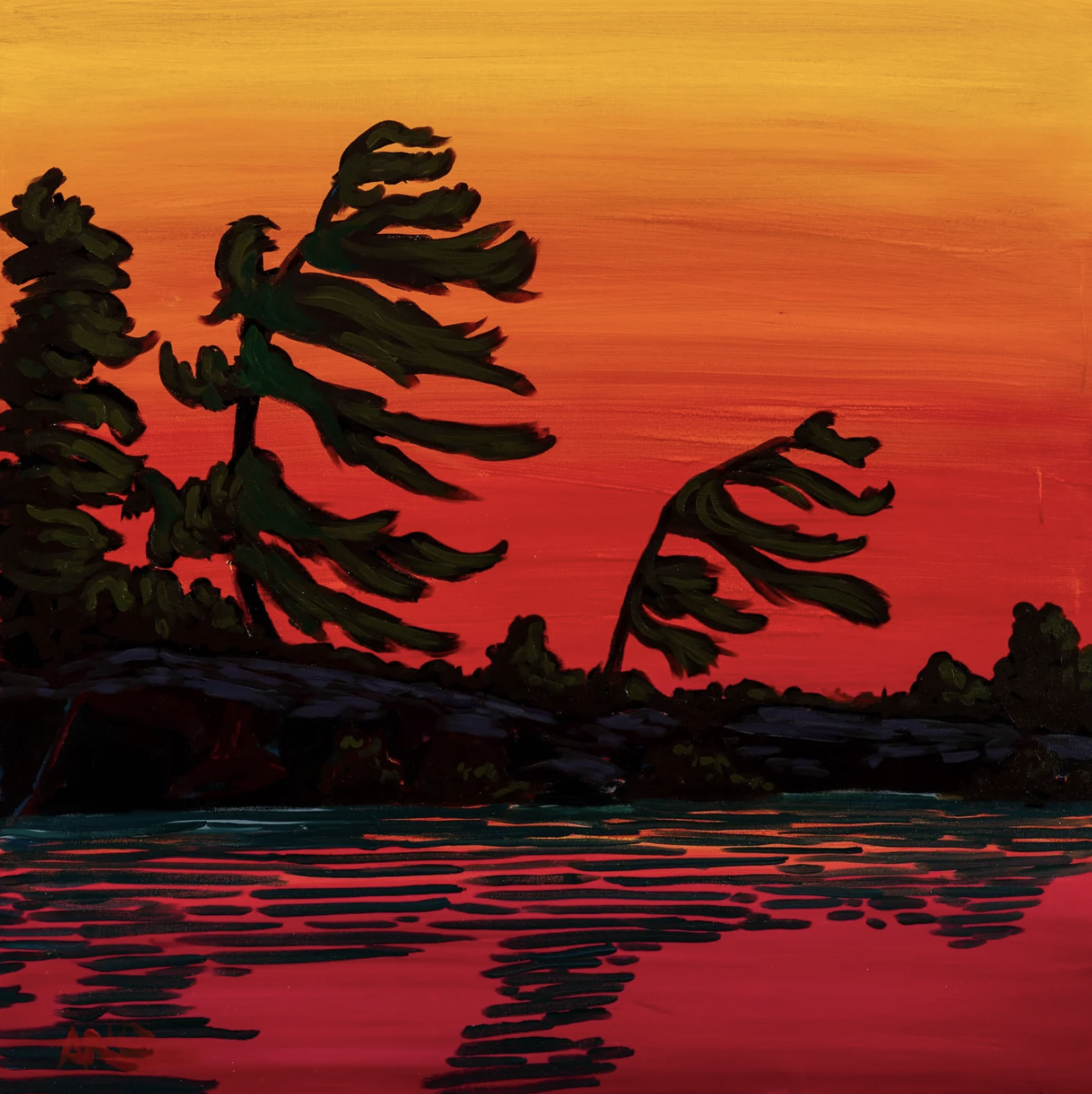
“I’m inspired by places that feel emotionally familiar and deeply connected to memory. The rugged Canadian Shield landscape, quiet shorelines, old docks, changing weather, reflections on water, and the movement of trees in the wind are things I continually return to.
What interests me most is not simply the beauty of a landscape, but the emotional imprint it leaves behind. I’m drawn to fleeting moments. Light before a storm, fog moving across a lake, or the stillness of early morning often carry a kind of emotional tension that feels both temporary and timeless.
I’m also inspired by the idea of attention. We live in a world filled with constant distraction, and painting gives us an opportunity to slow down and reconnect with our surroundings. A lot of my work comes from simply observing carefully and trying to hold onto moments that might otherwise disappear.”
What themes do you pursue? Is there an underlying message in your work?
“Much of my work explores memory, atmosphere, perception, and our emotional relationship with landscape. I’m interested in how certain places become tied to identity, experience, and personal history over time.
An underlying theme in the work is the importance of presence and observation. We often move through the world too quickly to fully notice it. The movement of water, changing light across rock, or the quiet feeling of standing alone outdoors can carry an incredible emotional weight when we stop and pay attention to it.
I’m less interested in painting a location exactly as it appears and more interested in capturing how it feels to experience it. Ideally, viewers bring their own memories and associations into the work. I want the paintings to create space for reflection, recognition, and emotional connection rather than simply describe a landscape.”
How would you describe your work?
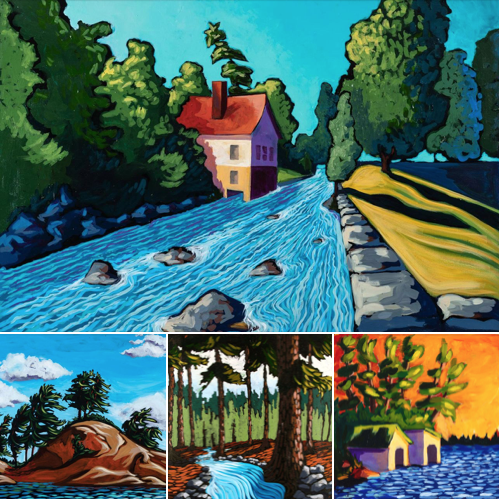
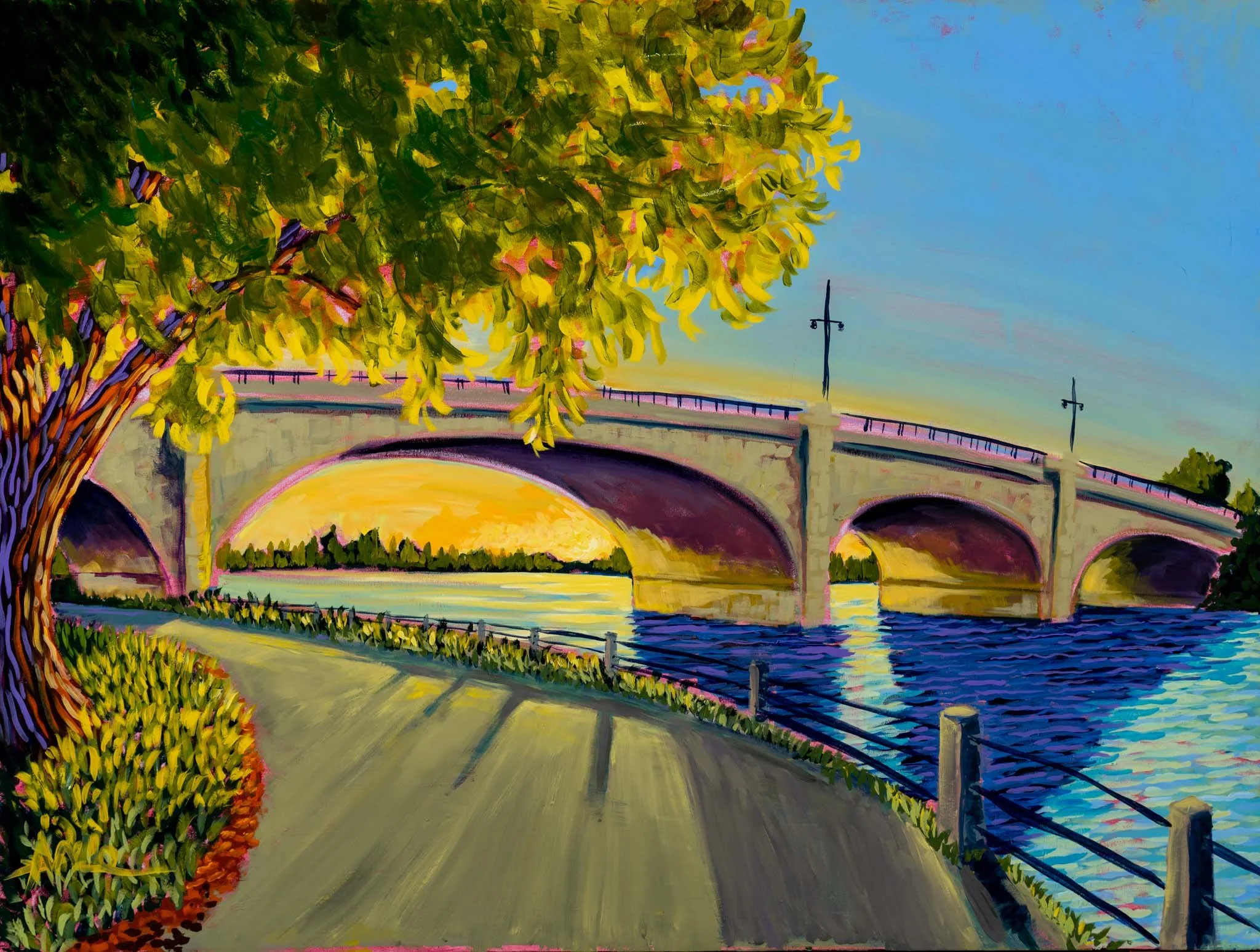
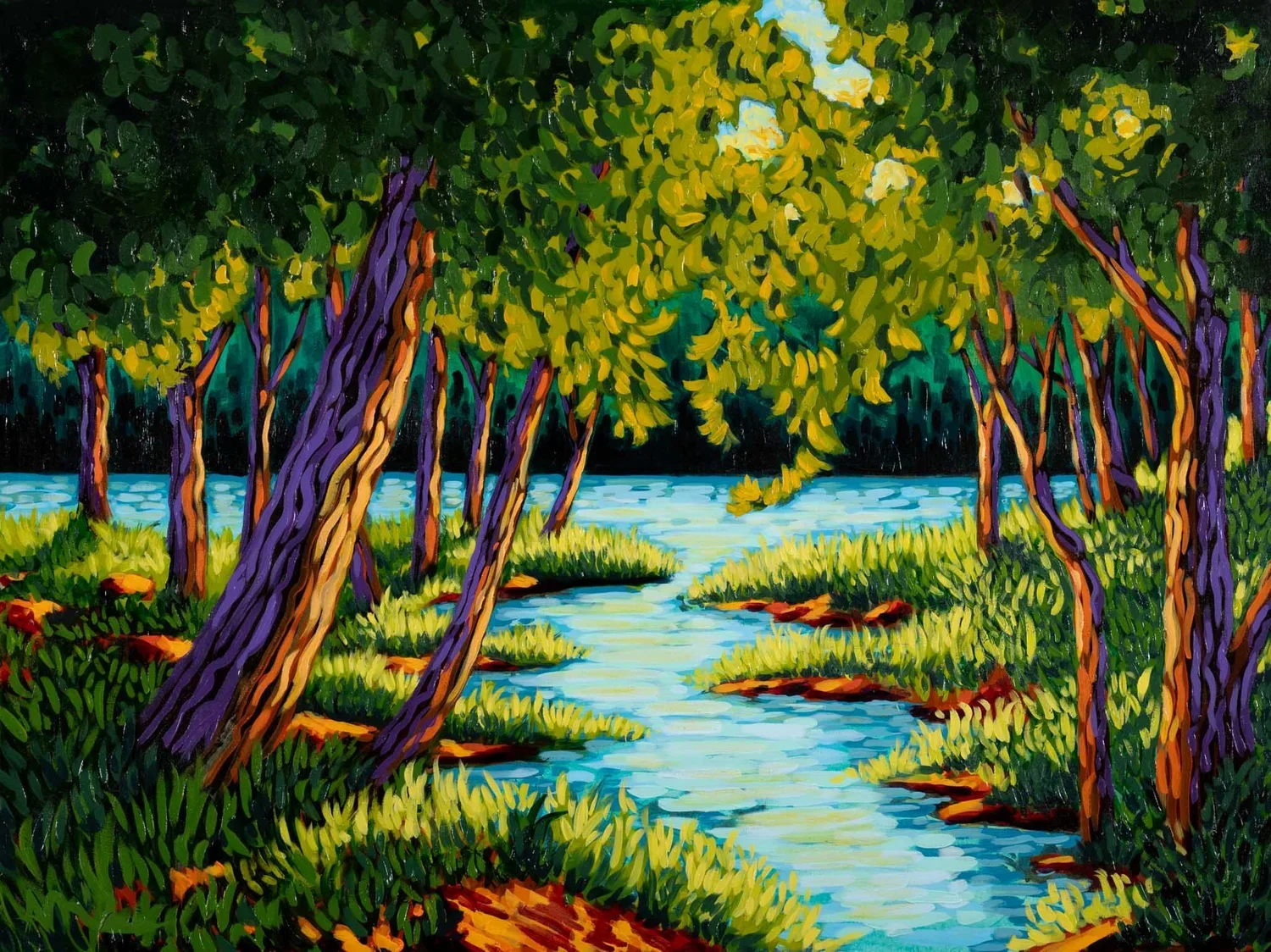
“I would describe my work as contemporary impressionistic landscape painting focused on atmosphere, movement, and emotional connection. My paintings are rooted in the landscape but interpreted through colour, composition, memory, and perception rather than strict realism.
There’s also a graphic quality to the work through the use of flattened shapes, expressive linework, and bold contrast. I enjoy simplifying forms and pushing colour relationships to create energy and movement while still maintaining a connection to place and environment.
The work often sits somewhere between observation and abstraction. I want the paintings to feel immersive and emotionally recognizable rather than static or purely descriptive. More than anything, I’m trying to create a feeling that stays with the viewer after they leave the painting.”
Which artists influence you most?
“I’m influenced by artists who reinterpret the world through strong visual language and emotional energy rather than strict realism. Henri de Toulouse-Lautrec has always inspired me because of his confidence with composition, movement, and simplification. I admire artists who distill an experience down to its essential feeling.
I was also deeply influenced by Tom Thomson and the Group of Seven. Their work captured the atmosphere and emotional power of the Canadian landscape in a way that still feels timeless today.
Another major influence is Christo. I’ve always been fascinated by the scale and ambition of his work and the way he transformed familiar environments into entirely new experiences. That idea of changing how people perceive and emotionally engage with a landscape has always resonated with me.”
What is your creative process like?
“My process usually begins outdoors through sketching, observation, and plein air painting. I like experiencing a place directly before bringing the work back into the studio. There’s something important about standing in the wind, watching changing light and weather in real time, that photographs alone can’t fully capture.
While outdoors, I collect sketches, colour notes, reference images, and impressions that later become part of the process. Once back in the studio, the work becomes more intuitive. I combine observation with memory and emotion rather than trying to recreate a scene exactly as it appeared.
I often build paintings in layers, starting loosely and gradually simplifying forms while pushing colour, contrast, and movement. Music and rhythm also play an important role in the studio. At a certain point, the work shifts from observation into instinct, and that’s usually when the painting begins to come alive.”
What is an artist’s role in society and how do you see that evolving?
“I think artists help people slow down, reflect, and experience the world differently. Art creates emotional connection and gives shape to ideas or feelings that are often difficult to express through words alone.
Today, I think that role is becoming even more important. We live in a culture where attention has become one of our most valuable commodities. People are constantly consuming images and information, often without truly experiencing them. Art asks us to pause and engage more deeply.
As technology and AI continue to evolve, I think people will increasingly seek out work that carries a real sense of humanity behind it. Human observation, imperfection, memory, and lived experience are things that technology can imitate visually but not fully replace emotionally. Art reminds us not only what the world looks like, but what it feels like to live within it.”
Have you had any noteworthy exhibitions you'd like to share?
“I’ve been fortunate to participate in national exhibitions, studio tours, collaborations, and charitable initiatives throughout Ontario. One event I particularly enjoy is the Rideau Lakes Studio Tour, where visitors can experience the work in a more personal and immersive setting connected directly to the landscape that inspires it.
I’ve also exhibited at the Opinicon Resort Gallery, a place that has become closely tied to both my life and artistic process. The surrounding landscape continues to influence much of my work.
Another memorable experience was collaborating with international streetwear brand Raised by Wolves. I enjoyed exploring how art could move beyond traditional gallery spaces and intersect with design, fashion, and contemporary culture.
In addition to exhibitions, I founded Canvas for Kindness, an initiative that uses art to support local charities and community fundraising efforts.”