Interview
Aly Harte
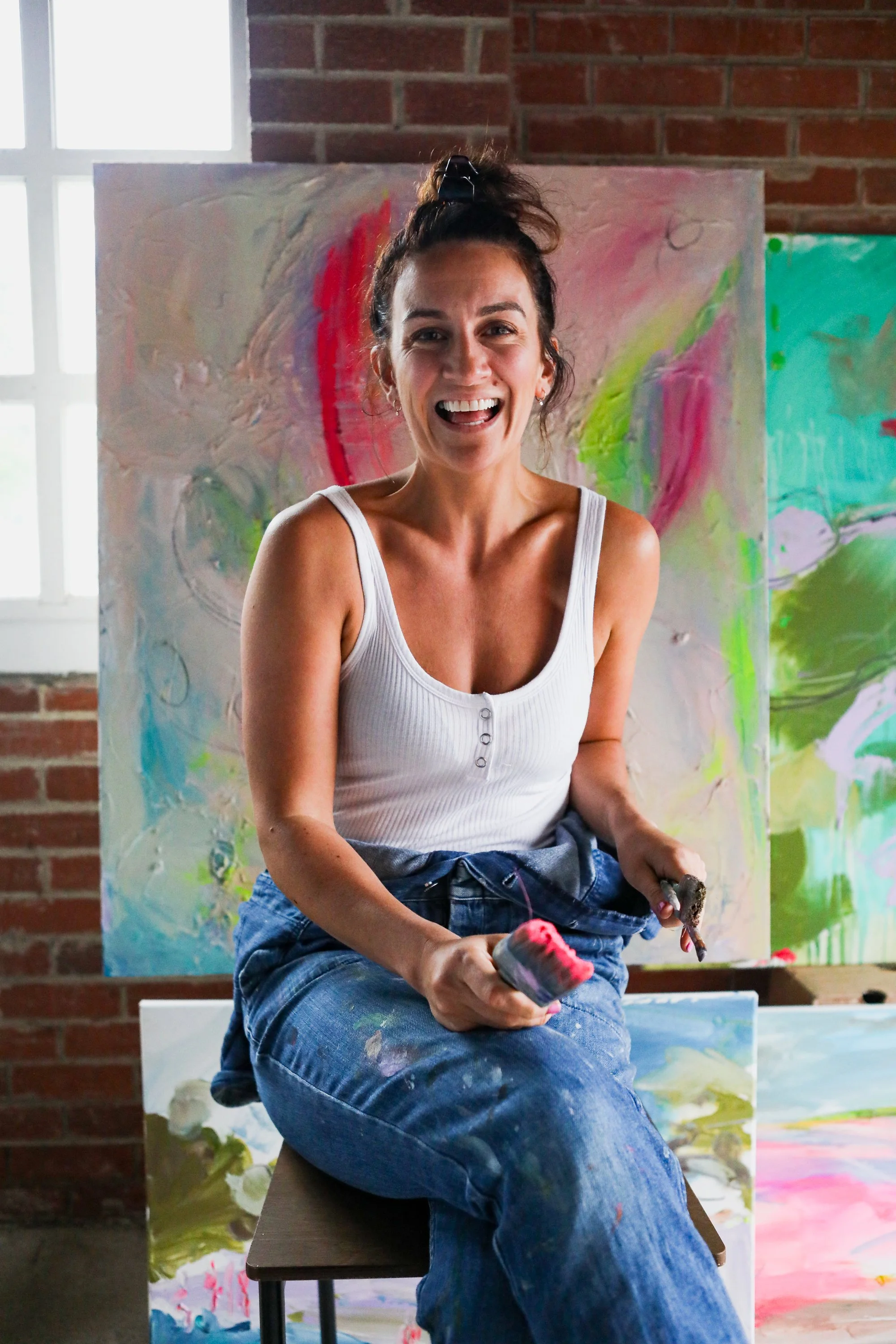
Aly Harte BA (Hons), MFA is a Belfast-based painter and art educator, changing grief into colour and teaching the world to paint loose. A First Class Fine Art graduate with an MFA in Painting and Performance with Distinction, Aly has worked professionally as an artist for 17 years. Her expressive, physical paintings explore grief, joy, memory, motherhood and the Irish landscape through colour, movement and instinctive mark-making. Alongside her studio practice, Aly has created hundreds of painting demonstrations reaching millions of people online, encouraging artists around the world to let go of perfection, trust their instincts and find freedom in paint.
What is your background and how did you start your journey in the art world?
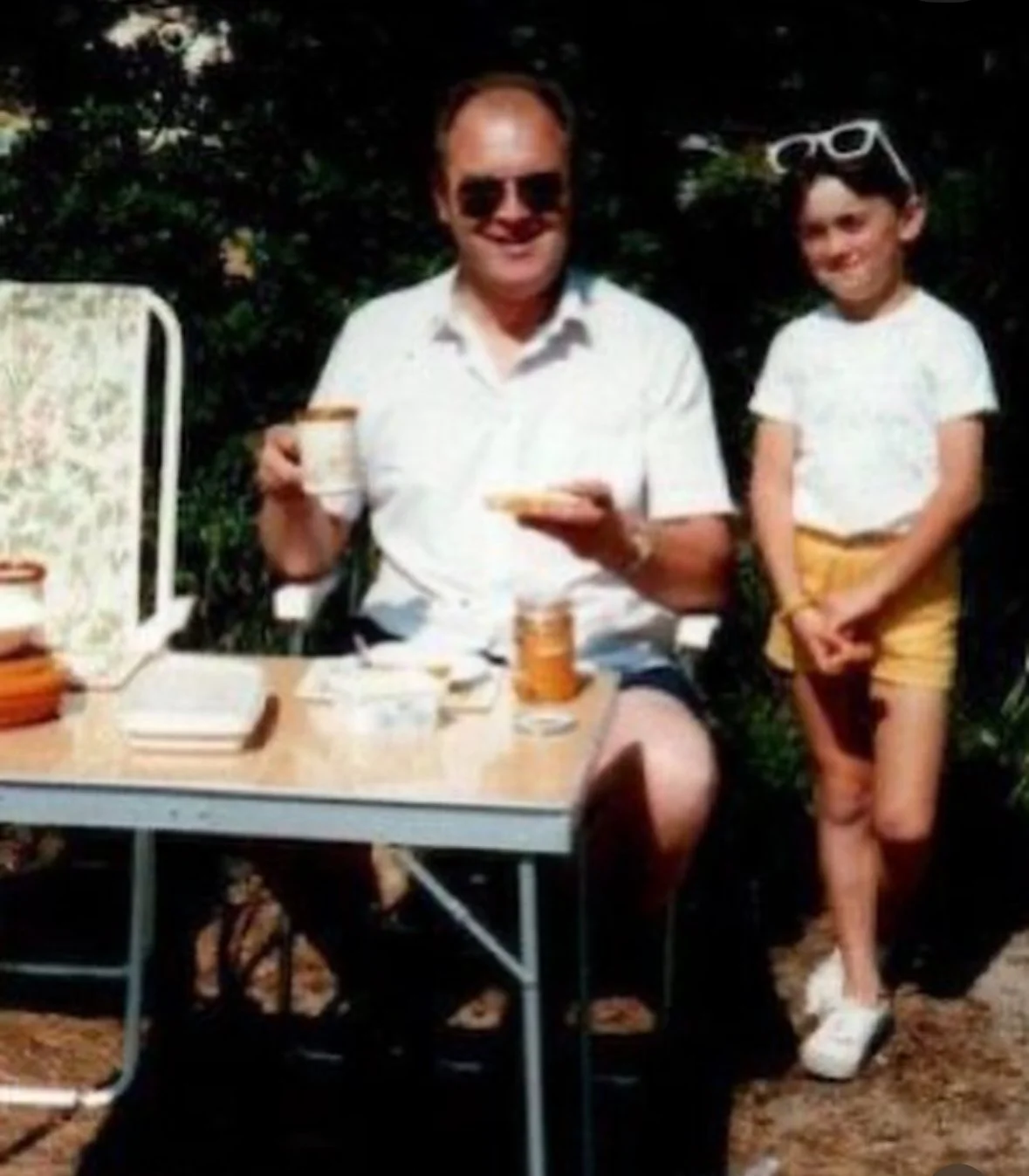
“I’m a Belfast-based artist and art educator, and I’ve been working professionally as an artist for around 17 years. I studied Fine Art and graduated with First Class Honours, then completed an MFA in Painting and Performance with Distinction. My relationship with art goes much further back than qualifications. I lost my father when I was seven, and drawing and making became somewhere I could put things I didn’t necessarily have words for. I often say that grief was the base layer and joy came later. That relationship between the two still sits underneath much of my work. After university I continued painting, exhibiting and working within community arts while gradually building a full-time practice around being a mum to three boys. Teaching has also become a major part of my practice. I’ve created hundreds of painting demonstrations, reaching millions of people through social media, and teach artists around the world to loosen up, trust themselves and stop chasing perfection. I don’t really see painting and teaching as separate anymore. Both are about permission, instinct and reconnecting with why we wanted to make art in the first place.”
What inspires you?
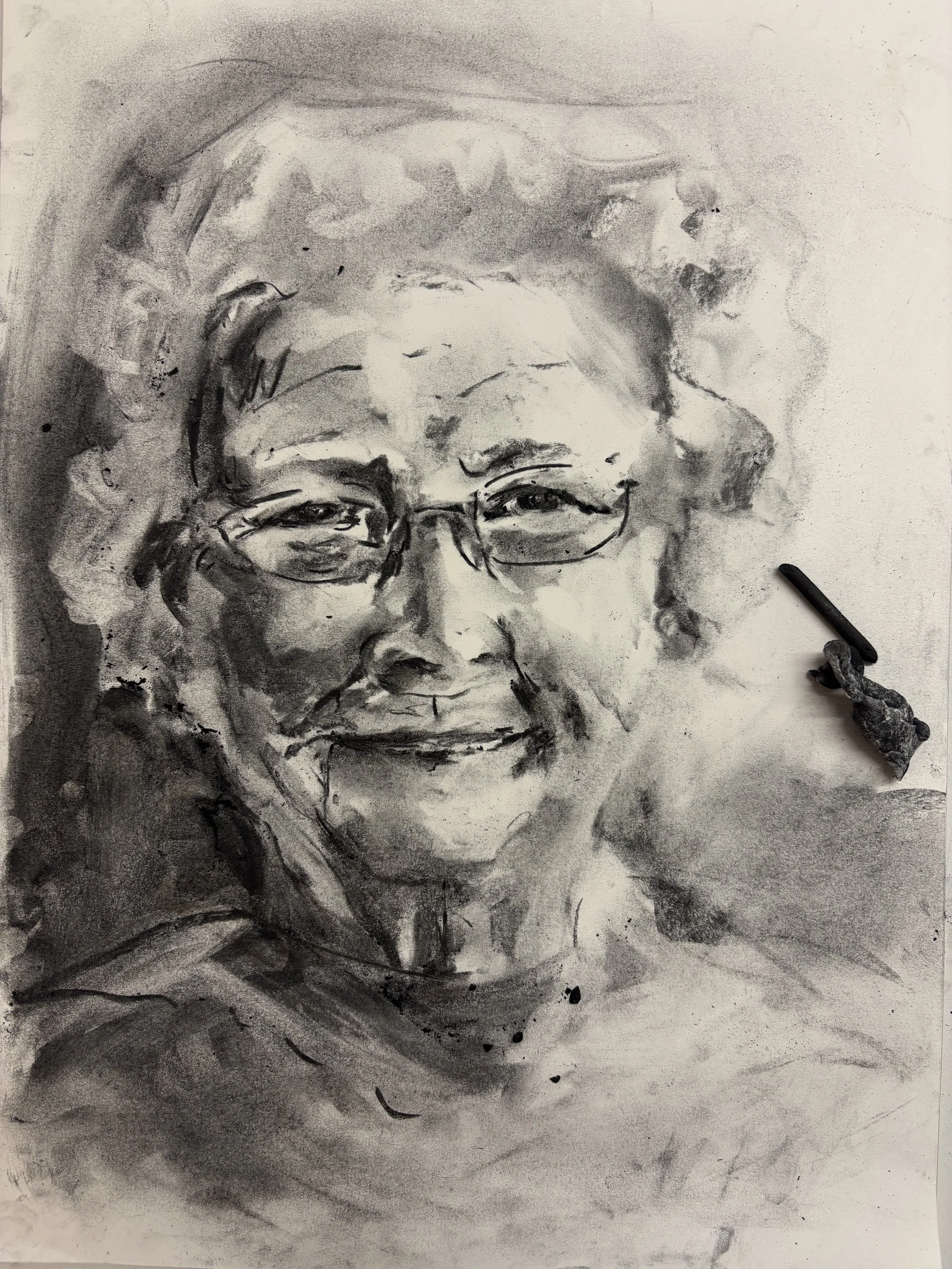
“Life inspires me — ordinary life as much as the extraordinary parts. My family, grief, joy, landscape, memory, colour, conversations and even a bunch of flowers on a table. I’m particularly drawn to Donegal and the Irish landscape, but I’m less interested in reproducing a place accurately than in what it felt like to be there. Losing my dad so young has inevitably shaped how I see the world, but I don’t want my work to be solely about loss. If anything, it has made me acutely aware of joy — colour, humour, movement, family and being alive. Louise Bourgeois, Neil Shawcross and Tracey Emin inspire me for different reasons, but particularly because their work comes from a place of expression, freedom and a willingness to play. I’m interested in work that feels human rather than perfect. I think inspiration comes when we’re engaged with life rather than waiting for some magical creative moment to arrive.”
What themes do you pursue? Is there an underlying message in your work?
“The coexistence of grief and joy runs through much of my work. Grief has been part of my story from a very young age, but so has an enormous appetite for life. I’m interested in how both can exist at the same time — how we can carry loss and still experience colour, humour, love and absolute joy. Memory and place are important too. The Irish landscape, particularly Donegal, appears again and again, but I’m not trying to document a landscape. I’m interested in memory, atmosphere and how a place made me feel. I suppose the underlying message is permission. Permission to feel, to play, to make a mess, to take up space and to trust yourself. I often say, ‘Grief was the base layer. Joy came later.’ The difficult parts of life don’t disappear, but we can keep adding layers.”
How would you describe your work?
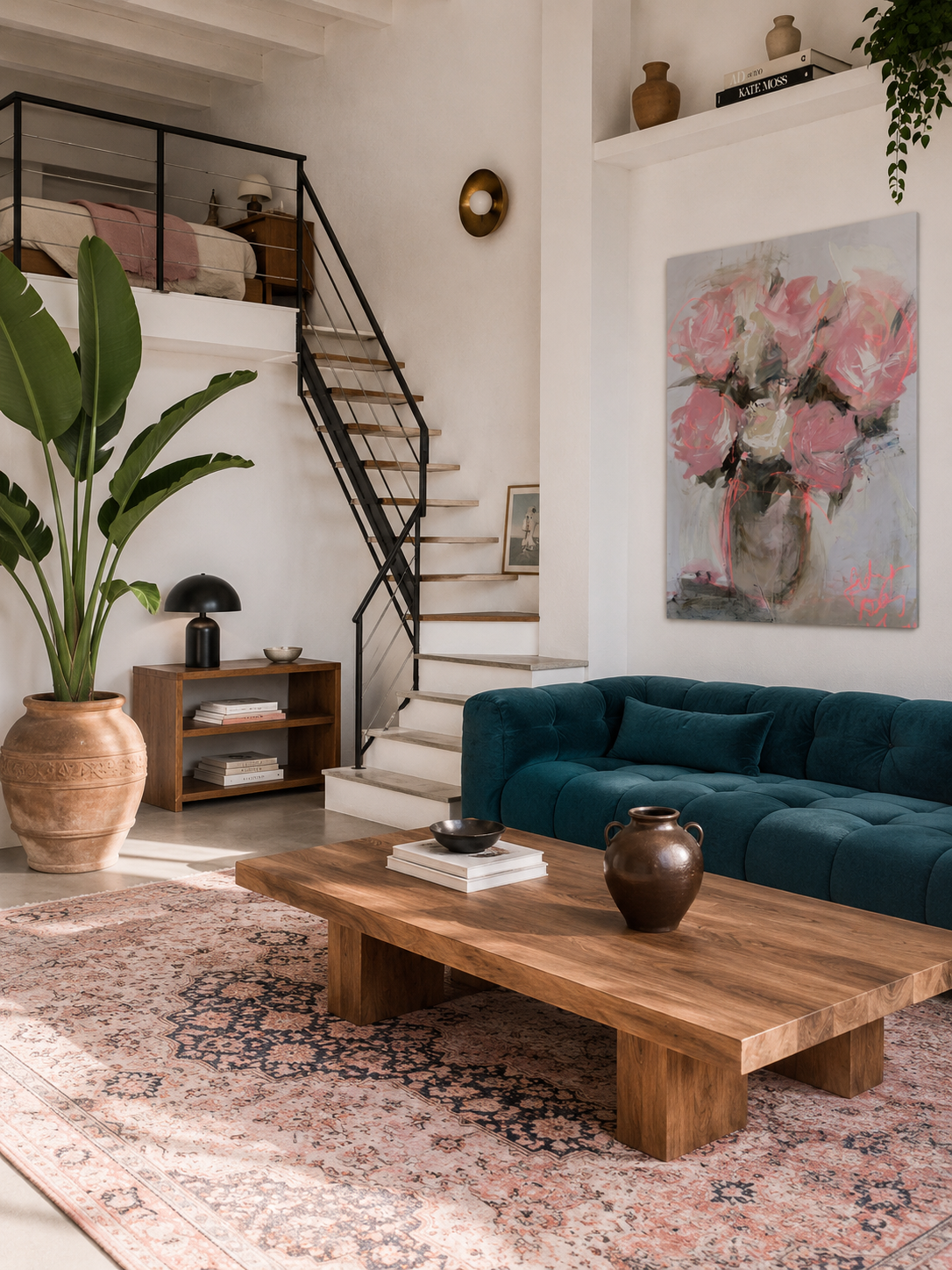
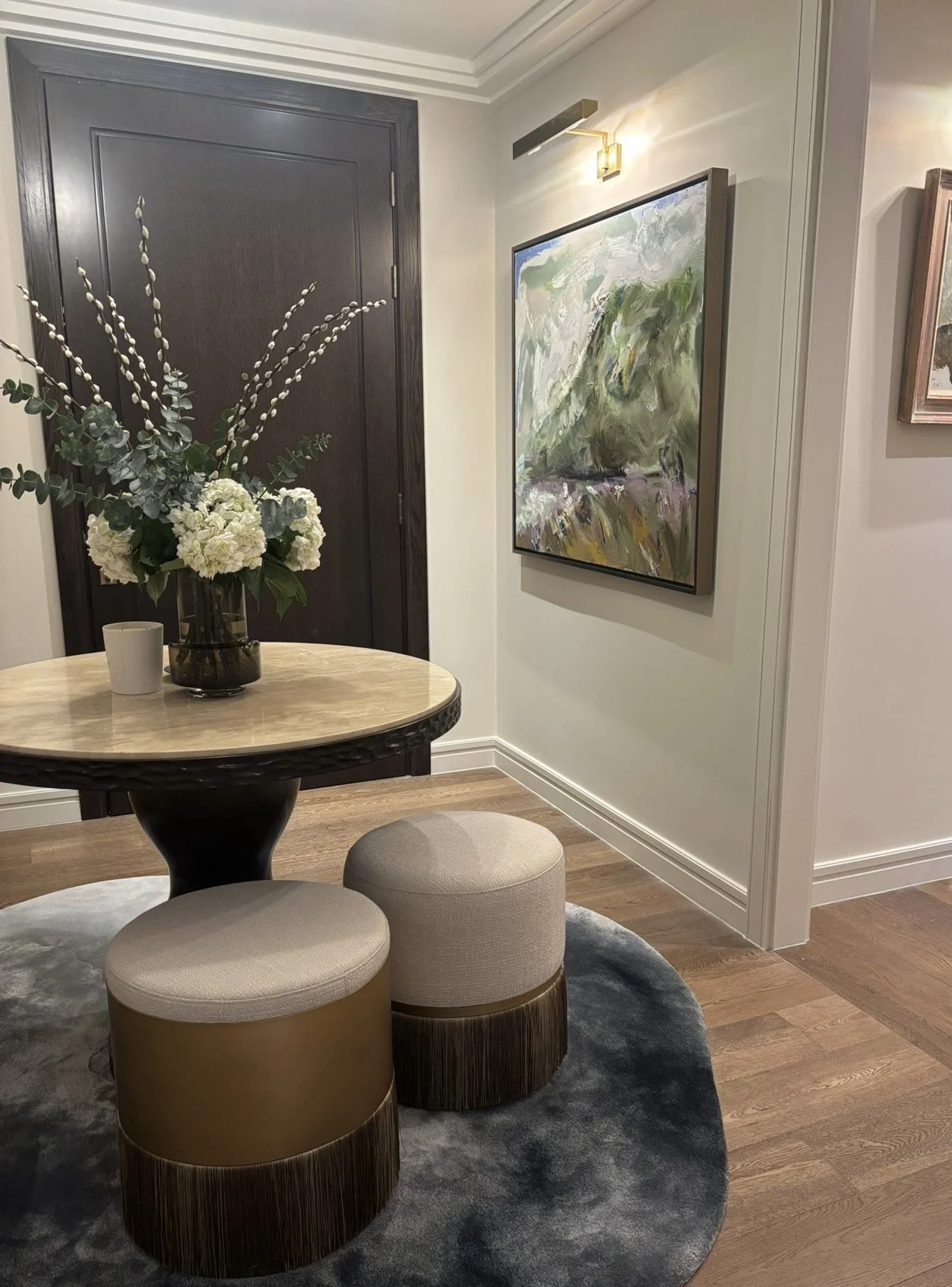
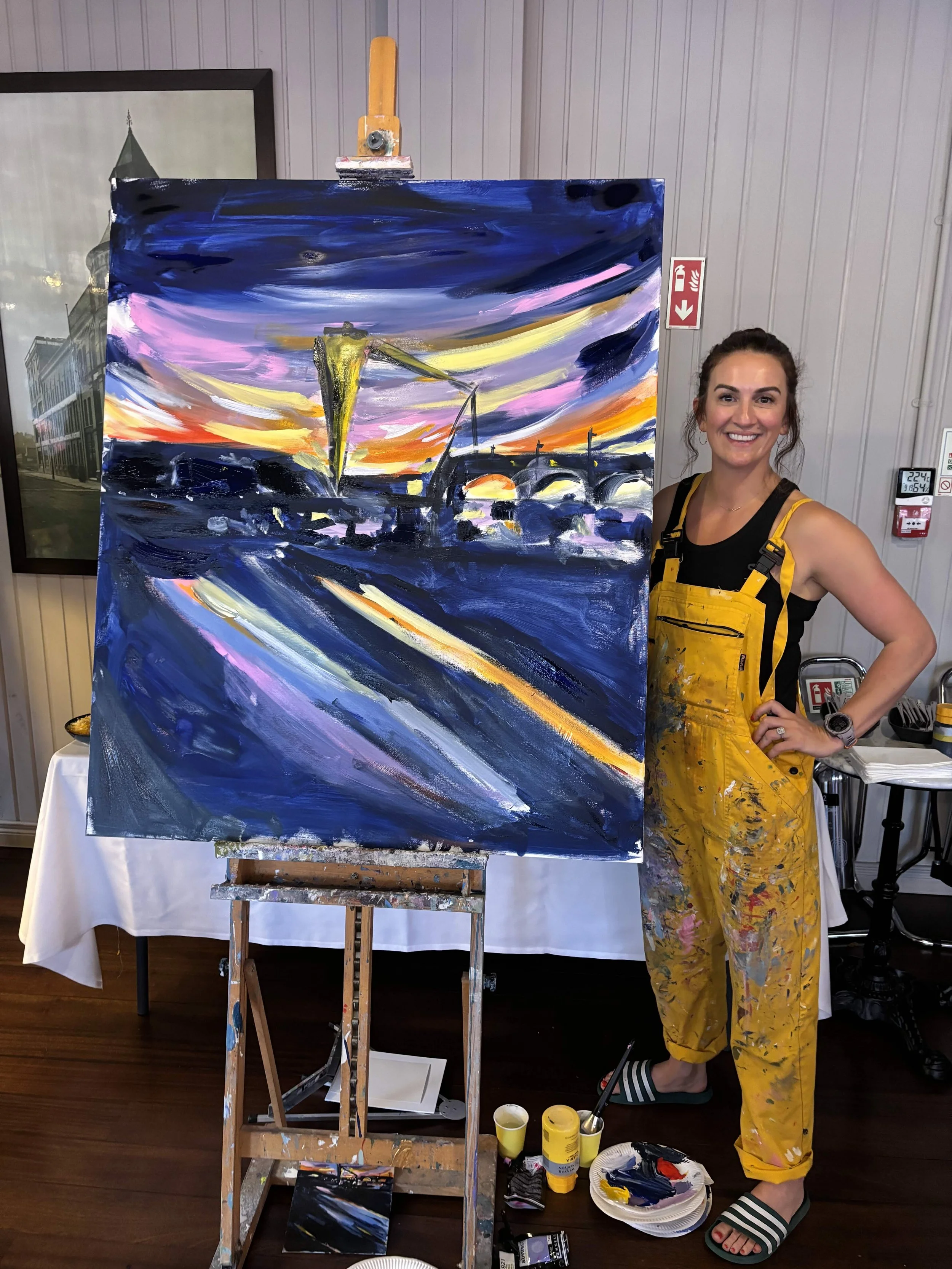
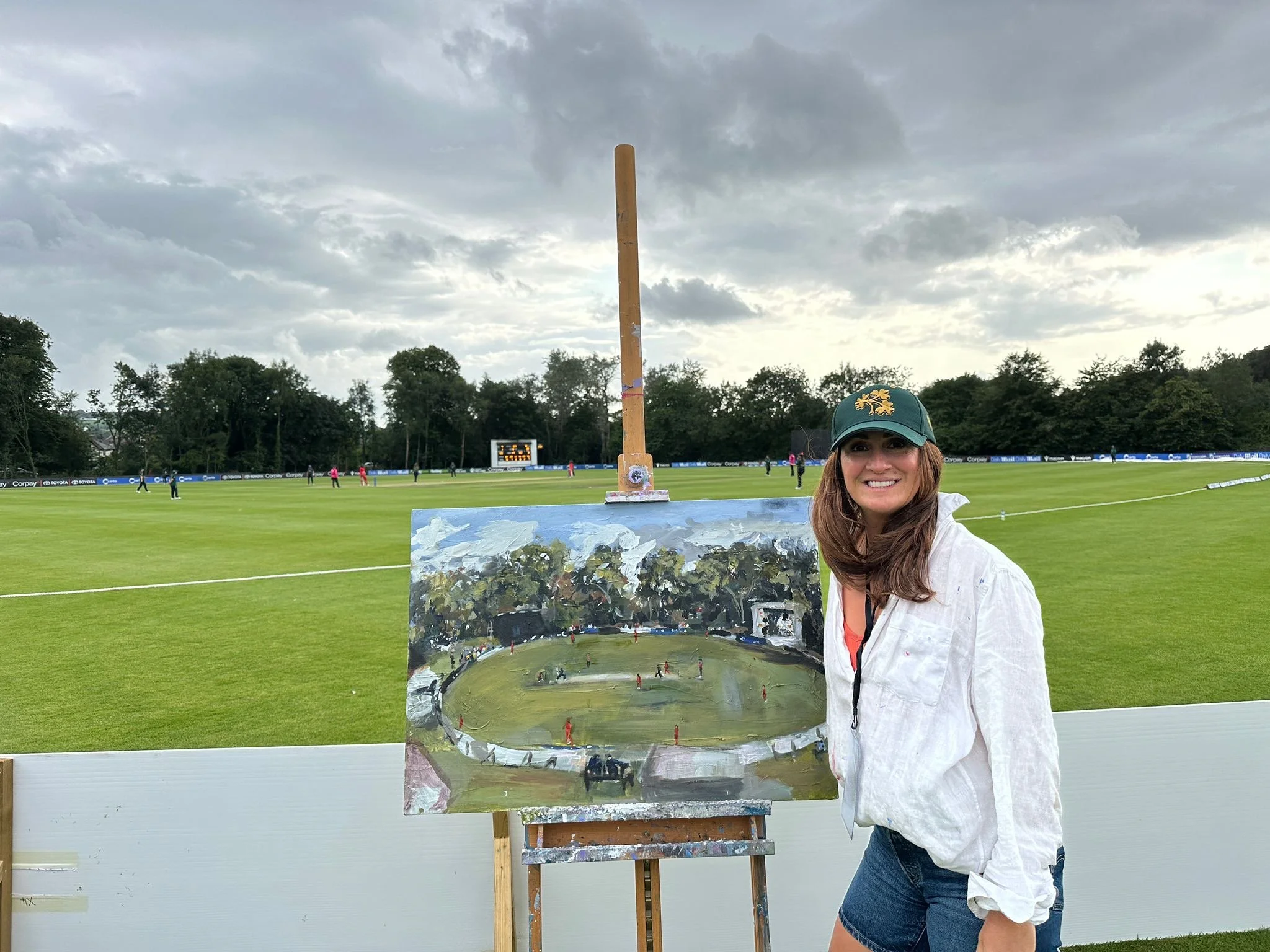
“My work is expressive, instinctive and physical. I paint loosely, often at scale, using large brushes, confident marks and a lot of movement. Colour is hugely important to me, increasingly combining softer, quieter colours with unexpected flashes of something brighter. Although the physical act of painting can be fast, the work itself isn’t necessarily made quickly. Some bodies of work take months of preparing, researching and leaning into a particular feeling. Works such as Daddy’s Bread and my explorations around ancestry come from a much deeper investigation of family, memory, loss and what we carry from those who came before us. Right now I’m exploring a body of work around Mothering While Fatherless, based on my experience of raising three boys while having lost my own father at seven. I’m interested in what it means to parent while carrying that absence. There can be months — or really years — sitting underneath a painting. I want the finished work to feel alive. Not perfect or overly resolved — alive.”
Which artists influence you most?
“Louise Bourgeois, Neil Shawcross and Tracey Emin have all influenced me, but for different reasons. With Louise Bourgeois, I’m drawn to the way personal history, family, memory and relationships become material for making work. Neil Shawcross has been an important influence much closer to home. I love the freedom and confidence in his use of paint and colour and the humanity in his work. With Tracey Emin, it is the permission to be personal. Her work can be vulnerable, direct and uncomfortable, without separating lived experience from the art. They are very different artists, but what connects them for me is expression and freedom. None of them make me want to paint like them. They remind me to make work like myself — to play, take risks and trust that your own experience is enough to begin with.”
What is your creative process like?
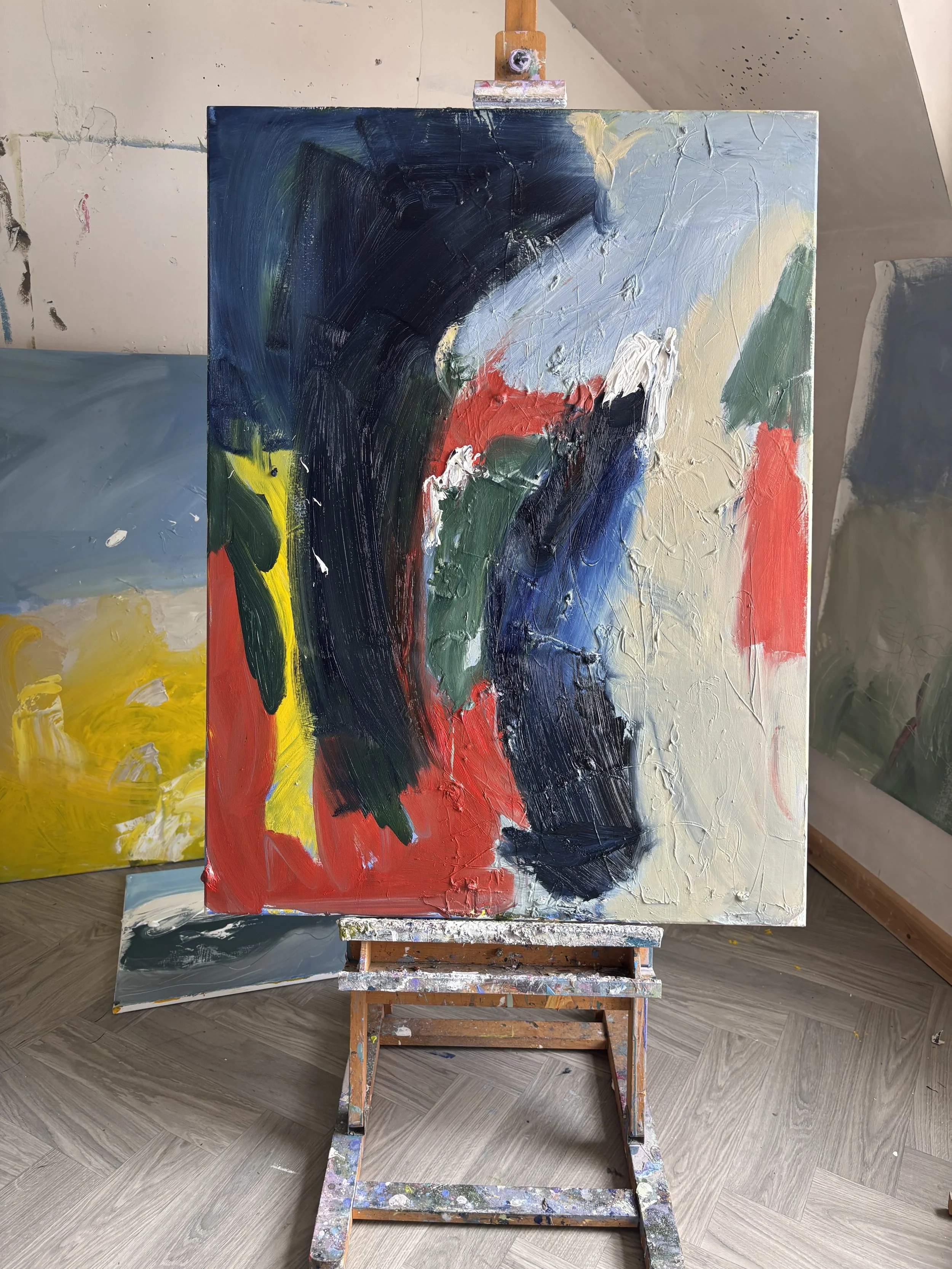
“My creative process is probably a mixture of thinking deeply and then trying very hard not to think at all! An idea can sit with me for months. I might collect photographs, write, draw, remember, research or simply live with a feeling. But when I begin painting, I want to get out of my own way. Painting is very physical for me. I often work at scale and want my whole body involved — moving around the canvas, reaching, stepping back and making large gestures. I deliberately limit my tools. I often teach with five colours and one large brush, and that comes directly from my practice: less time, less tools, less paint. I work at speed and allow drips, accidents and changes of direction to become part of the painting. There is also a quieter emotional process. Grief, care and love sit underneath much of what I make, and sometimes words find their way directly into the paintings. Connecting with my audience matters to me. I want someone standing in front of the work to find part of their own story in it, even when it began with mine. Ultimately, the process is about trust.”
What is an artist’s role in society and how do you see that evolving?
“I come at the role of an artist with perhaps a slightly different mindset. I love to give value, to teach and to lead. I don’t believe sharing what I know diminishes the seriousness of my own practice — if anything, I think it strengthens it. I haven’t always been the artist chosen by galleries in the first round, and I don’t necessarily fit the stereotype of the tortured or withdrawn artist making dark, moody paintings. I’m open, joyful and expressive. I’ve learned to lean into that rather than trying to make myself fit somewhere I don’t. Having lost my dad at seven, I have felt different in some way throughout much of my life. I was also the first of my peers to become a mother, at 25, and built my artistic practice while raising three boys. I’ve realised that the things that made me feel different are often the things that allow me to connect with others. Artists can hold space beautifully for conversations around grief, joy, identity, motherhood and belonging. I’m particularly interested in what that means for female artists. We can be serious and ambitious while also being open, generous, joyful, visible, teaching, raising families, running businesses and taking up space. For me, the artist’s role is no longer simply to make work and wait to be chosen. We can create our own audiences, teach, lead, connect and invite people into art. I want to be part of that.”

Have you had any noteworthy exhibitions you'd like to share?
“The exhibitions that have meant the most to me have combined something deeply personal with a wider public experience. Daddy’s Bread, part of my degree work more than twenty years ago, explored grief, memory and the loss of my father. It was immersive and interactive, and I can see now that many of the themes I’m still exploring were already present then. More recent exhibitions and live painting experiences have continued that connection between the personal and public. I’ve also received international opportunities, including selection for Georgia O’Keeffe’s Ghost Ranch in New Mexico. I chose to pursue residencies at Cortex Frontal and Arraiolos in Portugal, and in 2027 I will undertake a residency with Hambly & Hambly in France, culminating in an exhibition. Another exciting development has been seeing my work reach an enormous audience online. My Instagram community grew from around 14,000 to 86,000 in five weeks, with two painting videos reaching around three million views. Ultimately, I’m drawn to exhibitions and experiences with depth — personal, interactive and powerful.”