Interview
Alla Boldina
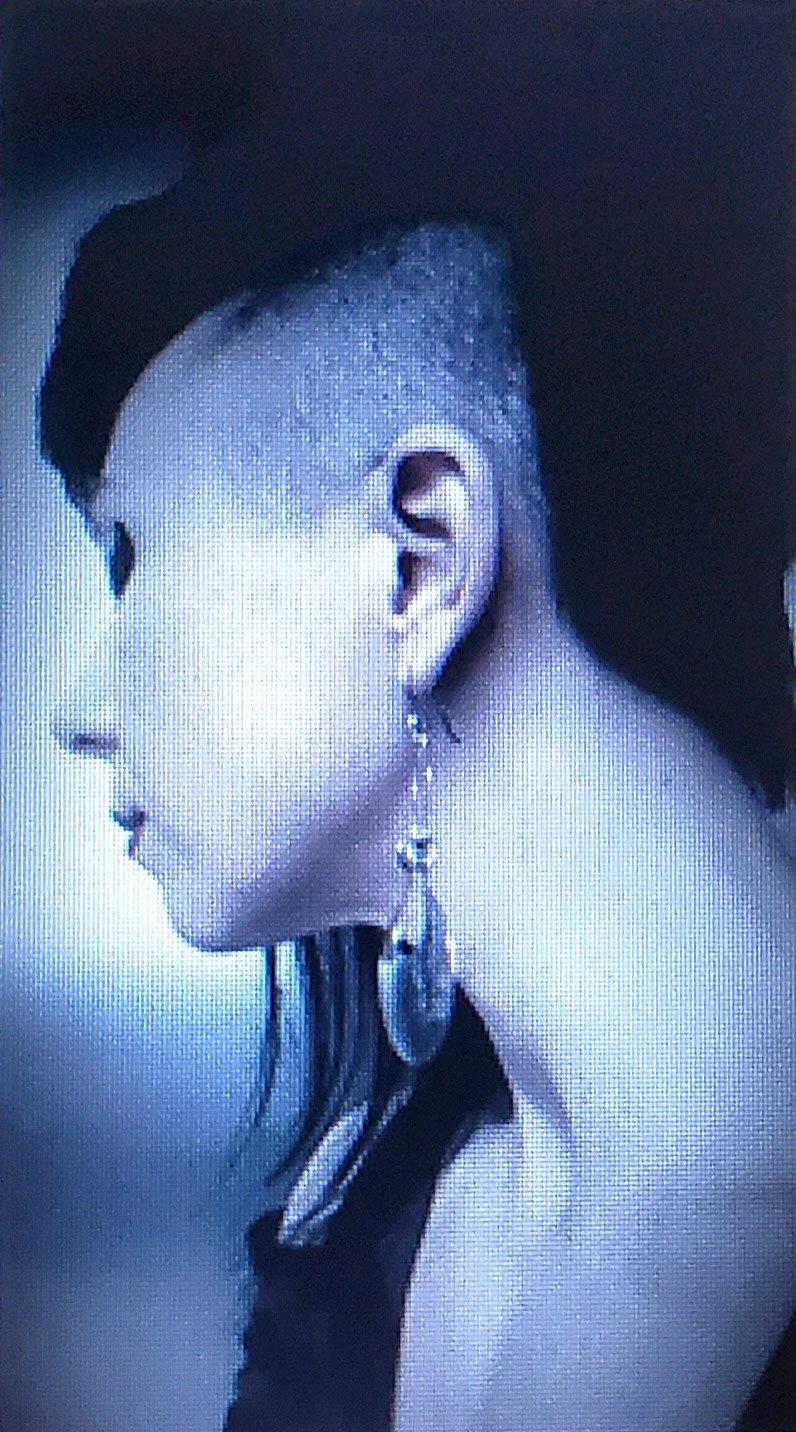
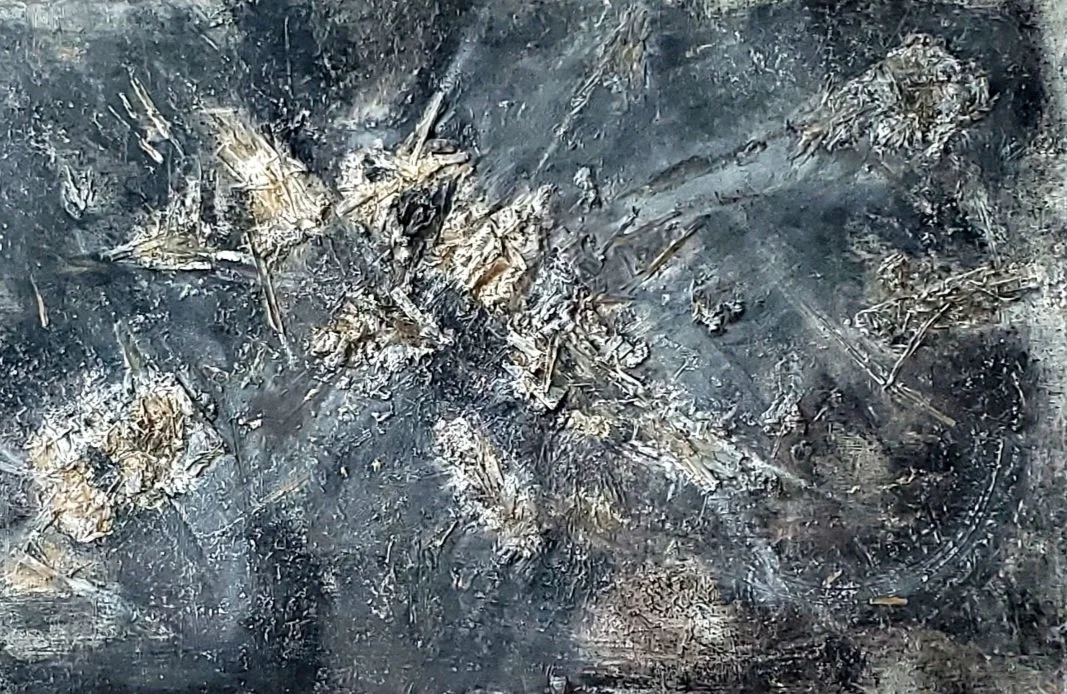
Born and raised in Russia, Alla came to the United States to study literature and philosophy, carrying with me a life-long fascination with art, language, and deep thought. Her artistic journey has unfolded at the intersection of movement, thought, and emotion. Through her background in dance, Alla learned to experience the body as an instrument for expressing rhythm, tension, and silence. Painting emerged later – almost as an inevitable continuation of dance – with its own visual vocabulary grounded in gestural mark-making and rhythmic line. Working in abstraction, she explores memory, perception, and the self. Alla sees the canvas as a space where movement becomes stillness, thought becomes form, and emotion becomes embodied in color, texture, and gesture. Her abstract work grows from the juxtaposition of thought, movement, and visual expression to capture the inner workings of being and becoming.
What is your background and how did you start your journey in the art world?
“As far back as I can remember, creativity has been a constant thread in my life—whether through dance, poetry, or drawing. Dance was my first artistic language, allowing me to appreciate the rhythm of movement, to feel the tension between movement and stillness, and to recognize the subtle poetry of the body in motion. Long before I could articulate these ideas, I learned to express them through gesture, rhythm, and fluidity. Over time, visual art emerged as a second language. It offered me a way to translate movement into line, rhythm into color, and emotion into form. While studying literature at one of the universities I went to, I became increasingly drawn to the possibility of pursuing art and even considered transferring to an art college. Ultimately, I chose to complete the degree I had begun, but my connection to visual art continued to deepen.
Years later, while studying literature and philosophy at another university, I began attending art workshops and seminars, allowing me to develop a language whose creative vocabulary has always been present within me. I was particularly drawn to abstraction, where meaning is not prescribed but discovered. It gave me a space to explore the subtle territory between thought and feeling, intuition and intention, memory and presence. Much like dance, abstraction allowed me to communicate without relying on narrative or representation. Gesture, texture, color, rhythm, and movement became the vocabulary through which my inner experience could find its way into the visible world. For me, abstraction is not an absence of subject, but an opening toward deeper forms of perception. Through abstract painting, I found the freedom, beyond the reach of words, to give form to the invisible to evoke a sensation, hold a memory, suggest a movement, or invite a moment of contemplation. In this space between the tangible and the intangible, I found not only a way of making art, but a way of thinking and experiencing the world.”
What inspires you?
“My inspirations are multifold: poetry, music, contemporary dance, fashion, philosophy and psychology. Music, whether classical, jazz, or contemporary, can make me feel, think, reminisce or move around. Modern dance holds a special place, for it connects me to the deepest, often unspoken parts of my identity. Poetry inspires my rejection of literal representation and reminds me how rhythm and image can evoke universal emotions and ambiguities of subjective experiences. Fashion intrigues me with its sense of color and form. Philosophy, literature, and psychology inspire me to ponder and contemplate, thus informing my artistic ideas and themes. On a more soulful level, a deep conversation with a family member or a friend can be deeply moving, thought-provoking, and inspiring to me all at the same time. Beyond the cerebral, I find inspiration in the most mundane shapes and shadows across a floor or on a wall, in the crevices between objects, in the most unexpected combinations of color on a muddied road, in the shifting patterns of clouds, and so forth. In general, I find inspiration in creativity itself, in the spaces between movement and stillness, gesture and reflection. I am drawn to the symbolic interplay between verbal and non-verbal, between rhythm, texture and color – and the ways these elements can hold, evoke, and reveal the ‘truths’ that exist beyond words.”
What themes do you pursue? Is there an underlying message in your work?
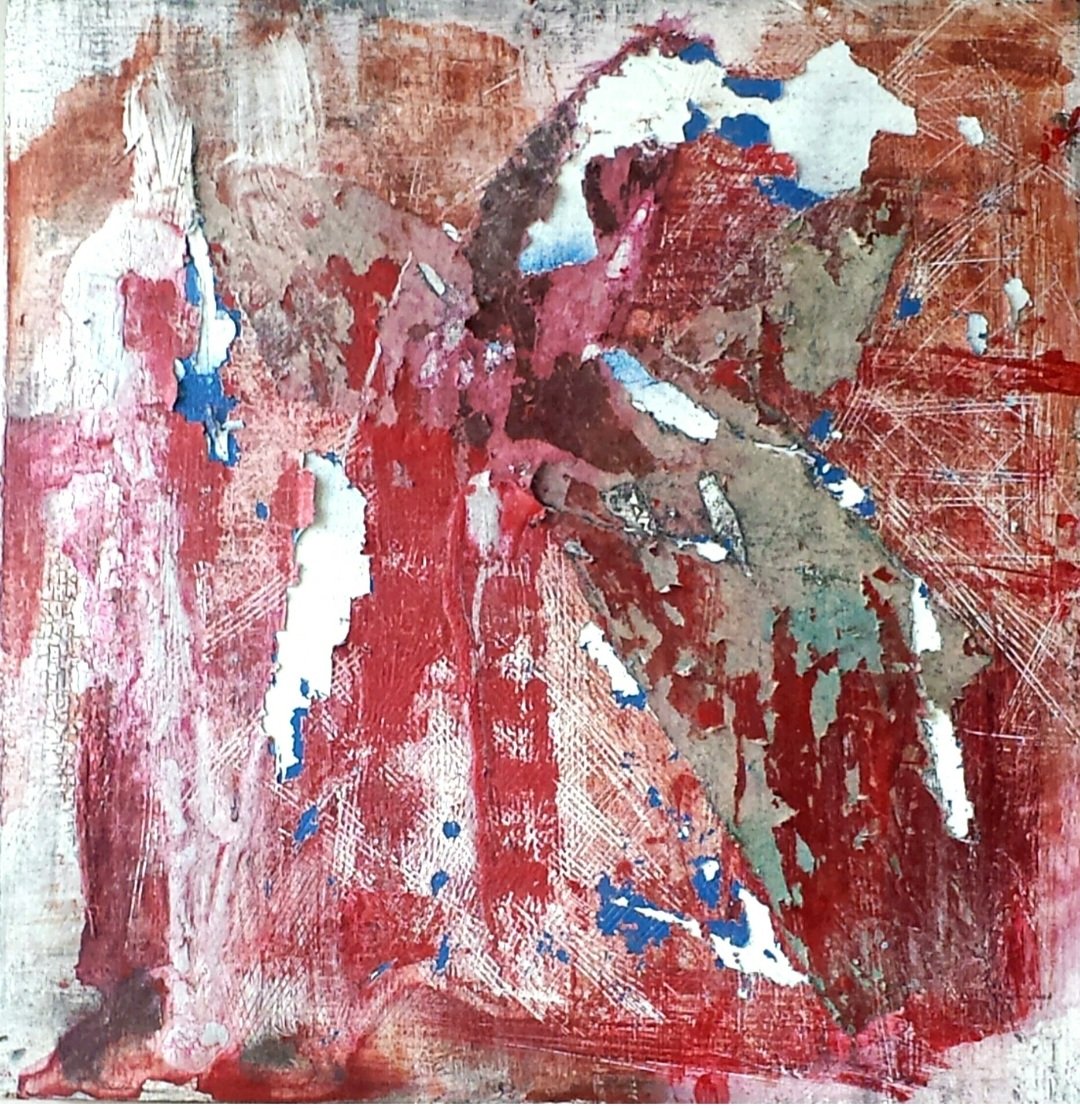
“My art revolves around the themes of self, connection, memory, perception and meaning. Through abstraction, I explore the tensions and shifting realms of being and becoming: the self as something fluid, remembered, perceived, and continually re-formed. Thematically, I contemplate in a visual form how memory surfaces and fragments; how perception bends and transforms; how identity emerges and unfolds. I am interested in the instability of perception – what changes as we look, remember, and recreate. Layers of color and texture accumulate, interrupt, and dissolve, revealing surfaces that resist a singular reading. My abstraction is a palimpsest of multilayered narratives, where fragments of thought, memory, feeling, and experience overlap, dissolve, and re-emerge. With this tension, my paintings inhabit a space between recognition and uncertainty, presence and absence and invite the viewers on a journey of co-creating meaning. I see my work not only providing a message about ever-changing nature of self and human condition but also, and more so, a question for the viewers to ponder and answer for themselves.”
How would you describe your work?
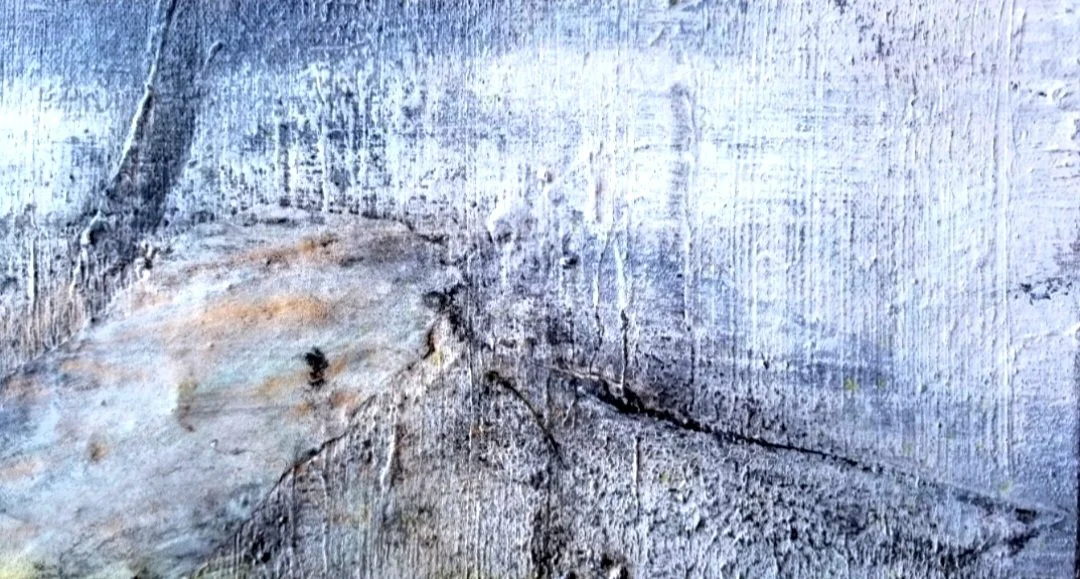
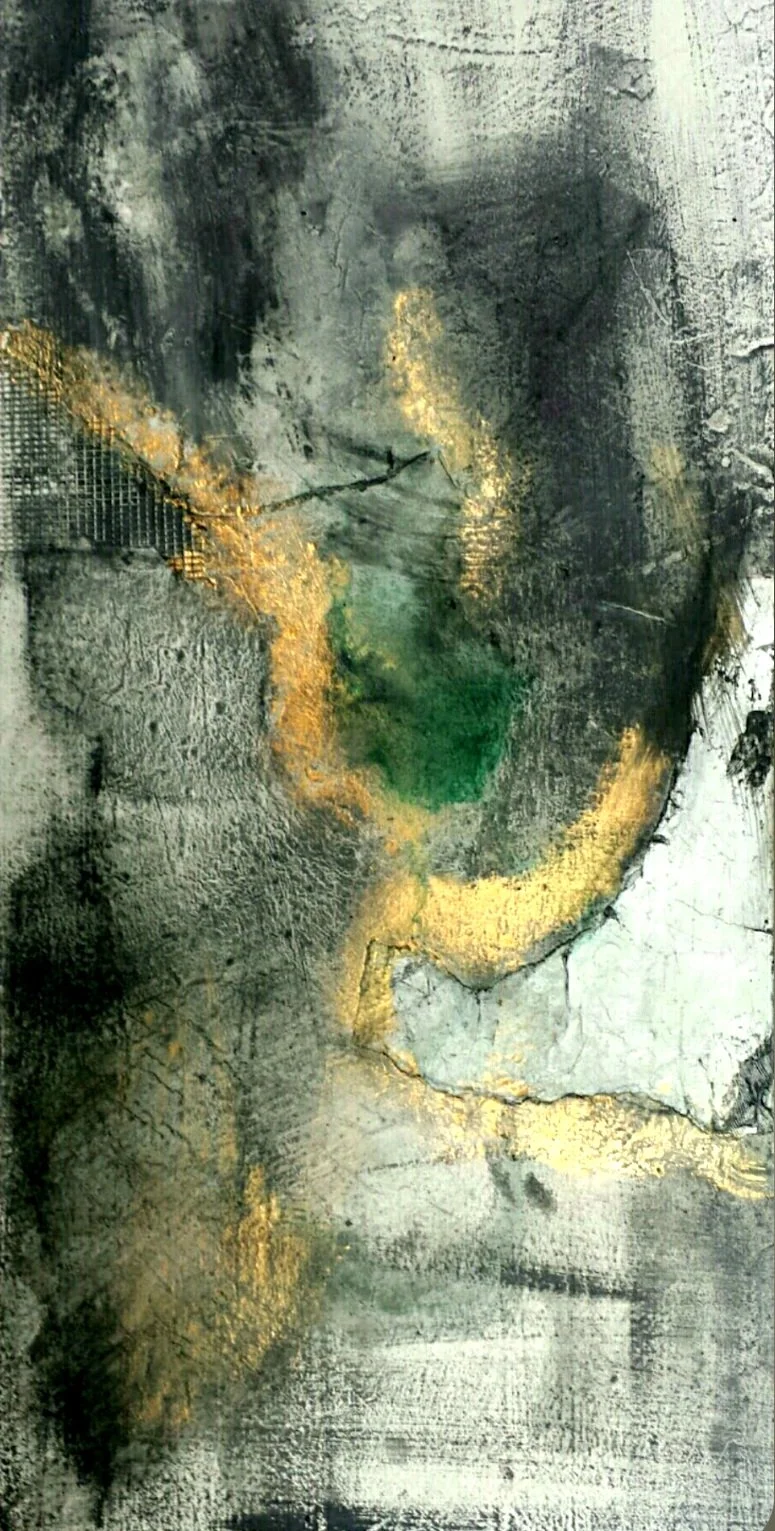
“My abstract work is an invitation for viewers to pause, ponder, and contemplate the dichotomies inherent in the universal human condition—the limitations of knowledge and perception, the fragmentation of memory, and the profound inevitability of transformation. Through gestural mark-making, mixed-media collage, bold color, and visceral texture, I explore the space between what is known and what remains uncertain. I am interested in the tension between opposing forces: tension and stillness, chaos and form, destruction and creation, emotion and discovery. The surface of my paintings becomes a record of this dialogue—a place where materials collide, memories fragment, and new possibilities emerge. My paintings inhabit this space between the building and the breaking, the known and the unknown, inviting the viewer not to find a singular meaning, but to enter the experience of discovery.”
Which artists influence you most?
“I am drawn to artists who understand color, form, and gesture not merely as visual elements, but as carriers of emotion, memory, and meaning. Kandinsky’s belief in the symbolic and spiritual power of color has influenced the way I consider color as a language of its own, capable of communicating beyond words. From Gorky, I draw an explosive energy—the sense that a painting can exist on the edge between creation and chaos. Hume’s ambiguous relationship between figure and abstraction encourages me to question where recognition begins and ends. Frankenthaler’s atmospheric, amorphous forms have taught me to embrace the unexpected movement of shape and color, allowing forms to dissolve rather than be confined. In Kline, I find an emotional rawness and physical immediacy that reminds me that a mark can carry the weight of a feeling. These influences are not formulas for my work, but points of departure. I am interested in the tension between control and surrender, intention and accident, structure and emotion. Through abstraction, I seek to create not simply an image of a particular experience, but an encounter with one—a visual space where color, form, texture, and gesture can evoke something that exists outside of verbal language.”
What is your creative process like?
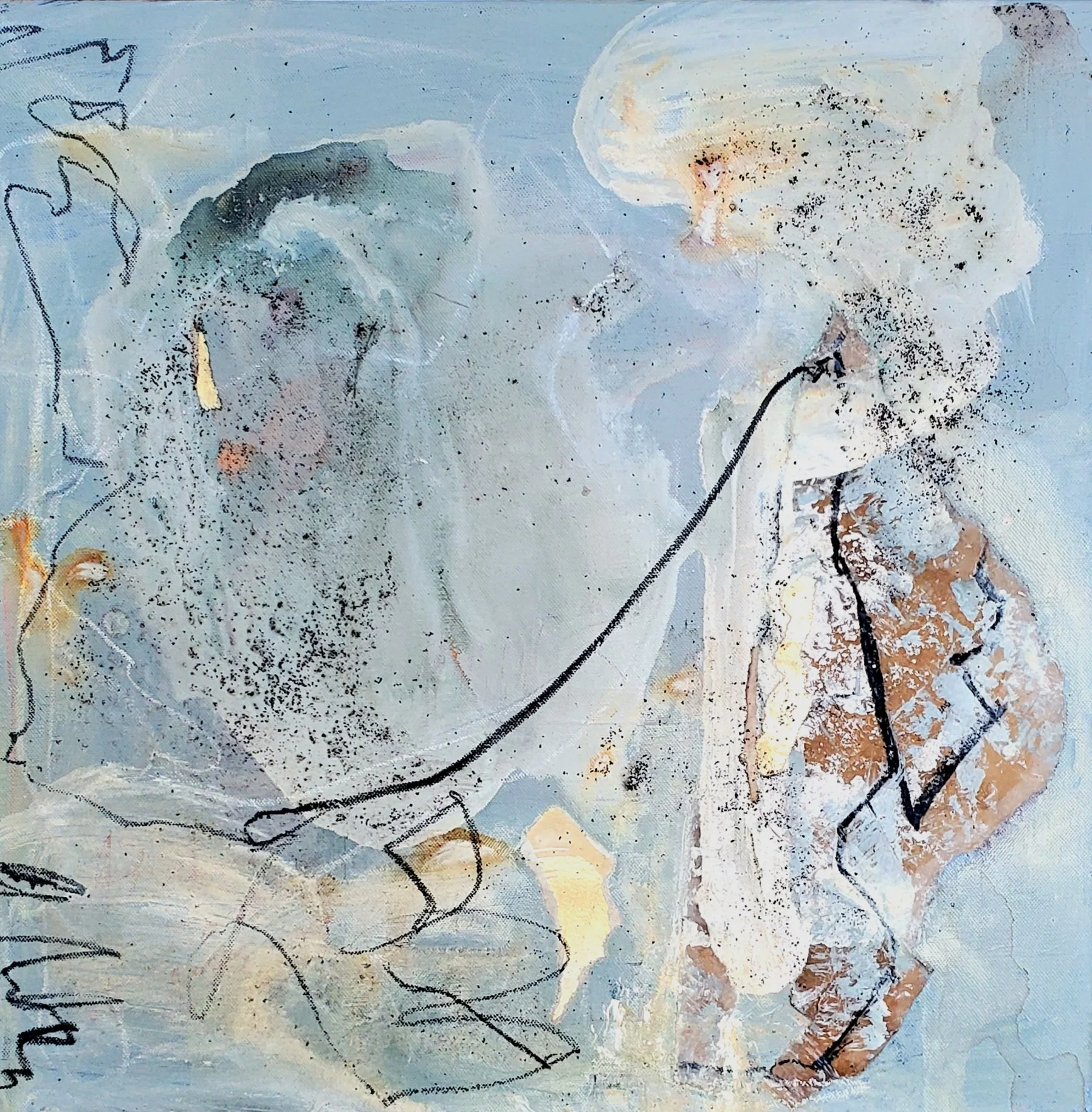
“To describe my work is like describing a wave. It begins quietly, almost imperceptibly, gathering movement, color, and energy. Slowly, it builds in power and dimension until it meets the solid structure of the shore. In that moment of collision, control gives way to instinct. The wave breaks, fragments, and transforms the landscape, leaving behind both chaos and creation. My process follows a similar rhythm. I begin with an idea or a feeling, silently present within me, sometimes in the most subtle way; then gradually, I start nurturing that idea-feeling and its energy while sketching or simply playing with line, texture or gesture. This accumulation of marks, colors, forms, and materials, allows the work to develop through gestural mark-making and experimentation. I tear and rearrange pieces of collage, scratch into the surface of the canvas, build layers of texture, obscure what came before, and enable fragments to emerge again. Each action becomes both an act of construction and disruption.
I am drawn to the physicality of this process—the resistance of the surface, the gesture of the hand, the tension between adding and removing. Tearing a piece of collage becomes a form of breaking apart; layering becomes a form of accumulation; scratching into the canvas reveals what lies beneath. The surface becomes a record of decisions, accidents, revisions, and moments of wonder and surrender. I am interested in what happens when intention encounters unpredictability. Rather than seeking complete control, I allow the work to push back, responding to its own developing language. The resulting marks and textures become traces of movement, much like the patterns left in the sand after a wave recedes. For me, abstraction is not about creating chaos for its own sake, but about discovering the order that can emerge from it. The painting becomes a physical record of transformation—a place where destruction and creation are not opposites, but part of the same continuous movement.”
What is an artist’s role in society and how do you see that evolving?
“I believe the role of the artist in society is not necessarily to provide answers, but to create spaces to pose questions. Art can interrupt the familiar, challenge perception, and invite us to consider experiences that may be difficult to express through language alone. In a world often driven by certainty, speed, and information, I see art as an opportunity to slow down and contemplate. The artist can bring attention to what is overlooked—the ambiguity of experience, the fragments of memory, the emotions beneath experience, and the uncertainty of what we believe we know. Abstraction allows me to explore these complexities without reducing them to a single narrative. Through gestural mark-making, collage, bold color, layered surfaces, tearing, scratching, and the accumulation and removal of material, I create paintings that embody the fragmentation and transformation inherent in contemporary life. The physical process mirrors the way we construct and reconstruct our understanding of ourselves and the world around us. Through abstraction, I hope to create an encounter rather than deliver a fixed message. My work asks the viewer to participate, bringing their own memories, perceptions, and experiences into the work, thus becoming co-creators of meaning along with the artist. In this way, meaning becomes something shared and continually transformed between the artist, the artwork, and the viewer. Ultimately, I see the artist as both observer and participant: someone who reflects the complexities of the human experience while creating new ways of seeing it.”
Have you had any noteworthy exhibitions you'd like to share?
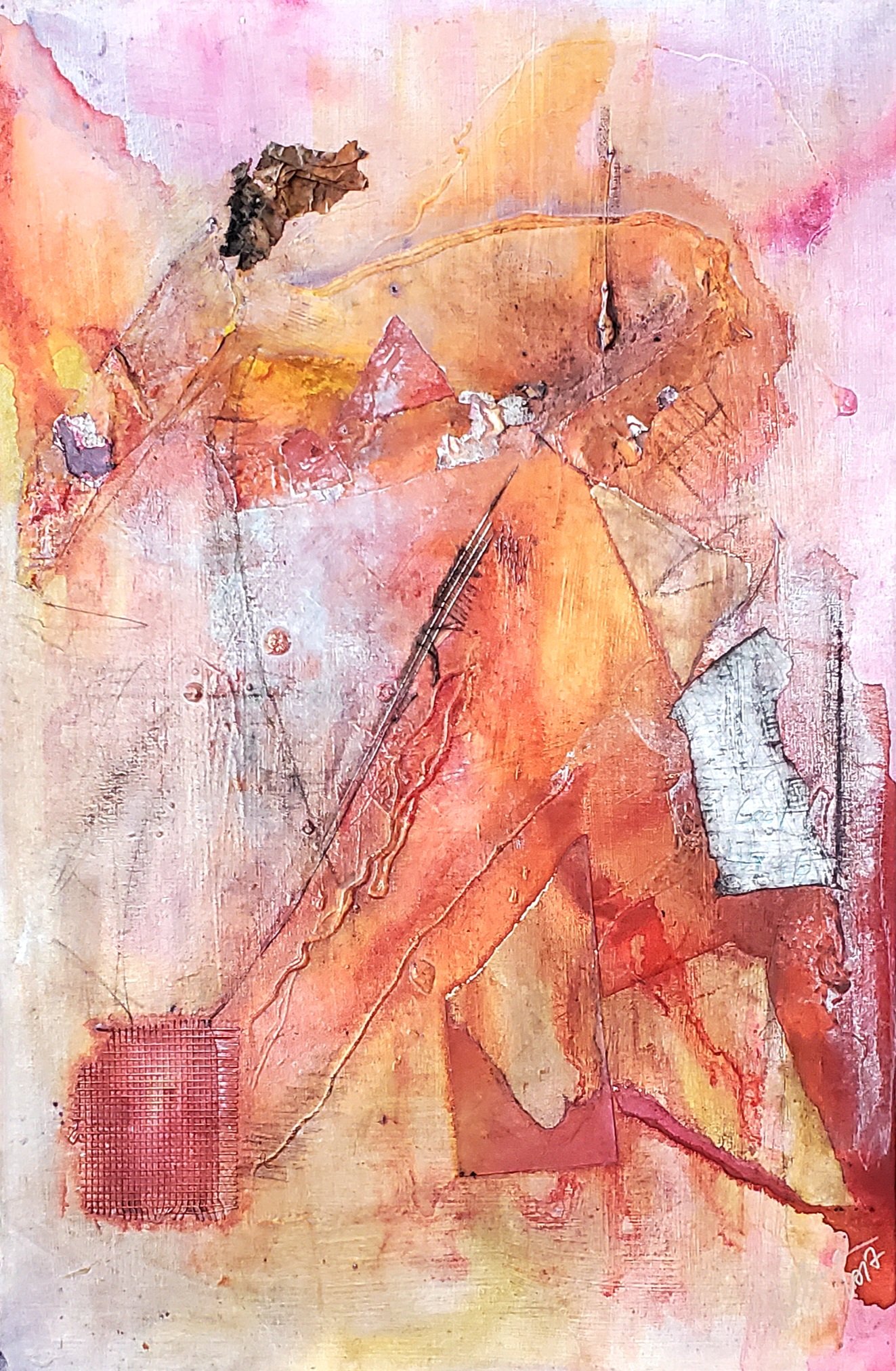
“My work has been presented in a range of juried, group, interdisciplinary, and online exhibitions, providing opportunities to engage with diverse audiences and artistic communities. Through these exhibitions, my work has received recognition for originality, as well as multiple honorable mentions in online competitions. My exhibition experience includes participation in a juried exhibition at the Roberson Museum and Science Center in Binghamton, New York, a group exhibition at a Chelsea gallery in New York City, and an interdisciplinary art and dance showcase in Binghamton, New York. I have also exhibited in local and regional galleries throughout Upstate New York, including Rude and Bold Women, Cooperative Gallery 213, and the Koffman Incubator. These experiences have allowed me to place my work within varied artistic contexts, engage with other artists and disciplines, and develop a deeper understanding of how artwork can communicate with different audiences and environments.”