Interview
Alfia Maha
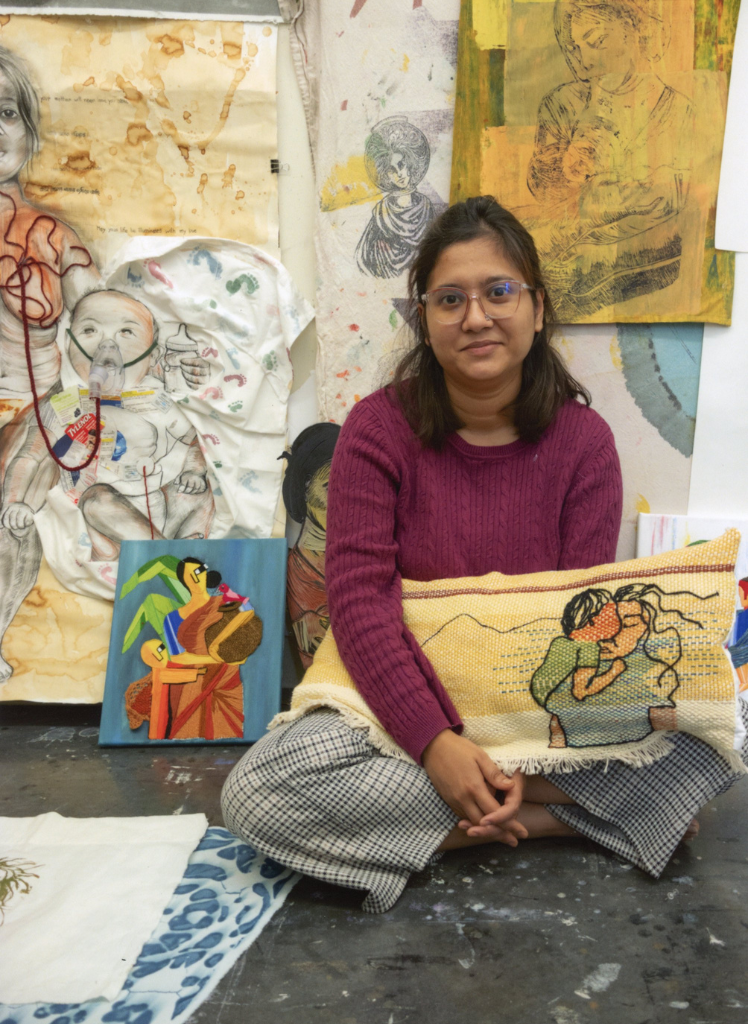
Alfia Maha is an artist with an academic background in textile studies from the Textile Department at Southern Illinois University Edwardsville. Her education allowed her to explore textile forms, textures, and material behavior, which became the foundation of her artistic language. Through this journey, Alfia discovered that art has the power to make emotions feel alive and tangible. Her work is deeply rooted in motherly concepts and lived experiences. She focuses on practical, physical forms while intensifying the emotional layers within them, often reflecting inner turmoil, care, resilience, and transformation. She is especially interested in starting conversations about change, responsibility, and how managed systems affect our personal and collective lives. Alongside her artistic practice, she is a mother to one son, a hardworking homemaker, and a master’s student in Information Technology. Balancing creativity, family, and academics shapes both her perspective and her work, allowing her to bring depth, honesty, and strength into everything she creates.
What is your background and how did you start your journey in the art world?
“I am originally from Bangladesh. I came to the United States as an international student to pursue my master’s degree in the Art and Design department at Southern Illinois University Edwardsville. Before that, I completed my bachelor’s degree at Jahangirnagar University in Bangladesh. My journey with art started in childhood. I was always fascinated by drawing and painting, especially the idea of capturing and recreating the world around me. I would notice even the smallest details—art on walls, rickshaw paintings, vehicles, or images in magazines—and try to copy them using whatever materials I had. That curiosity and habit of observing really shaped my early artistic practice. I also participated in many art competitions and workshops, which helped me stay connected to creative activities from a young age. Much of my learning was self-driven. I used to watch a Bangla TV program called Moner Katha (which means ‘the talk of your heart’), where an artist taught drawing using puppets. I was deeply inspired by it. Another show I loved was Art Attack, where I learned different crafting techniques. Over time, this passion grew into something more serious. Whether it was decorating, crafting, or painting, I always felt a strong connection to art—and that connection is what continues to guide my journey today.”
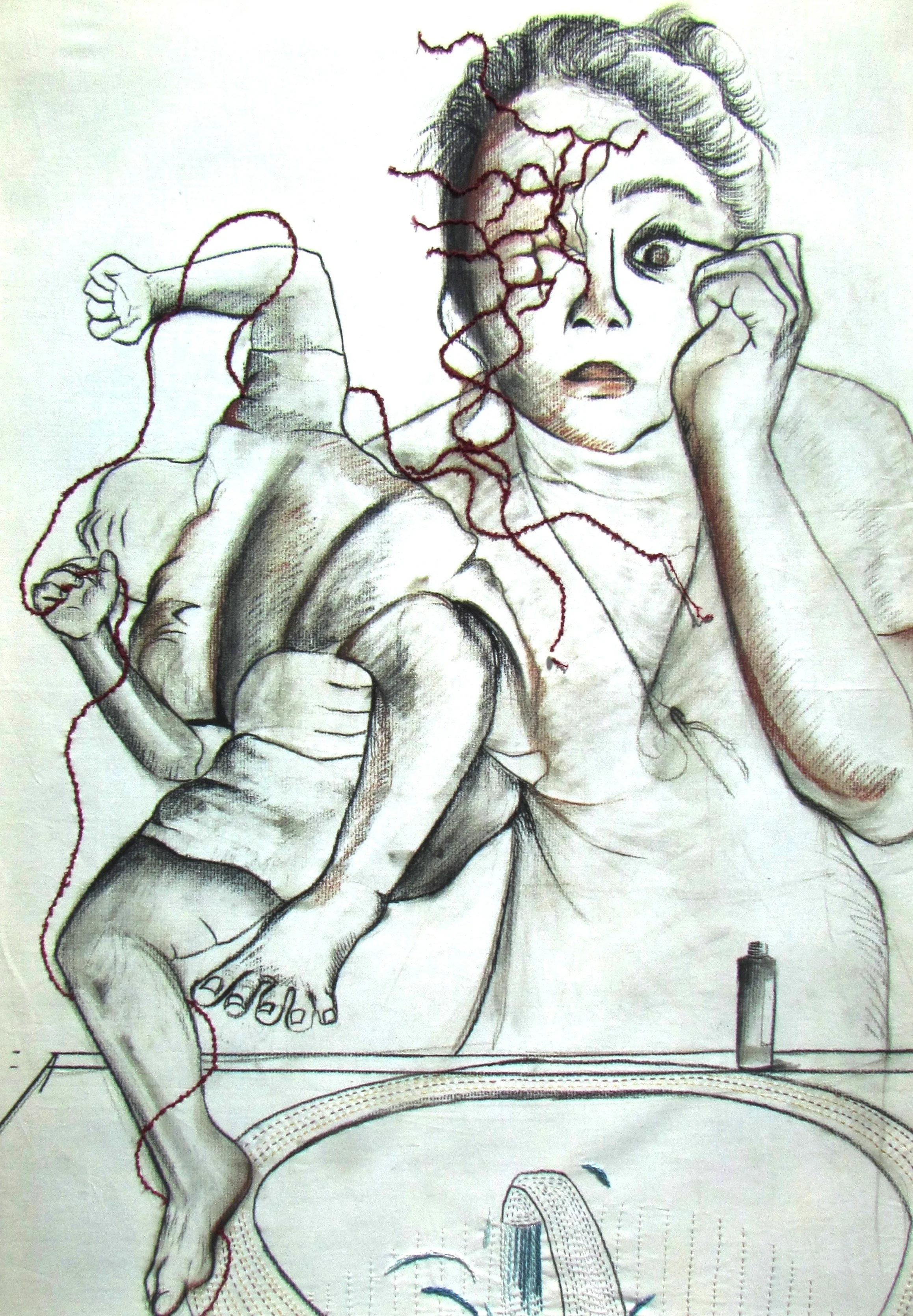
What does your work aim to say? Does it comment on any current social or political issues?
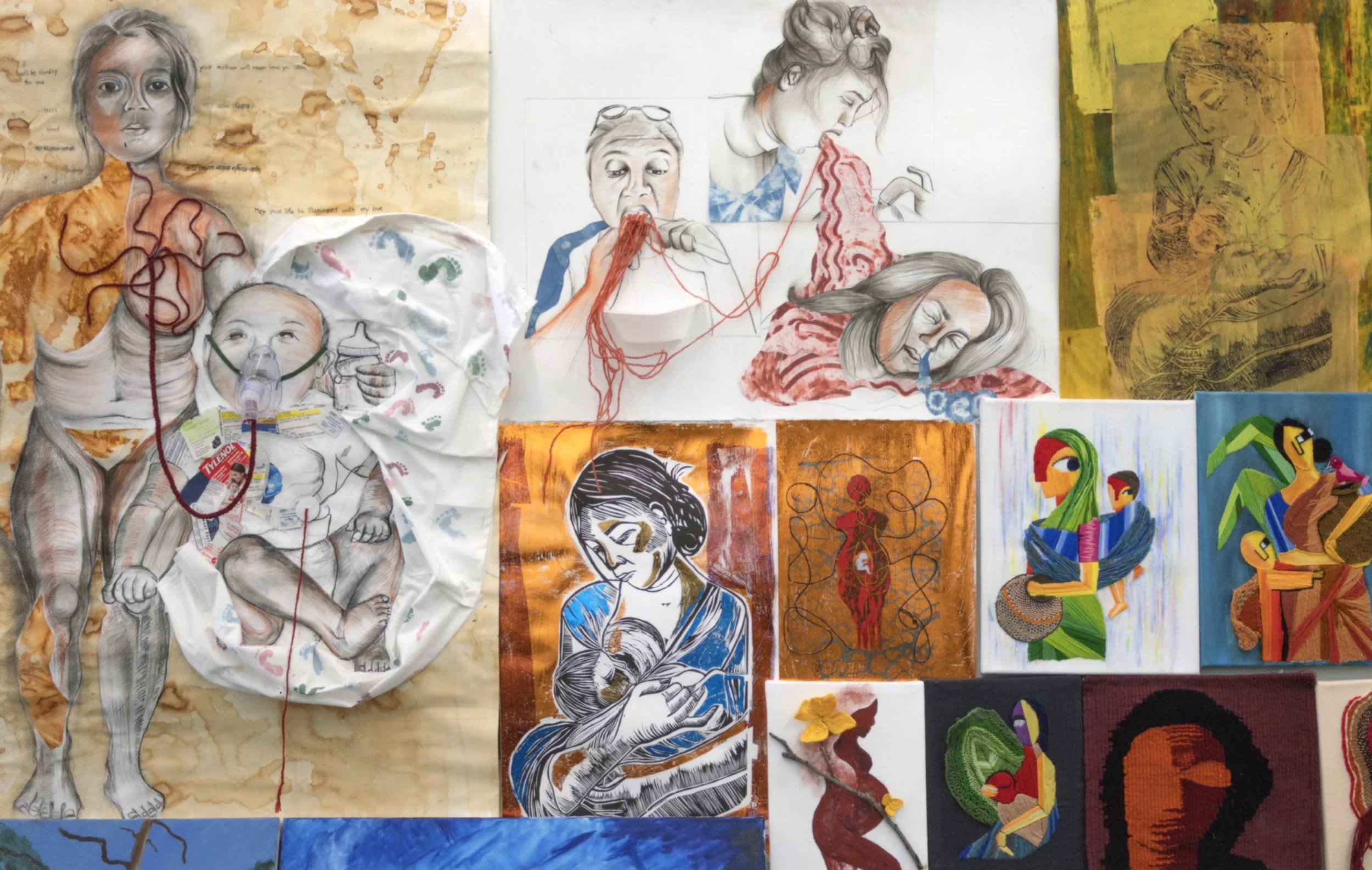
“My recent work, especially my graduate thesis exhibition, focuses on the complexity of motherhood and the lived experience of womanhood. Initially, I was thinking about working on themes like feminism and women’s lives, but I wanted to approach it in a more personal and honest way rather than repeating what has already been done. During that time, I became pregnant, and that experience completely transformed my direction. I realized that my own journey could become the core of my work. Being pregnant in the United States, away from my family in Bangladesh, was emotionally and physically challenging. Back home, I would have had strong family support—my mother, sisters, and relatives—but here I had to go through everything largely on my own while also managing academic pressure and daily responsibilities. Through my work, I explore the dual reality of motherhood—the coexistence of joy and pain. Society often presents motherhood as something purely beautiful and fulfilling, but it also involves physical pain, emotional struggle, mental exhaustion, and deep personal change. I wanted to bring attention to these less visible aspects: the body’s transformation, the emotional weight, and the internal conflicts that many women experience but rarely express openly. My work is not only personal but also social. By sharing my own experience, I create space for other women to relate, reflect, and feel seen. It becomes a way of opening conversation about maternal mental health, self-care, and the importance of acknowledging a mother’s identity beyond just caregiving. For me, art became a way to process my own journey—to express, reflect, and find a sense of mental relief. At the same time, I hope it encourages others, especially women and mothers, to speak about their own experiences and understand that taking care of themselves is just as important as taking care of their child.”
Do you plan your work in advance, or is it improvisation?
“I would say my process is a combination of both planning and improvisation. I usually begin with a structured plan. I write down my concept, theme, materials, colors, and the elements I want to include. Since I often work with mixed media, planning helps me organize how different materials—like drawing, textile, or embroidery—will come together. I also think about the size, format, and overall composition, sometimes creating a rough layout before starting. However, I don’t strictly follow the plan. As the work develops, I naturally begin to improvise. Once I can visually see the piece taking shape, I often feel the need to adjust, add, or even remove elements. This stage is very intuitive and depends on how the artwork evolves. I believe this balance between planning and improvisation is essential in my practice. Planning gives direction, but improvisation brings life to the work. As I learned during my early studies, an artwork is never truly ‘finished’—it always has the possibility to change and grow. That flexibility is what makes the creative process so meaningful to me.”
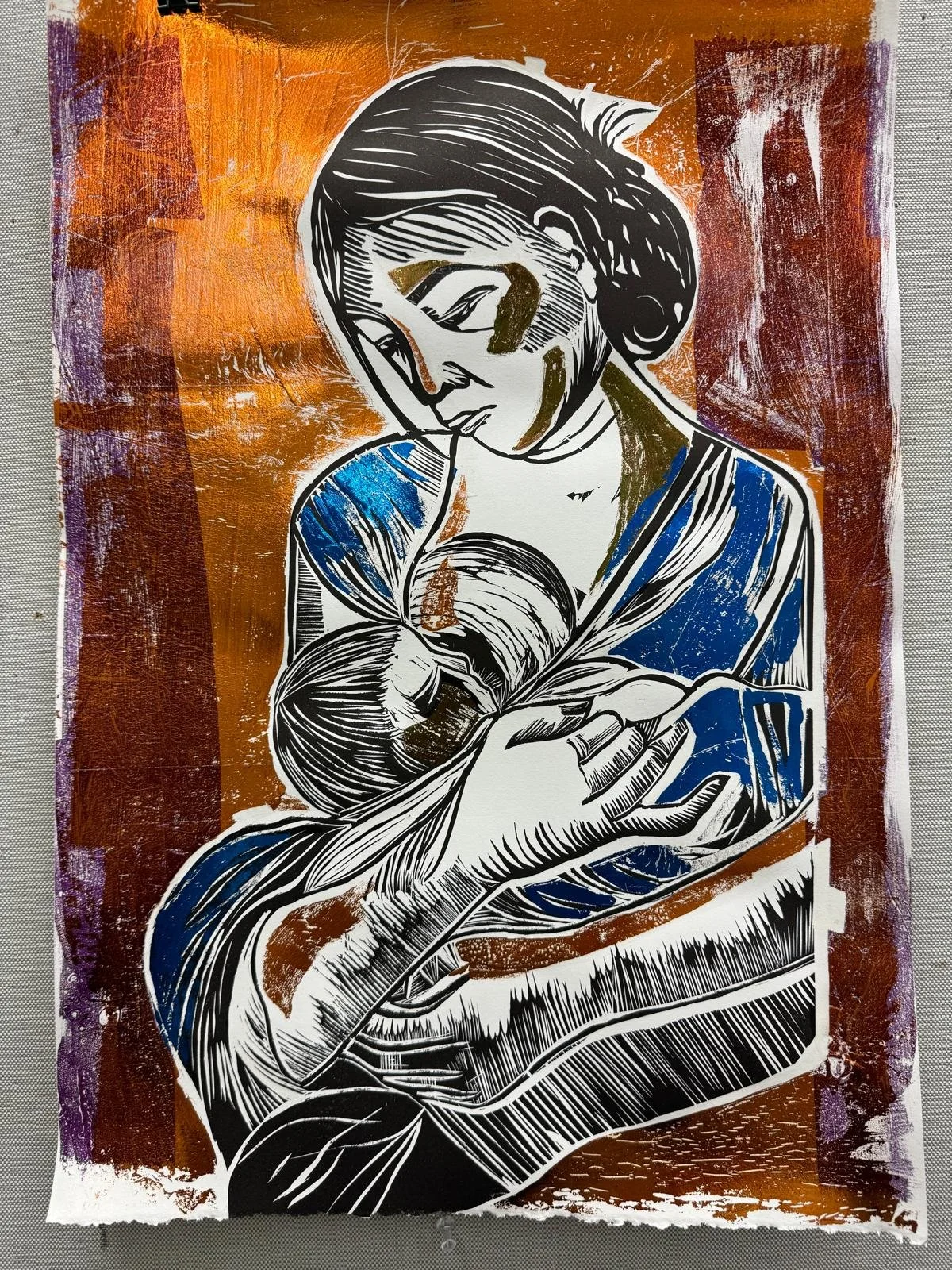
Are there any art world trends you are following?
“I am especially interested in the fusion of traditional and contemporary practices in today’s art world. Rather than following trends in a conventional way, I focus on staying rooted in my own cultural background—particularly Bengali folk art—while exploring how it can evolve in a modern context. Bengali folk art is very expressive, with bold lines, large eyes, strong motifs, and vibrant colors. I am deeply inspired by these elements and often incorporate them into my work. At the same time, I try to reinterpret them in my own way instead of simply repeating traditional forms. One of the major trends I connect with is the idea of fusion and mixed media. Artists today are blending different materials, techniques, and disciplines—such as combining drawing with textiles, or using both traditional handwork and modern processes. I find this approach very meaningful and relevant. During my studies at SIUE, I explored textile-based practices alongside drawing. I worked with fabric, embroidery, indigo dyeing, and rust techniques, and experimented with combining these with my visual language. This allowed me to create layered works that connect material, culture, and personal expression. I am also interested in how digital processes and printing can be integrated into traditional practices. Overall, my approach is to stay connected to my roots while adapting to contemporary methods—creating a balance between tradition and modernity through fusion and experimentation.”
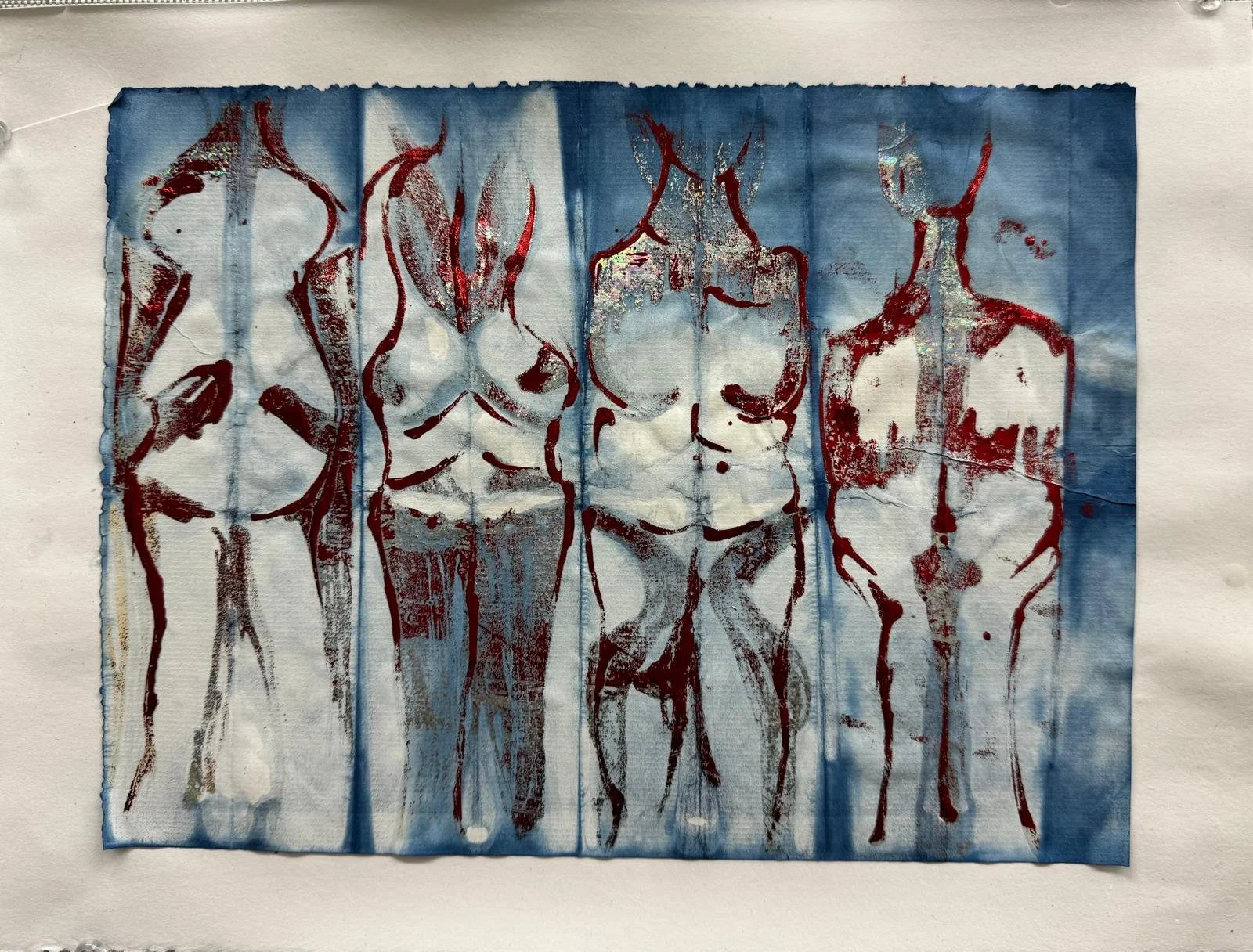
What process, materials and techniques do you use to create your artwork?
“My process is deeply connected to both my concept and materials, and it often involves layering different techniques together. I usually begin with an idea that comes from personal experience, and then I translate that into visual form through sketches and written notes. I primarily work with mixed media, combining drawing, painting, and textile-based techniques. My materials often include fabric, thread, paper, and sometimes found or natural elements. I have explored processes like embroidery, hand stitching, indigo dyeing, and rust printing, especially during my studies. These techniques allow me to bring texture and depth into my work. Drawing is always an important foundation for me. I often start with hand-drawn forms inspired by Bengali folk art—such as bold lines, expressive figures, and vibrant colors—and then build on top of them using other materials. I like to layer surfaces, combining traditional handwork with more experimental approaches. I also enjoy working with fabric because it gives me flexibility. I can cut, stitch, and reshape it, which allows the work to evolve physically as well as visually. Sometimes I integrate digital elements or printing techniques to expand the possibilities of the work. Overall, my process is about combining different mediums and techniques to express personal narratives, while creating a balance between traditional methods and contemporary experimentation.”

What does your art mean to you?
“Art is something very personal and emotional for me. It is not just a practice—it is a part of how I live, feel, and understand myself. From a young age, I found joy in making things look beautiful, whether it was drawing, decorating, or creating something from simple materials. That feeling of transforming something ordinary into something meaningful has always stayed with me. When someone looks at my work and connects with it, it gives me a deep sense of satisfaction. For me, art is also a form of therapy. Whenever I feel stressed, overwhelmed, or emotionally low, I turn to art. Creating helps me process my thoughts and feelings, and it brings me a sense of calm and mental peace. Even small acts, like decorating my surroundings, make me feel grounded and happy. At the same time, I believe art should communicate. I want my work to speak to people—to carry a message that can be seen, felt, and understood. It’s important to me that viewers can connect with my work visually and emotionally, and find their own meaning in it. Overall, art gives me purpose, healing, and inspiration. It allows me to grow, to explore myself, and to keep moving forward creatively.”
What’s your favourite artwork and why?
“One of my favorite works is a piece titled Connection, which I created in 2023, during the early stage of my pregnancy, before my son was born. This work holds a very special place for me because it captures a deeply personal and transformative moment in my life. At that time, I was experiencing many changes—physically, emotionally, and mentally. I was trying to understand my body, manage my responsibilities, and at the same time process the feeling of carrying a new life inside me. The concept of Connection comes from that initial bond between a mother and her child. Especially as a first-time mother, there is a complex mix of emotions—joy, uncertainty, fear, and love—all existing together. This piece reflects that moment of realization, when you begin to accept that you are connected to another human being who is growing within you. Technically, I combined tapestry and embroidery on canvas, using thread as a symbolic element. The threads represent the growing bond between mother and child—something that is invisible yet deeply powerful. I used subtle shades of red and off-white to reflect both warmth and vulnerability. What makes this work my favorite is not only the concept and technique, but also the memory it carries. Whenever I look at it, I am taken back to that time in my life—the beginning of my journey into motherhood. Now, when I see my child growing, playing, and existing in the world, this artwork feels even more meaningful. It holds a moment I never want to forget.”
Have you had any noteworthy exhibitions you'd like to share?
“One of the most meaningful exhibitions for me was my graduate thesis exhibition at my university gallery. It was a group exhibition, but it marked the final presentation of my own body of work focused on the complexity of motherhood. This exhibition was very special because it was the first time I was able to present such a personal and emotional journey to a wider audience. I shared my experiences of pregnancy, motherhood, and the challenges of balancing multiple roles—as a student, a mother, and managing everyday responsibilities. During the exhibition, I had the opportunity to speak about my work and connect directly with viewers. It was a powerful experience to see people engage with my art, listen to my story, and respond with understanding and appreciation. That moment of connection with the audience meant a lot to me. I also received strong support and encouragement from my professors, which motivated me further. Being surrounded by other artists and their work was equally inspiring, as it created a shared creative environment. Overall, this exhibition was not just a presentation of my artwork—it was a moment of growth, confidence, and connection. It allowed me to bring together my personal experience, my cultural background, and my artistic practice in a meaningful way.”