Interview
Alexis Murray
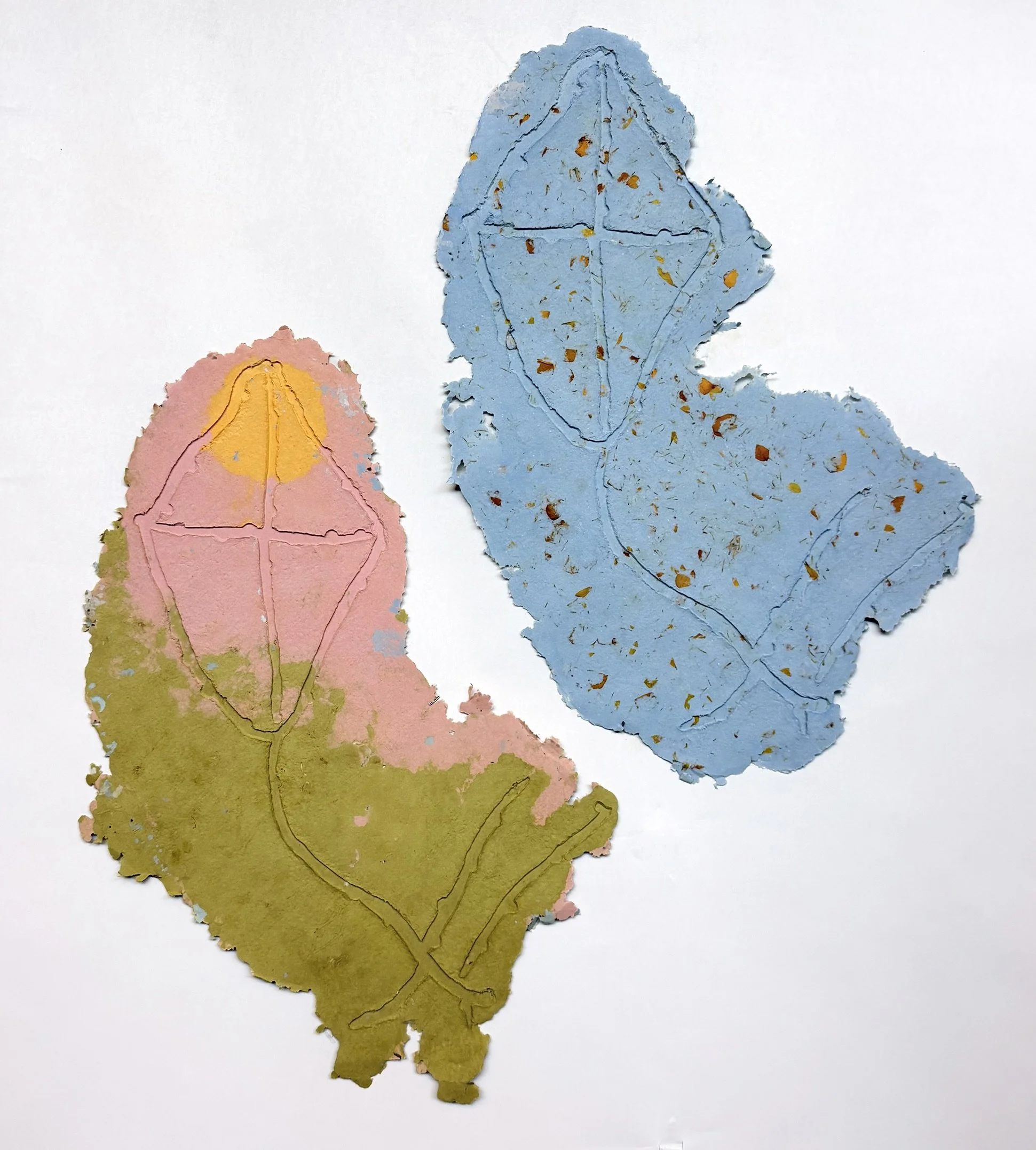
Alexis Murray (born 1998, Smithtown, New York) is a contemporary papermaker and printmaker currently based in Ronkonkoma, New York. Working primarily with handmade paper, pulp painting, and sculptural paper processes, Murray is best known for layered paper compositions that blur the boundaries between painting, sculpture, and textile. Her practice is distinguished by its exploration of material transformation, fragility, and surface depth, achieved through heavily textured formations, embedded fibers, and tactile relief structures. Employing muted, earthy palettes alongside intermittent luminous chromatic shifts, her works construct abstract spatial environments that evoke associations with landscape, architecture, and the body. Murray’s work is characterized by a sustained investigation into impermanence, decay, and processes of material becoming. Through layered pulp applications and the integration of recycled and botanical fibers, she constructs abstract surfaces that emphasize both structural tension and visual fragility. Her practice often evokes fragmented landscapes and corporeal presence, where surface irregularities and embedded matter function as traces of transformation and time. Across her ongoing body of work, Murray develops material-driven compositions that foreground the expressive potential of handmade paper as both image and object, situating her practice within contemporary discourses on expanded painting and sculptural printmaking.
What is your background and how did you start your journey in the art world?
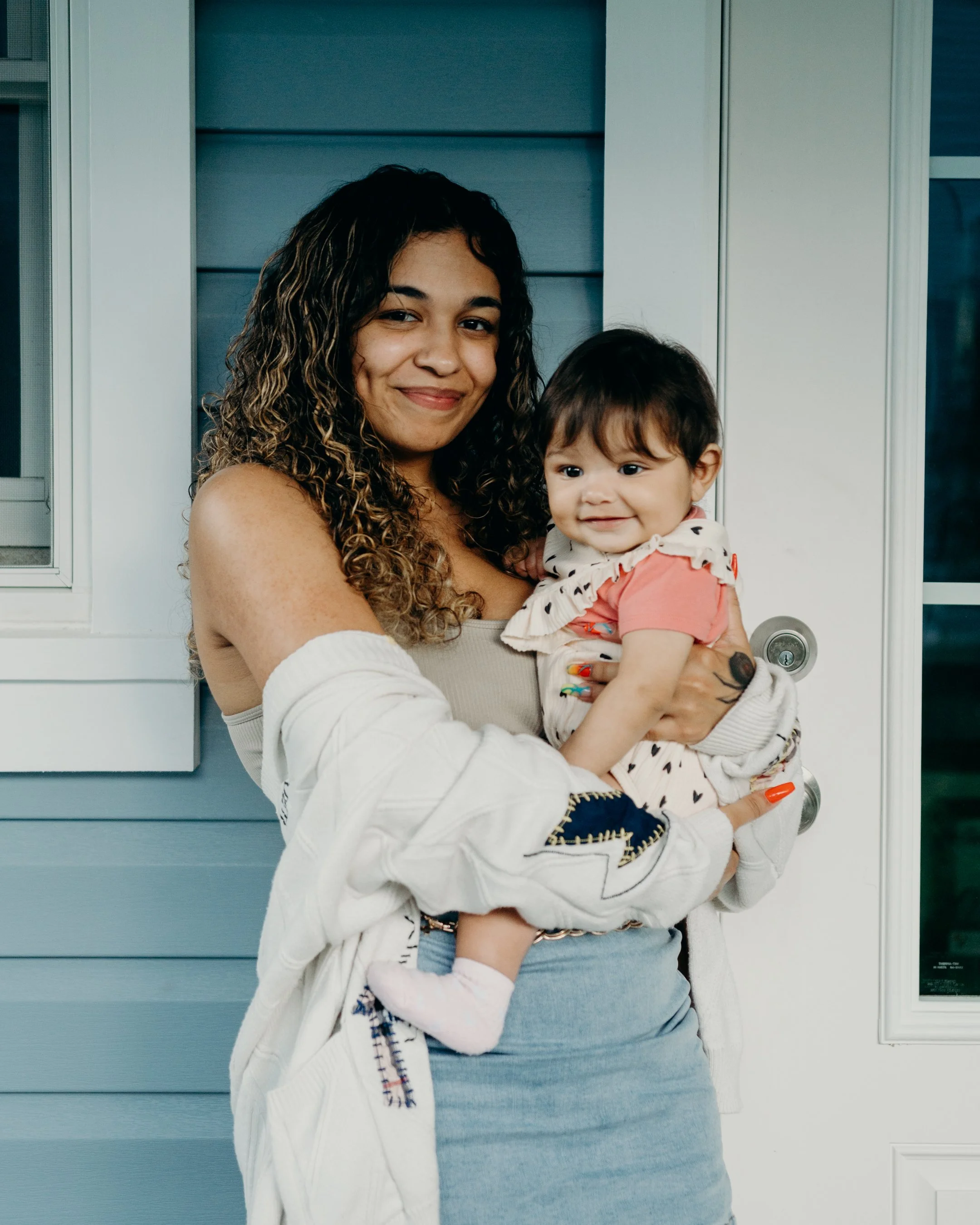
“I come from a mixed black and white background, and art first became important to me during my teenage years as a way to navigate and express my inner thoughts and emotions. What started as a personal outlet gradually developed into a serious creative practice. I became especially interested in hands-on, material-based processes because they felt deeply connected to transformation and experimentation. That curiosity eventually led me to papermaking and printmaking, where I found a medium that allowed me to combine emotion, texture, and physical process into one body of work.”
What inspires you?
“My inspiration is rooted in the tension between responsibility and becoming—especially through my experience as a mother. That reality has shaped everything about how I move through the world and my practice. There are days where survival and care take priority over making, and other moments where making becomes the only way I can process the weight of it all. Art, for me, isn’t separate from life—it’s how I metabolize it. What keeps me going is the desire to build a life that reflects honesty, endurance, strength, and self-determination. I’m driven by the hope that my children will one day understand not just what I made, but what it took to keep making it—through exhaustion, uncertainty, and growth that didn’t always feel linear. My practice becomes a record of that effort: a quiet insistence on continuing, even when things are difficult. Ultimately, I want to be able to show them that I didn’t abandon myself. That I stayed with my vision, kept learning, and kept rebuilding. And one day, I can say to them with real weight behind it: ‘Mama did it—not because it was easy, but because I kept choosing to.’”
What themes do you pursue? Is there an underlying message in your work?
“My work consistently returns to themes of fragility, transformation, and endurance—both materially and emotionally. Working with handmade paper allows me to physically engage with processes of breakdown and rebuilding, where fibers are deconstructed and reformed into something new. That cycle mirrors how I understand lived experience: layered, unstable, and always in a state of becoming. I’m also interested in care, memory, and the body’s relationship to time. My surfaces hold traces—of pressure, touch, and accumulation—and I see those marks as evidence of both vulnerability and strength existing at once. The materials I work with embody that tension, where delicacy is never separate from resilience. At the core of my practice is the idea of persistence through softness. I believe that owning your fragility, tenderness, and emotional depth is not a weakness, but a form of strength—often stronger than the resistance that comes from rejecting it. My work holds space for that belief: that allowing yourself to be soft, open, and affected by the world is an act of endurance in itself, and one that requires real courage.”
How would you describe your work?
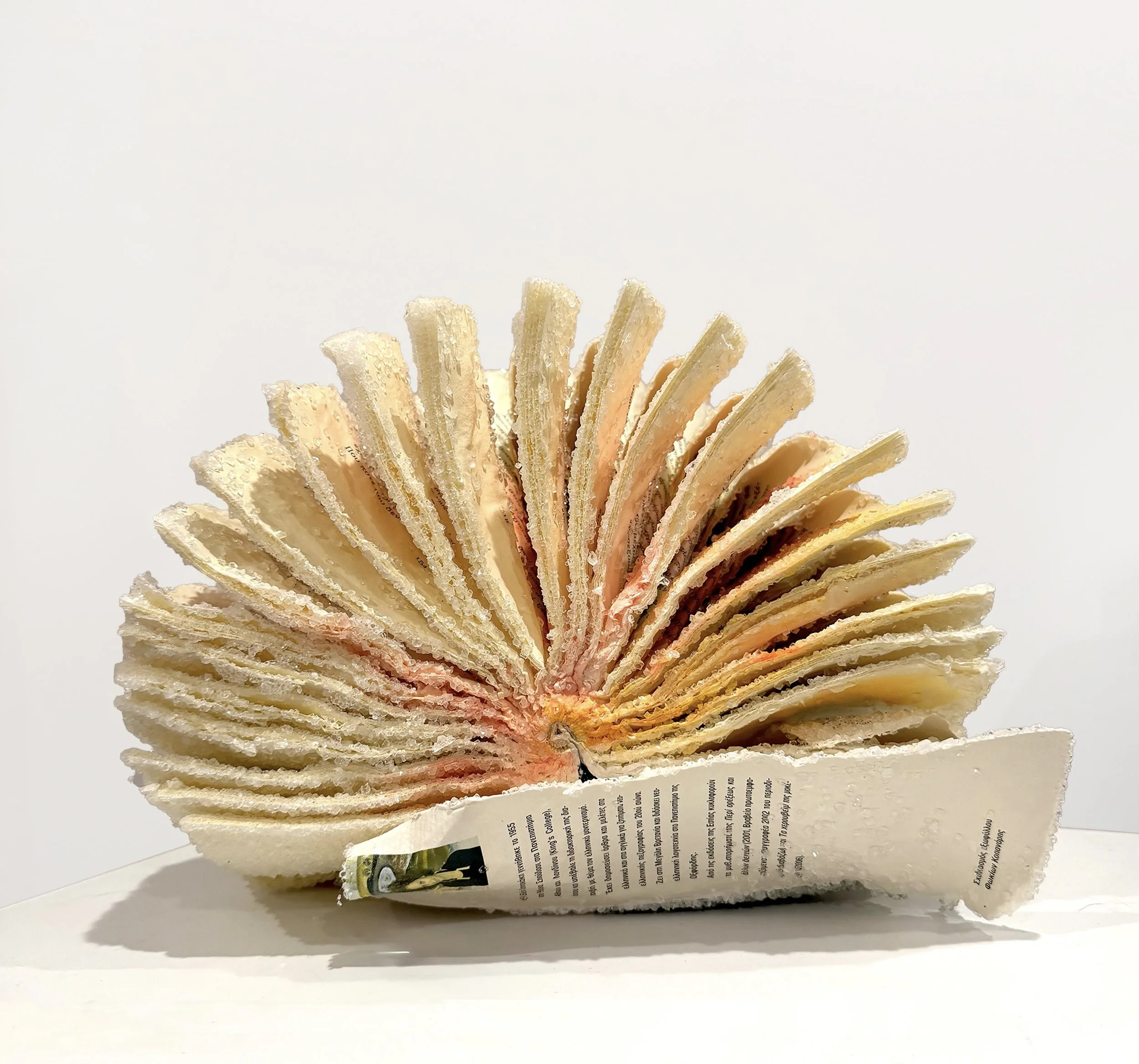
“I would describe my work as materially driven and process-based, rooted in handmade papermaking and sculptural surface-building. It exists between painting, sculpture, and printmaking, often blurring those boundaries through layered pulp, embedded fibers, and tactile relief structures. Visually, my work is abstract and heavily textured, with surfaces that shift between softness and density, fragility and structure. I’m interested in how paper can move beyond a support and become an object in itself—something that holds memory, pressure, and transformation within its surface. Conceptually, the work is about impermanence, care, fragility, and strength. It reflects on how things break down and rebuild over time, both materially and emotionally. At its core, I see my practice as a way of giving form to vulnerability—where fragility is not hidden, but held and made visible as a source of strength.”
Which artists influence you most?
“Two artists who have been a major influence on my work are Georgia O’Keeffe and Frida Kahlo. I’m drawn to the way O’Keeffe can take something incredibly quiet, soft, and organic and translate it into a powerful visual language through abstraction, form, and subtle shifts in tone. There’s a similar quality in Kahlo’s work that I admire—the emotional honesty and symbolic depth, where vulnerability is never hidden but fully present and, at the same time, undeniably strong. What connects them for me is that balance between softness and strength. Their work feels emotionally direct without being fragile in a dismissive way. Instead, it embraces sensitivity, the body, and interior experience as sources of power. That idea strongly resonates with how I think about my own practice—where tenderness, fragility, and material delicacy are not opposites of strength, but part of what makes it visible and real.”
What is your creative process like?
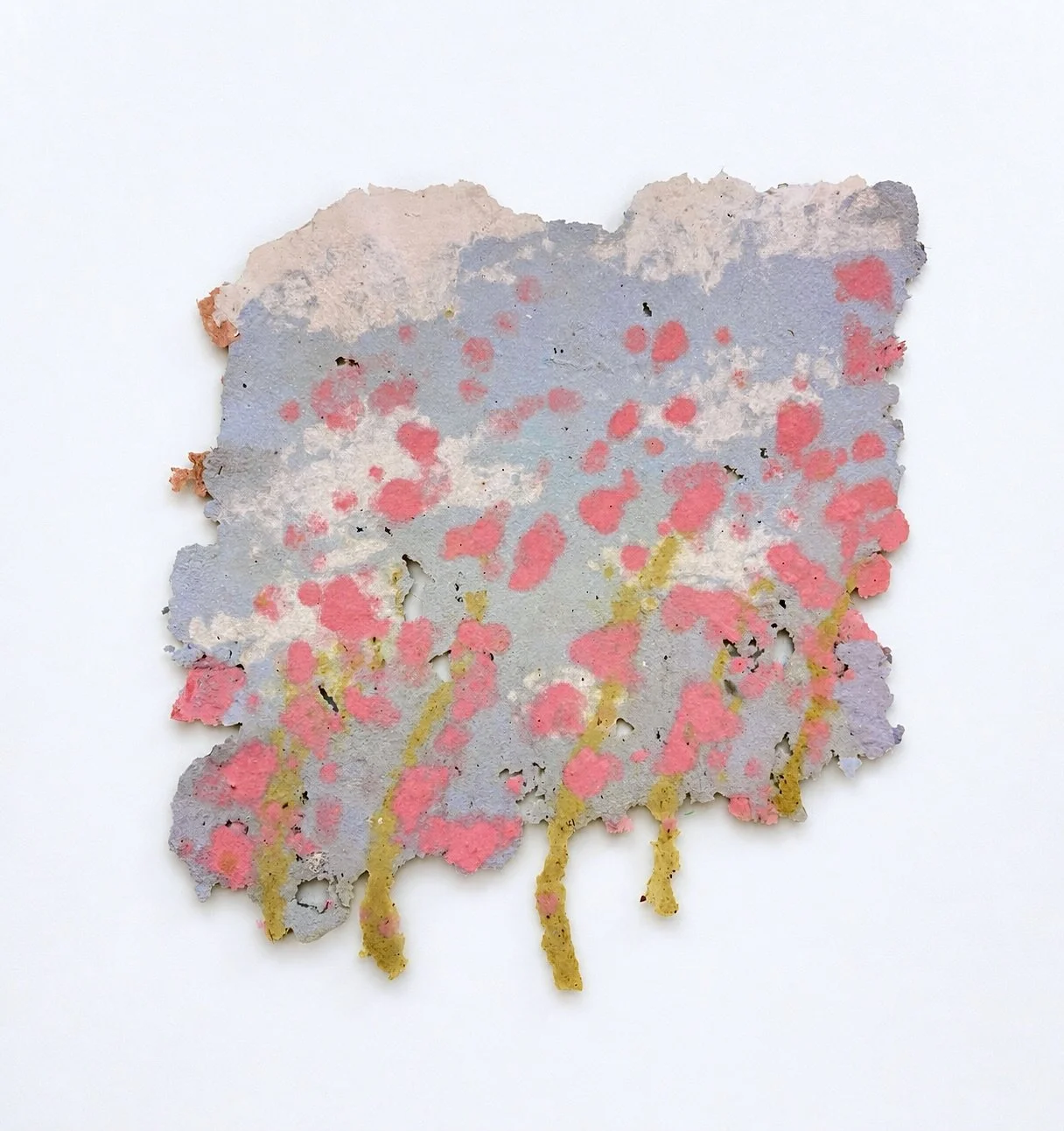
“My creative process is highly experimental and process-led. I often begin without a fixed outcome in mind, allowing the material itself to guide decisions as I work. With handmade paper and pulp-based processes, there’s an element of unpredictability that I intentionally lean into, where texture, density, and surface behavior start to direct the direction of the piece. I respond closely to what emerges in each stage—what I see within the surface, how layers interact, and where tension or softness begins to form. Rather than controlling every aspect, I treat the work as a dialogue between intention and material response, adjusting and building based on what the piece is telling me in real time. Because of this, my process is constantly shifting. It moves between control and release, structure and chance, and that balance is what allows the work to evolve organically.”
What is an artist’s role in society and how do you see that evolving?
“I see the role of the artist in society as someone who observes, translates, and gives form to experiences that are often difficult to articulate. Artists hold space for complexity—emotion, contradiction, fragility, beauty—and make it visible in ways that can invite reflection, connection, or understanding. In that sense, artists are not separate from society, but deeply embedded in it, responding to its conditions while also shaping how we perceive them. I also think the role of the artist has become more porous and less defined over time. It’s no longer just about producing objects or images, but about creating spaces for dialogue, care, and questioning. As the world becomes increasingly fast-paced and image-saturated, I believe there is even more value in practices that slow things down and return attention to materiality, process, and presence. For me personally, I see the artist’s role as both witness and translator—someone who pays attention to what is often overlooked or felt but not named, and gives it form. That role continues to evolve toward greater openness, where process, vulnerability, and lived experience are just as important as finished work.”