Interview
A.K.B
A.K.B is a Franco-American artist born in New York and raised in Paris. Working across painting and mixed media, he explores cultural, political, and personal narratives through a distinctive visual language informed by both European and American influences. For the past several years, A.K.B has focused on an ambitious body of work centered on soccer, a sport deeply connected to his upbringing in France. Through more than twenty paintings, he examines the beauty, passion, ambiguity, and contradictions that surround the world's most popular sport. Using soccer as a lens through which to explore identity, power, spectacle, migration, labor, and collective experience, the work considers the game not only as a sport, but as a reflection of contemporary society. A.K.B recently presented his first solo exhibitions in New York and in Paris. He currently lives and works in Harlem, New York.
What is your background and how did you start your journey in the art world?
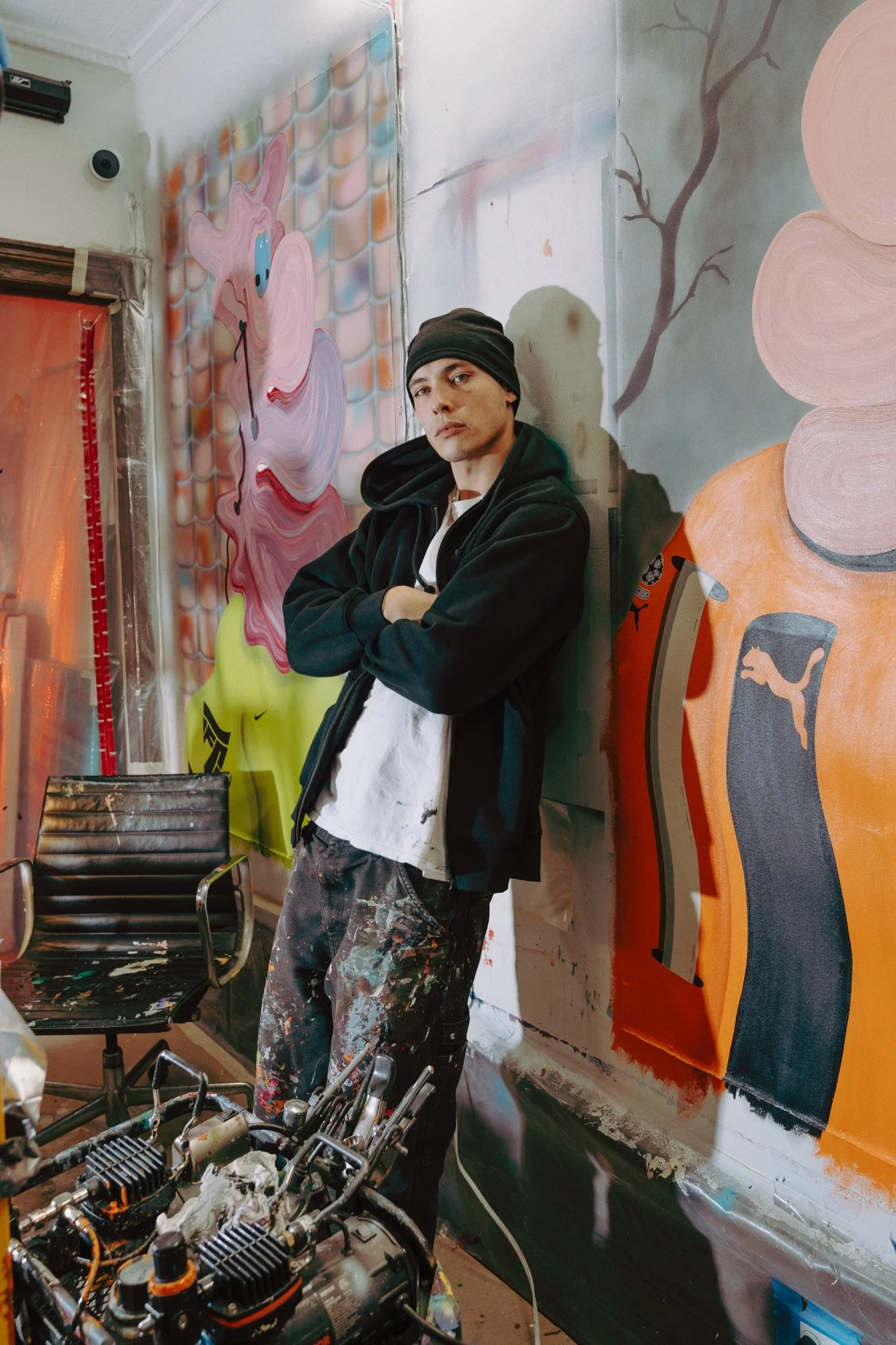
“I am a Franco-American painter, born in NYC and raised in Paris. After passing the French baccalaureate, I moved to New York to take care of my grandma (who was living in Jersey City) and to pursue an art and acting career. Although I've always been creative and liked to live inside my own world, I first found interest in filmmaking and ended up pursuing film studies at The New School and creative entrepreneurship at Parsons. While I was at The New School, I was surrounded by artists, some painters. After hanging with them and seeing where the creative magic was made, I felt inspired and took interest and realization. I slowly realized that that's what I wanted to do. I started painting in my apartment at the time. I also was a graffiti artist during that time out of passion (and still am) and had a character (some call it ‘Squiggle’) that was slowly developing over the years. My character in the streets looks like he could be related to the world of characters I live through and express myself through in my paintings.”
What inspires you?
“When it comes to the art I do and the messages I decide to translate through my paintings, I feel inspired by social issues I feel like I'd like to put more of a spotlight on. Since I started painting I often felt the duty to be a messenger of the time I live in, be some sort of a journalist through painting. I once wanted to be a journalist that would travel the world and give a voice to those who may not feel heard, but I was never really good at reading or writing (growing up speaking two languages at once made it more difficult to perfect one) but I feel like I can do that through art. I feel inspired by art and photography books and often go through them, leaving post-its. I feel inspired mainly by photojournalism and history. Artists who create worlds of their own and who live in and through them inspire me, such as Kenny Scharf for example. I also feel inspired by artists like Fernando Botero, Fernand Leger, Frida Kahlo and Philip Guston. I recently visited the exhibit at the Picasso Museum in Paris on Henry Taylor's work and felt inspired.”
What themes do you pursue? Is there an underlying message in your work?
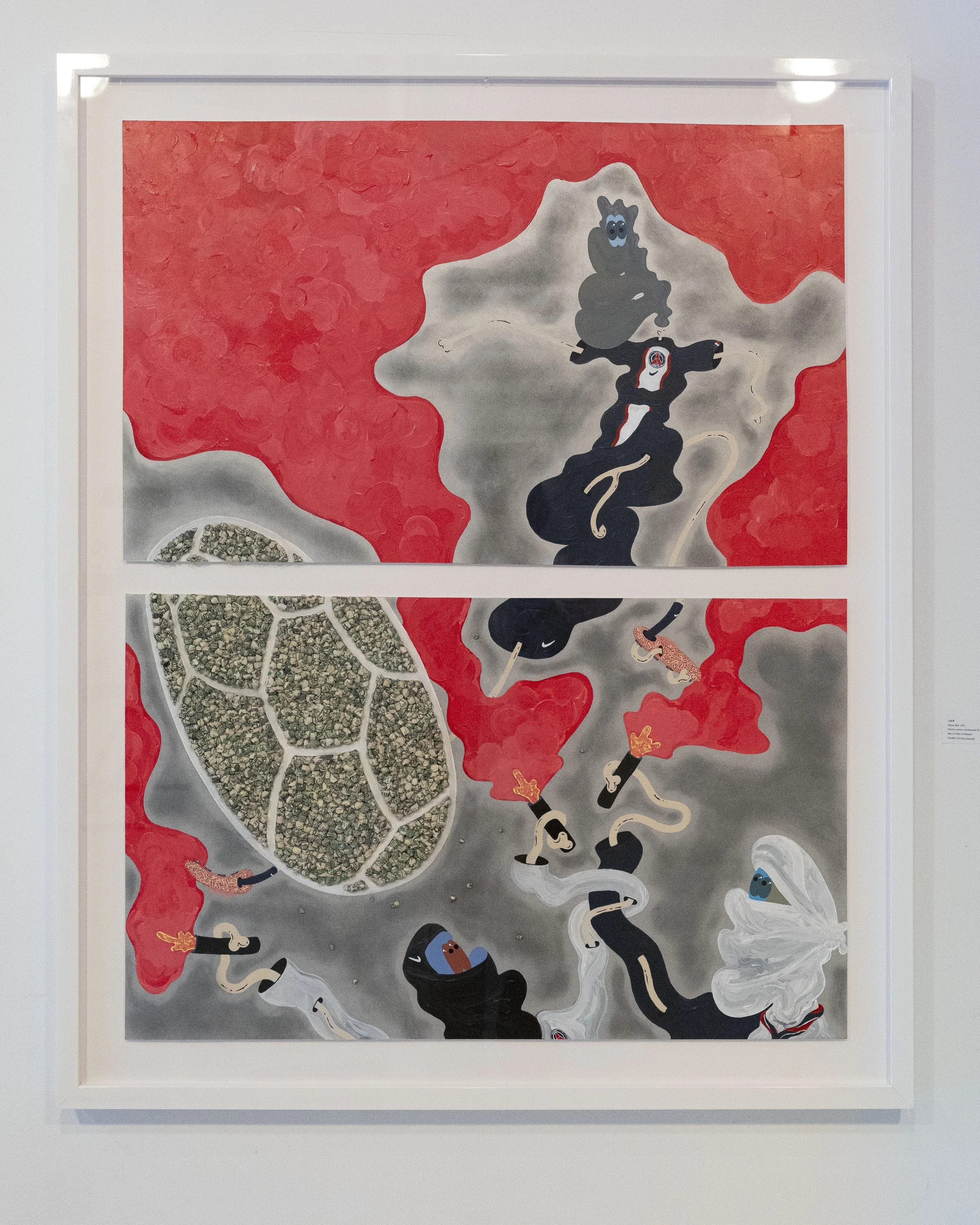
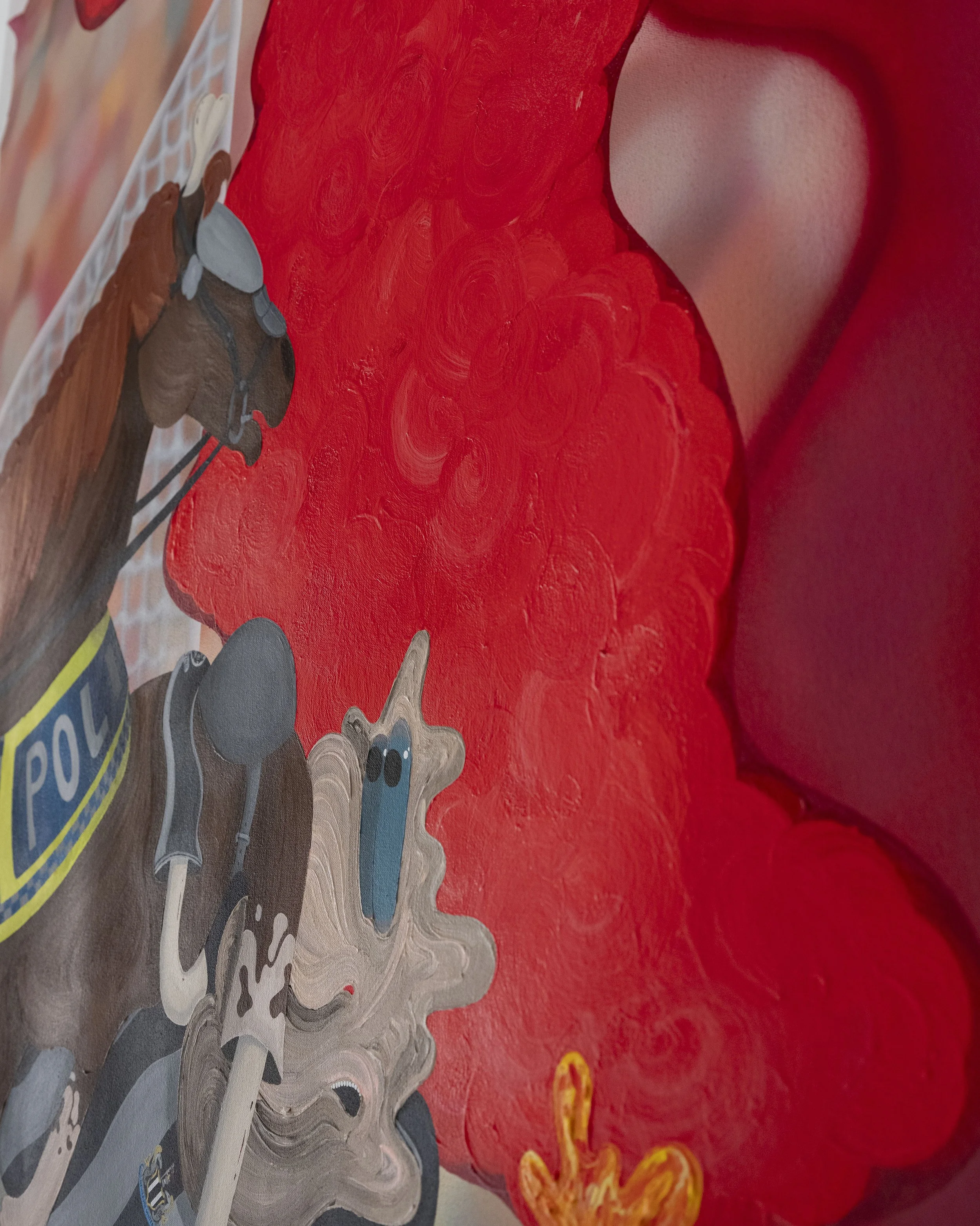
“I tend to paint about social issues and try to speak about subjects I feel like people need to know more about or that deserve more visibility. More recently, I've been working on a body of work that I just showed in NY and Paris. This series was a protest towards FIFA and FIFA World Cup. This body of work is called the Football Series. This series explores the beauty, ambiguity, corruption, and emotional power of the world's most popular sport through a body of work developed over the past several years. Soccer has changed, and for the worse. And yet we continue to watch, admire, and dream. Players play, fans support, and the game continues to unite people across borders and generations. It is a relationship built on both love and frustration.”
How would you describe your work?
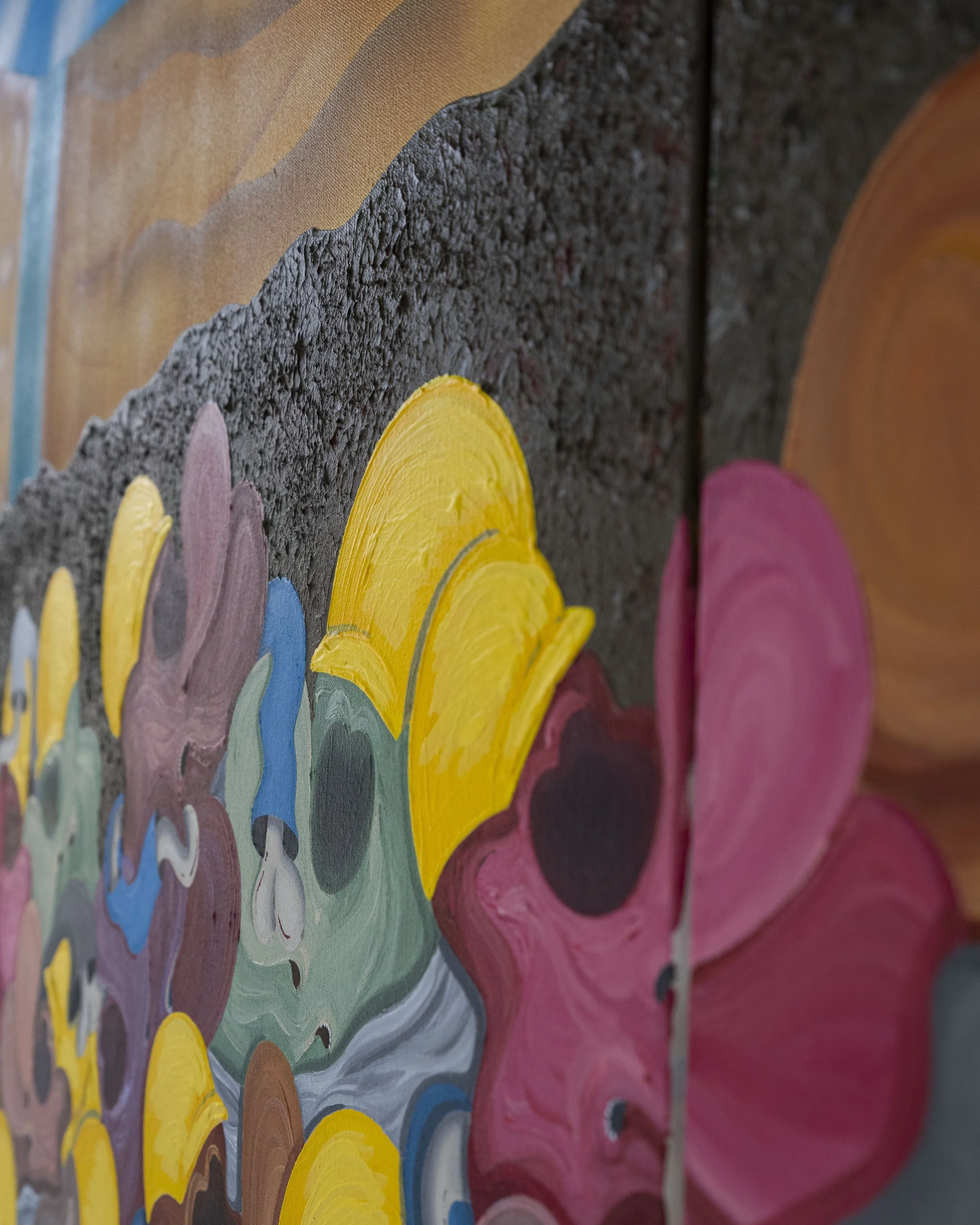
“Working across painting, mixed media, and graffiti, I create a distinctive visual language that explores cultural, political, and personal narratives through recurring symbols, characters, and contemporary subjects. I have my own world in which I express myself through. At the moment my paintings explore themes of identity, power, representation, and collective experience, balancing the beauty and passion of the sport of soccer with its complexities and contradictions.”
Which artists influence you most?
“I feel inspired by many artists, none in particular. But I often study art books and keep post-its where I feel inspired. I feel inspired by Fernando Botero, Fernand Leger, Frida Kahlo and Philip Guston. I felt inspired by Ron Mueck's work (especially the large human skull pieces) that I had the chance to see in person at the old location of the Fondation Cartier in Paris. I also felt recently inspired by Henry Taylor's work that is being shown at the Picasso museum in Paris.”
What is your creative process like?
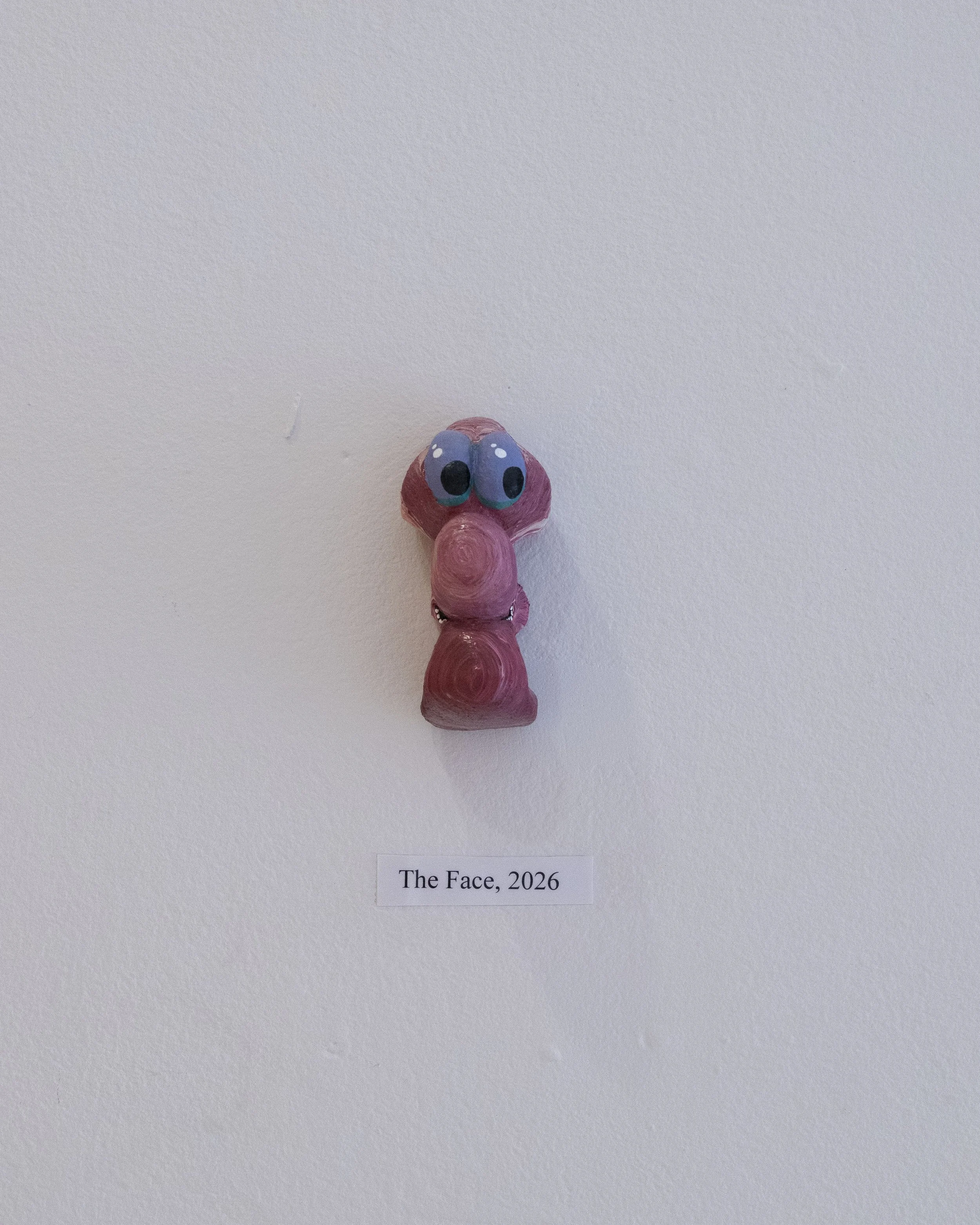
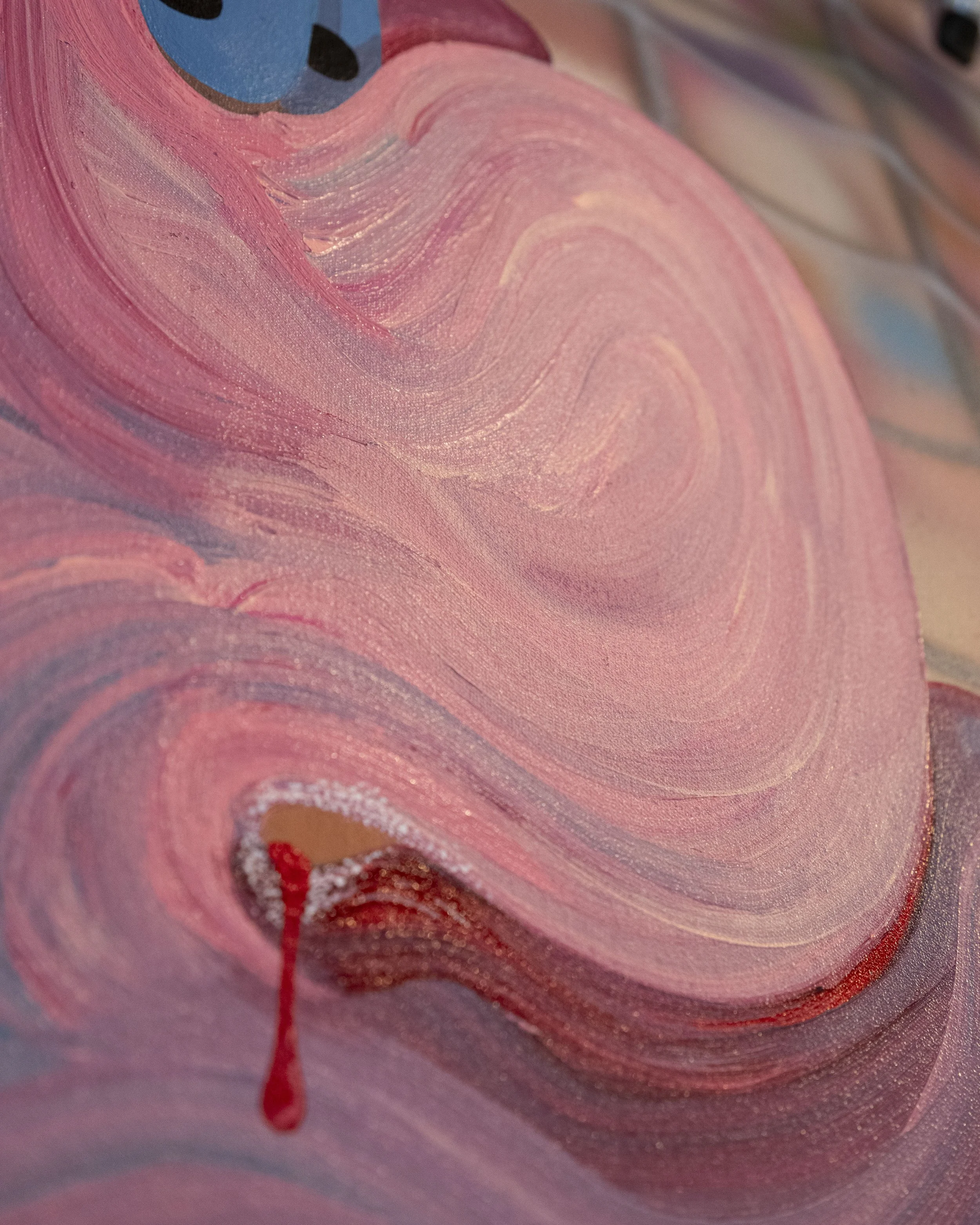
“My process first begins with a lot of research. I want to be as informed as possible before starting to paint about a specific subject. I then sketch, which usually consists more of a very detailed drawing with color. Once I start working on a piece, I start with the background and work myself forward. The background usually consists of airbrush and aerosol techniques where I keep my distance from the canvas in order to keep that sense of blurriness. I then work with acrylic paint. When doing my characters, I play with mixes. I purposefully do not mix too much and use lots of paint, playing with families of different mixes going from darker tones to lighter tones.”
What is an artist’s role in society and how do you see that evolving?
“I believe that, for me, an artist is either a decorator of space or a messenger of the time they live in. I want to be a messenger. I'd like to leave a message for future generations. With AI and robotics taking over, I believe artists are more important than ever before.”
Have you had any noteworthy exhibitions you'd like to share?
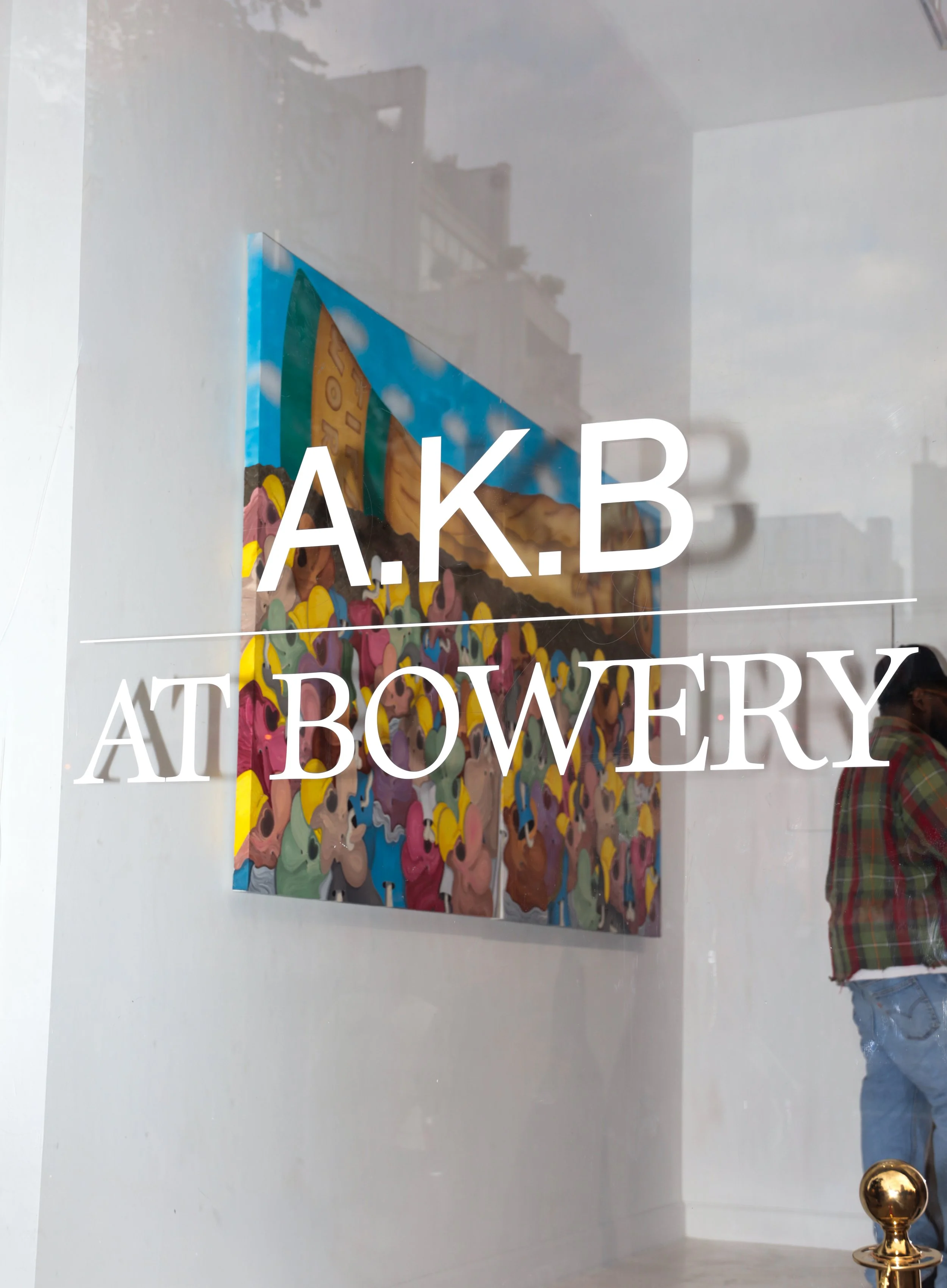
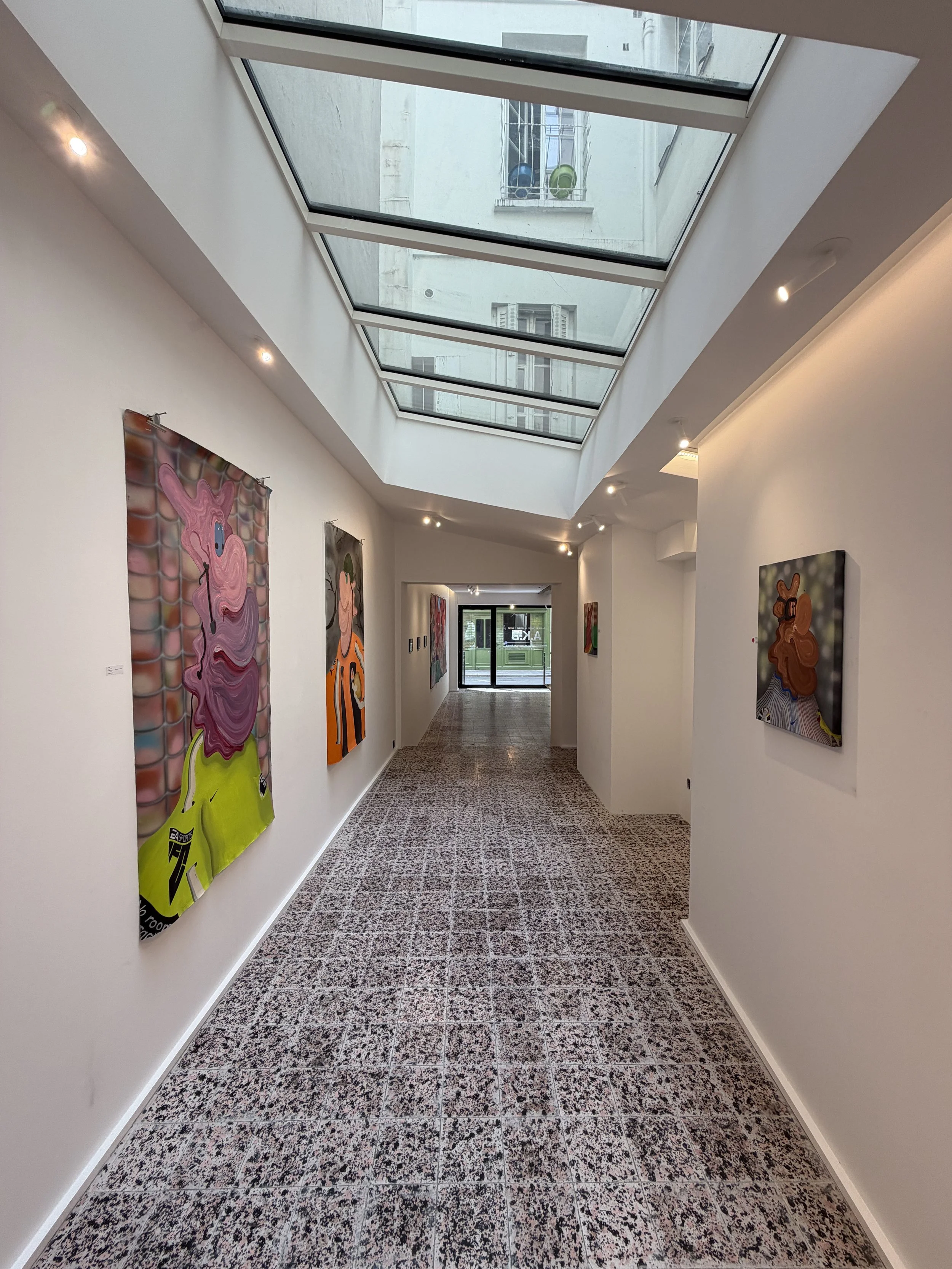
“I just had my first solo show in NY (a protest show in preparation for the FIFA World Cup) and then in Paris (a protest show during the FIFA World Cup).
Here are the descriptions of the shows: ‘NY Show: It’s a love & hate thing. In a few weeks, the World Cup begins. Players will be playing, fans will be cheering, and FIFA will make more profits than it ever has in a major tournament. A.K.B, a Franco-American painter, born in New York and raised in Paris, offers a protest show. A passionate open letter to soccer through social and realist painting on The Beautiful Game. 20 paintings. 2 years working on the series. An infinite way to observe the corruption, malice, ambiguity and beauty of soccer. From stadiums built with the bones of exploited workers to a sole player hugged by a hundred fans. From an encounter between one of the world’s greatest and one of the worst, to fans beaten by the police for their passion. Can football be great again ? Paris show: It's a love & hate thing. Football has changed, and for the worse. Cooling breaks serve advertisers' interests, a referee whose dream was shattered, teams searched on tarmacs or in soulless airport offices — this World Cup has all the makings of a fiasco. A political one, at least. And yet, we watch, admire, and dream of the players taking part in this competition. Players play, fans support, and FIFA makes more money than ever. So do broadcasters around the world, especially those with close ties to governments. This World Cup is one of all dangers: political, cultural, and environmental. This World Cup shows what Football, or Soccer in the U.S., is slowly transforming to. A.K.B, a Franco-American painter born in New York and raised in Paris, presents an exhibition with a protest edge. An open letter to football, rendered in colors and banknotes, delivered by a passionate lover of the beautiful game, and addressed to the world of football. 20 paintings. 2 years of work. An infinite number of ways to present the corruption, the malice, the ambiguity, and the beauty of football. From stadiums built on the bones of exploited workers, to a player embraced by a hundred supporters. From an encounter between one of the best this world has to offer and one of the worst, to fans beaten simply for expressing their passion. One question remains: Can football be great again?’”